
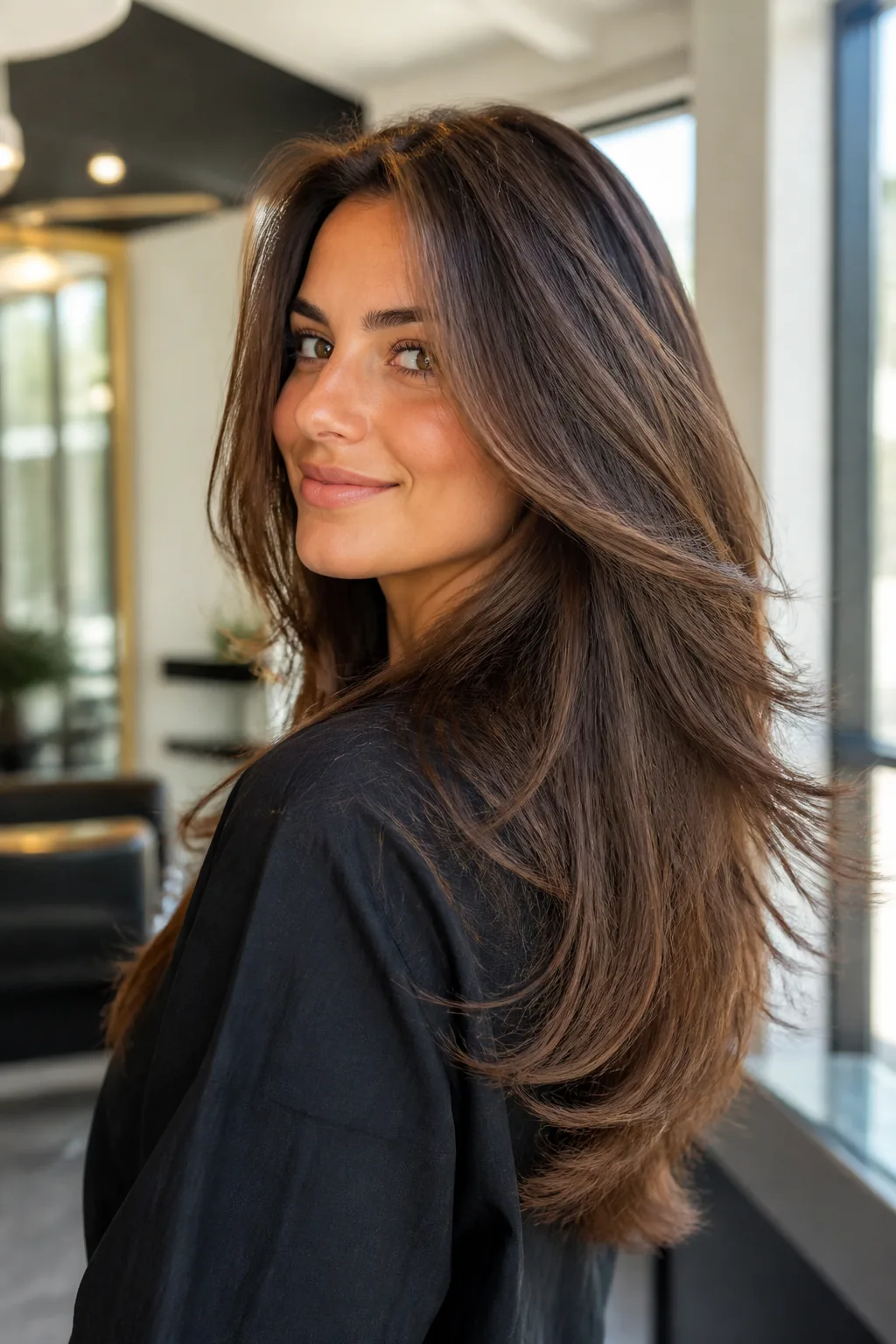
These 12 long styles keep your length and add movement without an hour of styling each morning, so you can look polished in ten minutes, not forty.
I spent most of my twenties with long hair that just hung there. It was long, sure, but it was heavy, flat on top, and by day three it turned into a triangle. I’d look in the mirror at 7 a.m., sigh, and scrape it back into the same bun I’d worn the day before. Sound familiar?
Here’s the thing: the problem was never the length. It was the cut, and the routine around it. long hairstyles for women in 30s should work as hard as you do. You want to walk out of the house looking polished without spending forty minutes with a round brush, and you want a cut that still looks good six weeks later when life gets busy and the salon appointment slips.
I learned this the hard way, through years of one-length cuts that dragged my face down and layers that were chopped in too short and stuck out at odd angles. The twelve styles below are the ones that actually survived my real life: school runs, desk-to-dinner days, weekends away, and mornings when I have ten minutes, not forty. Every one of them keeps your length. Every one of them adds movement. And none of them asks you to become a person who styles her hair for an hour every morning.
1. Long Layers That Move
This is the cut I come back to again and again, and it’s the foundation of almost everything else on this list. Long layers mean the shortest layer still falls past your shoulders, so you keep all your length while the ends stop sitting in one heavy shelf. The trick is asking for blended layers, not choppy ones. Blended layers melt into each other, so your hair swings instead of stepping.
Who it suits: honestly, almost everyone with long hair, but it’s a lifesaver if your hair is thick and tends to sit like a curtain. The layers take weight out from the inside, so your hair moves when you move instead of moving as one solid block. If your hair is fine, ask your stylist to keep the layers long and minimal, just two or three, so you don’t lose the fullness at the ends.
Ask your stylist for: long, blended layers starting no higher than chin level, with the shortest layer still reaching past your collarbone. Bring a photo of the back view, not just the front, because that’s where a bad layering job shows up first.
Styling tip: you don’t need to do much to this cut for it to look good. A rough blow dry with your head tipped upside down for the last minute gives you lift at the roots, and the layers do the rest.
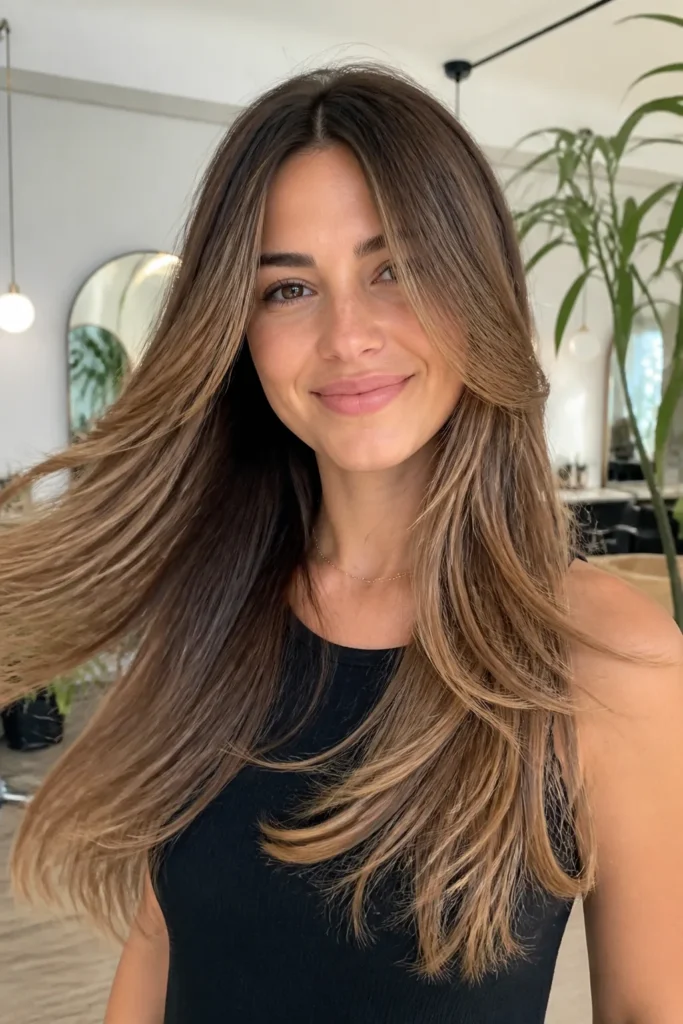
2. The One-Length Blunt Cut
If layers feel risky to you, this is your cut. One length, all the way around, with ends cut straight across. It sounds simple, and it is, which is exactly why it works. A blunt cut makes long hairstyles for women in 30s look thicker and healthier, because the ends are all full and even instead of wispy and tapered.
Who it suits: fine to medium hair loves this cut, because it creates the illusion of density. If your hair is very thick, your stylist may need to remove a little internal weight so the cut doesn’t turn into a triangle, but the outline stays blunt and clean. It also suits you if you wear your hair straight most of the time, since a blunt hemline looks sharpest when the hair is smooth.
Ask your stylist for: a one-length cut with no layers, ends cut blunt, and a tiny bit of internal thinning only if your hair is very thick. Then keep the ends trimmed every eight to ten weeks, because split ends show fast on a blunt line.
Styling tip: run a flat iron over just the last few inches if they flip out, and leave the rest alone. A drop of smoothing oil on the ends keeps the hemline looking intentional rather than dry.
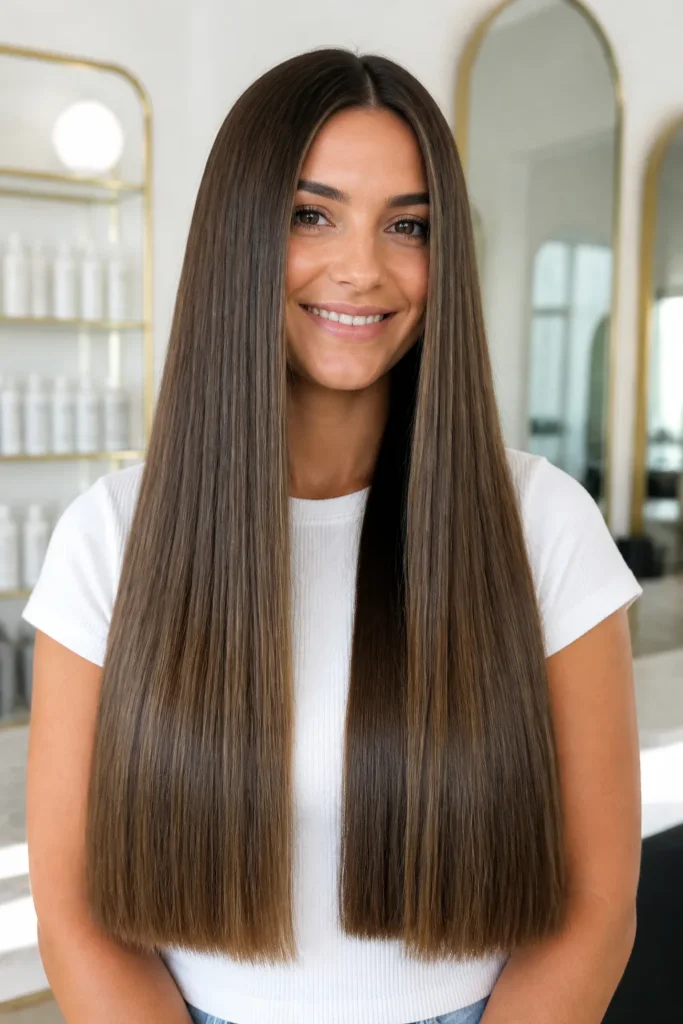
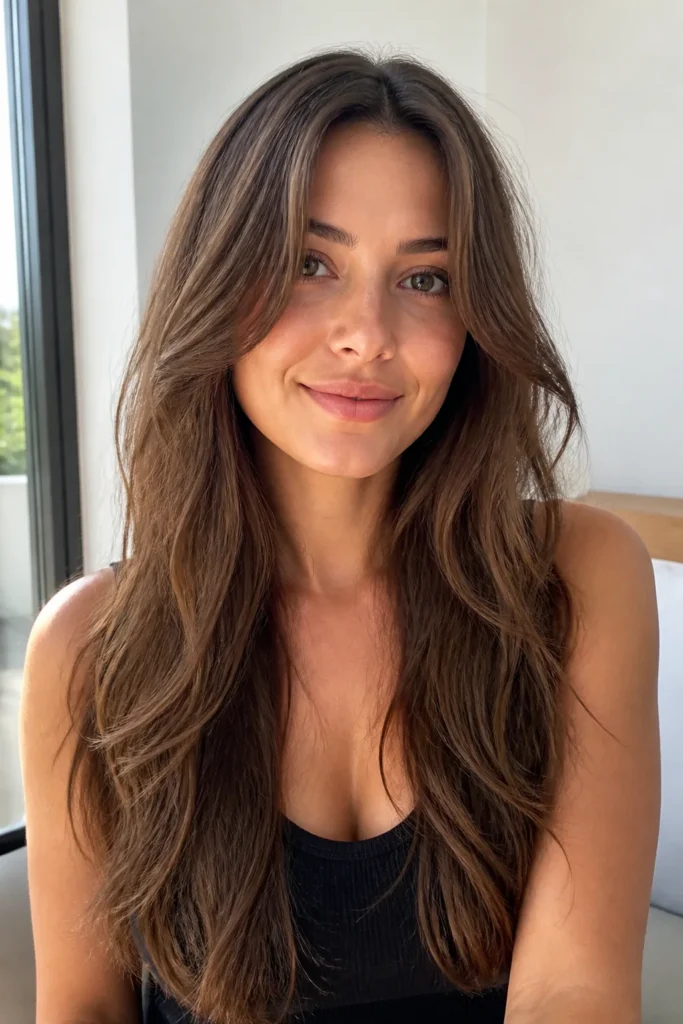
3. Face-Framing Layers
This one is not a fringe, and that’s an important distinction. Face-framing layers are longer pieces that start around your cheekbones and melt down into the rest of your hair. They soften the front of a long cut without committing you to bangs, and they grow out gracefully, which matters when your next appointment is further away than you planned.
Who it suits: if you wear your hair down most days but feel like it hides your face, this is the fix. It’s also kind to rounder and fuller faces, because the longer front pieces draw the eye downward instead of cutting across the widest part of your face. And if you pull your hair back a lot, those front pieces give you soft bits around your face instead of a severe scraped-back look.
Ask your stylist for: face-framing pieces that start at cheekbone level or below, cut on a diagonal so they blend into your lengths. Nothing shorter than your cheekbones, or you’re into fringe territory and the grow-out gets awkward.
Styling tip: when you blow dry, wrap those front pieces around a round brush and roll them away from your face. Two minutes, and they sit like they were styled on purpose.
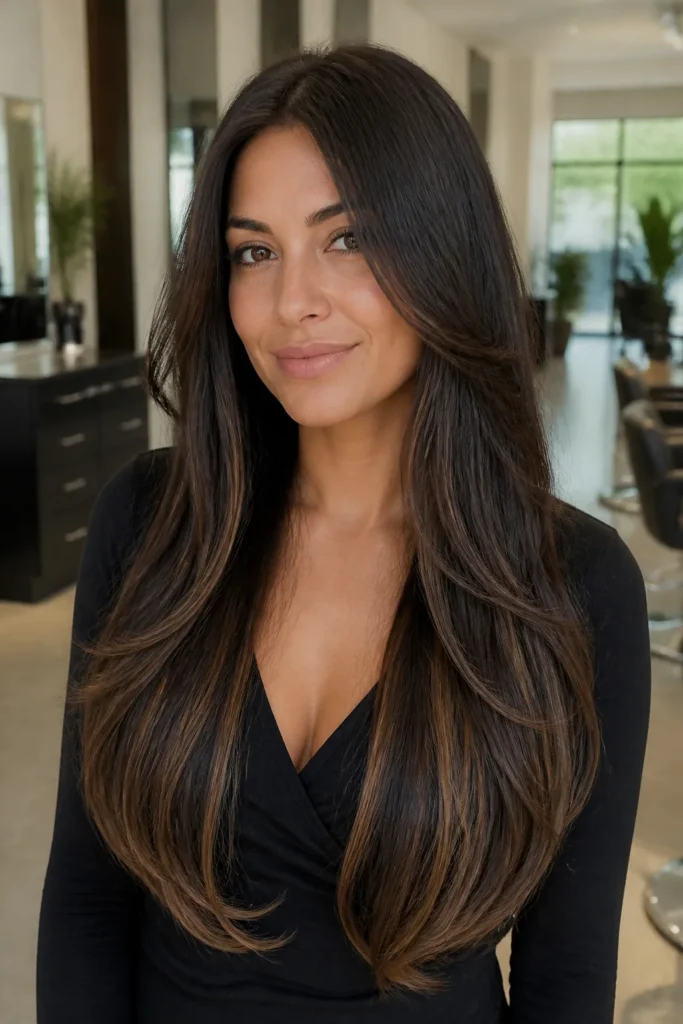
4. The Bouncy Blowout
Some days you want volume, and you want it to look like you just left the salon. The bouncy blowout is a styling approach, not a cut, and it works best on a long layered base. The idea is lift at the roots, smooth through the middle, and ends that flip and bounce instead of lying flat.
Who it suits: anyone with a dinner out, a work event, or a day when you just want to feel polished. It works on medium and thick hair most easily, but fine hair can get there too with the right prep. If your hair is very curly, you’ll need to blow it smooth first, so save this one for days when you have twenty minutes, not five.
How to do it: start with a volumizing mousse on damp roots, then blow dry in sections with a large round brush, rolling each section up and away from your face. Let each section cool for a few seconds before you drop it, because hair sets its shape as it cools. That’s the part most of us skip, and it’s the whole secret.
Why it works: the cooling step is what gives you bounce that lasts past lunch. Without it, you’re just pushing hot hair around and wondering why it falls flat by 10 a.m.
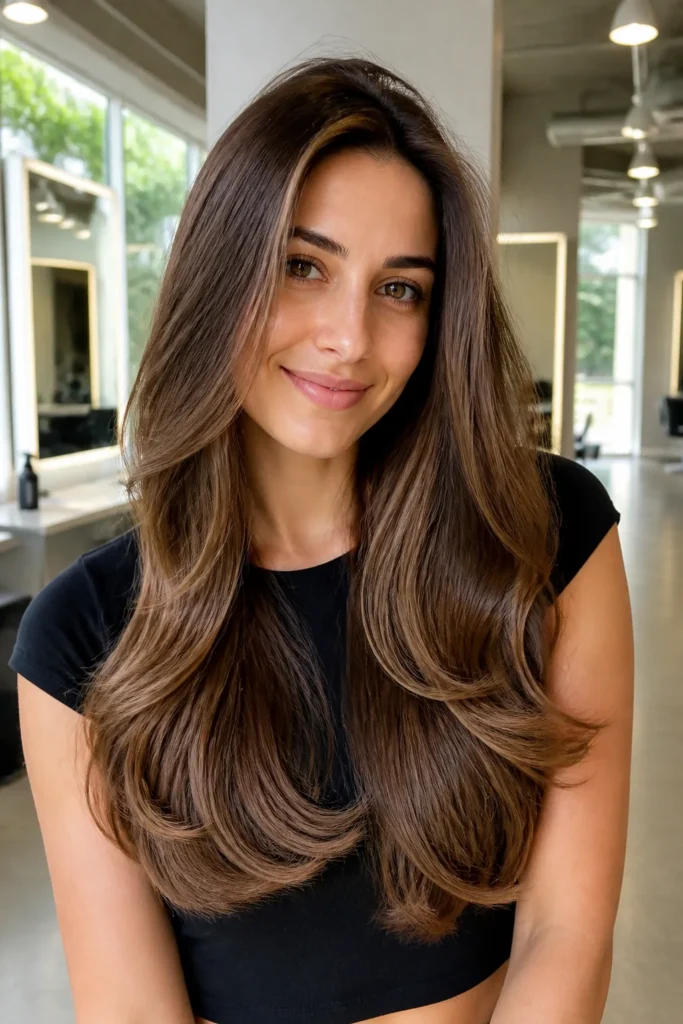
5. Soft, Lived-In Waves
This is the wave for people who hate the word “beachy” but want exactly that texture. Soft, lived-in waves mean bends through the middle and ends, not tight curls, and they look better on day two than they do fresh. That’s a feature, not a flaw.
Who it suits: medium and thick hair holds this wave best, but fine hair can wear it too if you prep with a texture spray. It’s the most forgiving style on this list, because the whole point is that it doesn’t look perfect. If one side drops a little faster than the other, nobody can tell, and that includes you.
How to do it: work in large sections with a wide curling iron or a flat iron, bending the hair away from your face and leaving the last inch or two straight. Then run your fingers through it, never a brush, and finish with a light texture spray. If you want it to last, sleep on it in a loose braid and shake it out in the morning.
Styling tip: start with hair that’s about ninety percent dry, not sopping wet, and skip the heavy serums. Lived-in waves need grip, not slip.
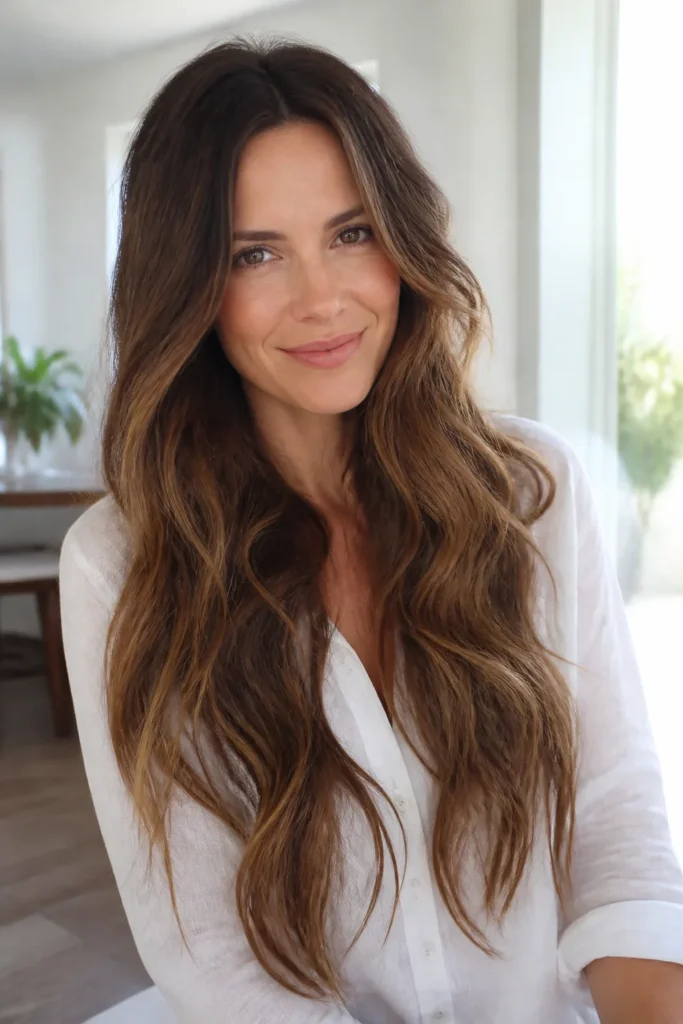
6. The Sleek Middle Part
There is something about a clean middle part and smooth long hairstyles for women in 30s that reads instantly polished. No fuss, no volume tricks, just a straight line and a smooth finish. I reach for this one on work days when I want to look like I have my life together, even if my inbox says otherwise.
Who it suits: straight and slightly wavy hair takes to this style most easily. If your hair is very curly, you can still wear it, but it takes more smoothing work, so it becomes a sometimes style rather than an everyday one. It also suits you if your features are fairly symmetrical, since a middle part puts your face front and center with nothing to hide behind.
How to do it: part your hair down the middle while it’s still damp, then blow dry it smooth with a paddle brush, working downward. Finish with a flat iron in large sections if you need extra polish, and a pea-sized amount of smoothing cream on the ends only, never the roots.
Styling tip: the part is the whole look, so take ten seconds to get it straight with the tail of a comb. A wobbly part makes the whole style look accidental.
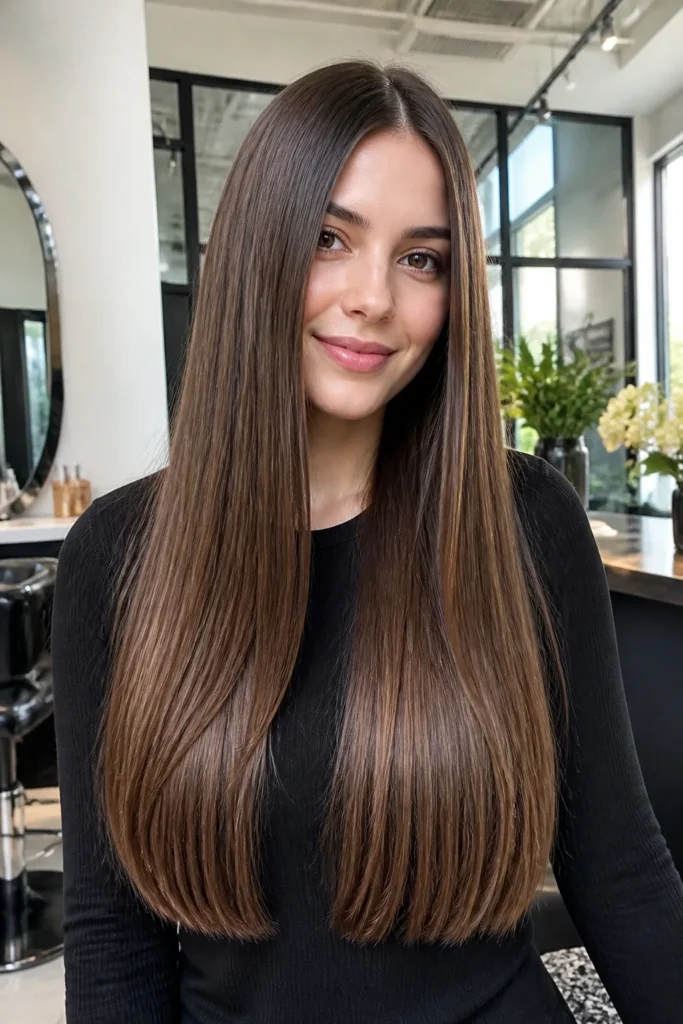
7. The Deep Side Part
If the middle part feels too severe for you, the deep side part is its warmer cousin. You flip most of your hair to one side, which instantly creates volume at the roots and a soft sweep across your forehead. It’s the fastest way I know to make long hairstyles for women in 30s look styled when all you’ve done is change where it falls.
Who it suits: this is a gift for fine hair, because the deep part creates lift that fine hair struggles to hold on its own. It also suits you if you have a high forehead or a strong jawline you want to soften, since the diagonal sweep breaks up straight lines. And it’s a brilliant second-day style, because day-old hair has the grip to hold the sweep.
How to do it: while your hair is damp, part it about two inches off center on whichever side feels natural. Blow dry the roots on the heavier side in the opposite direction first, then sweep them over, which trains the hair to sit with volume instead of collapsing flat. A couple of bobby pins hidden underneath on the lighter side keep it from sliding back by lunchtime.
Why it works: you’re using your hair’s own weight to create the volume, instead of fighting it with product. That’s why it lasts all day.
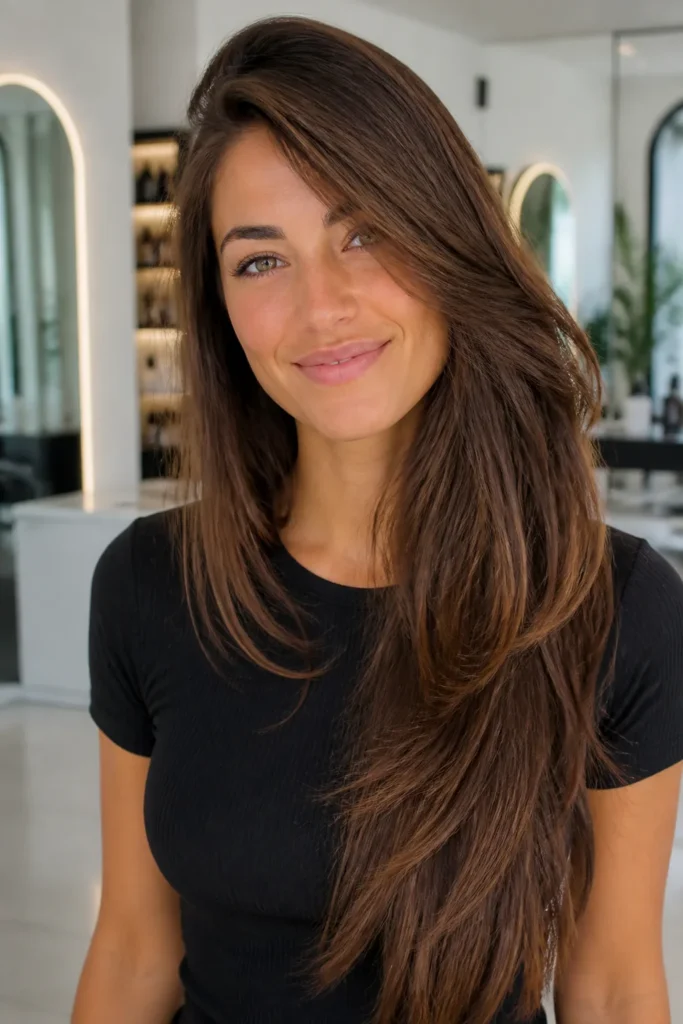
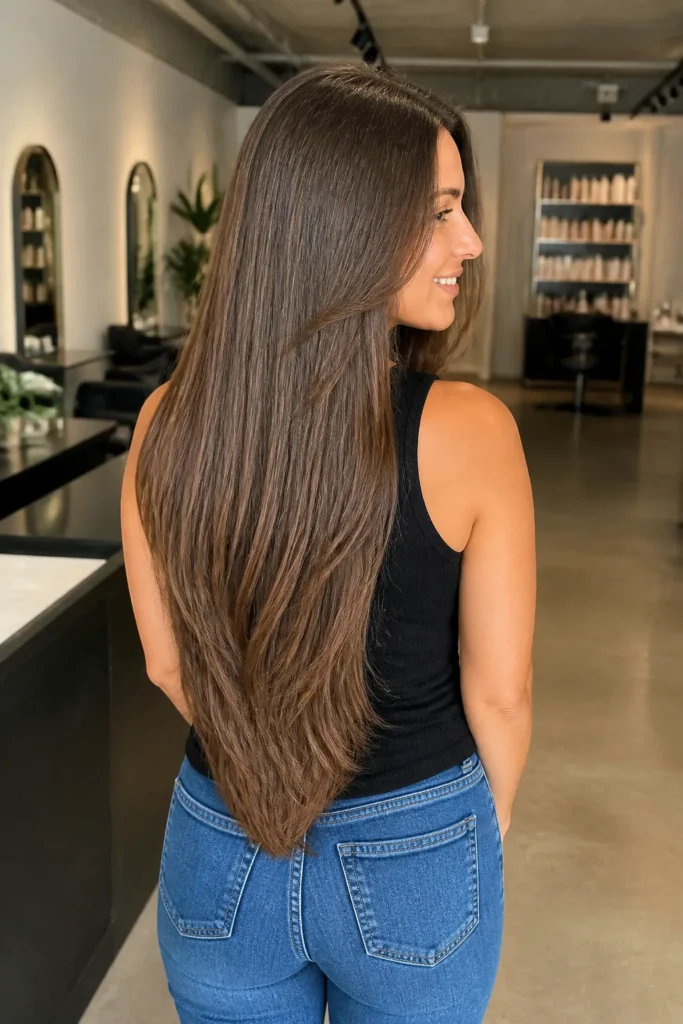
8. The V-Cut
The V-cut is a shape cut, and it’s one of the best-kept secrets for long hairstyles for women in 30s . From the back, your hair comes to a gentle V point instead of a straight line, which keeps your full length at the center back while removing bulk and weight from the sides. It looks gorgeous from behind, which is where most of the world sees your hair anyway.
Who it suits: thick hair benefits most, because the V shape takes out the heaviness that makes thick long hair feel like a blanket. It’s also lovely if you love wearing your hair down your back and want it to look intentional rather than just long. Fine hair can wear a soft, shallow V, but ask your stylist to keep it subtle, or you lose too much fullness at the sides.
Ask your stylist for: a V-shaped hemline with the point at your longest length, and the sides angled up gradually. The steeper the V, the more dramatic the shape, so start shallow if you’re trying it for the first time.
Styling tip: this cut looks best when the ends are healthy, so a trim every ten weeks matters more here than on a layered cut. Split ends show up fast on a pointed shape.
9. The Grow-Out Friendly Cut
This is the cut for the woman who books her next appointment three months out and means it. A grow-out friendly cut is designed so that it still looks good at week ten, not just week one. That means long layers, no harsh lines, no short pieces that turn into ledges as they grow, and a shape that gets softer over time instead of stranger.
Who it suits: busy women, new moms, anyone whose calendar fills up faster than her hair grows. It’s also the smartest choice if you’re growing your hair out from a shorter cut and you’re in that awkward in-between stage where every appointment feels like a gamble.
Ask your stylist for: long layers only, nothing above chin level, and a soft outline with no blunt lines except at the very ends. Tell her straight out that you won’t be back for twelve weeks, because a good stylist cuts differently when she knows the timeline.
Why it works: harsh lines grow out into ledges, and ledges look like mistakes. Soft shapes grow out into softer shapes, which just look like your hair.
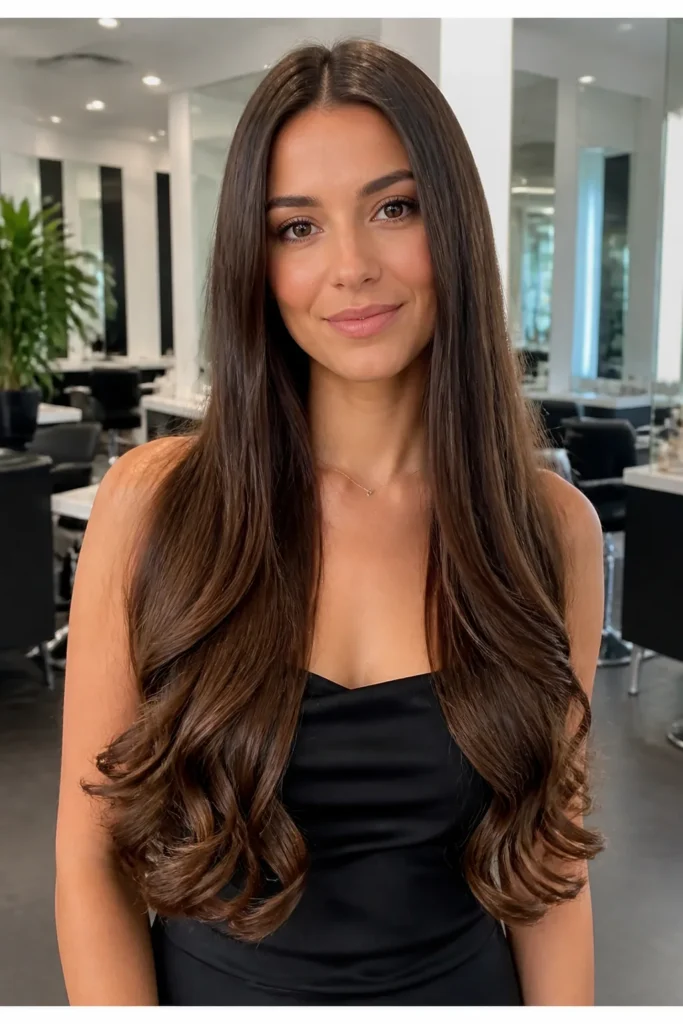
10. Soft Curls Just at the Ends
Here’s a trick I swear by: curl only the bottom third of your hair and leave the roots and middle completely smooth. You get all the romance of curly hair with none of the volume on top, and the whole thing takes about ten minutes because you’re only styling a small section of your hair.
Who it suits: this is beautiful on long hairstyles for women in 30s that tend to go flat, because the curled ends create movement without adding width at the top. It also suits formal days, dinners out, and any time you want to look dressed up without a full styling session. If your hair is very short on top or heavily layered, the curled ends can look disconnected, so this one works best on longer layers or a blunt base.
How to do it: divide your hair into two or three large sections, and curl only from about ear level down, wrapping the hair around a medium iron away from your face. Let the curls cool completely, then shake them out with your fingers and finish with a light-hold spray.
Styling tip: leave the very tips uncurled for the last half inch. It keeps the curls looking modern instead of pageant-perfect.
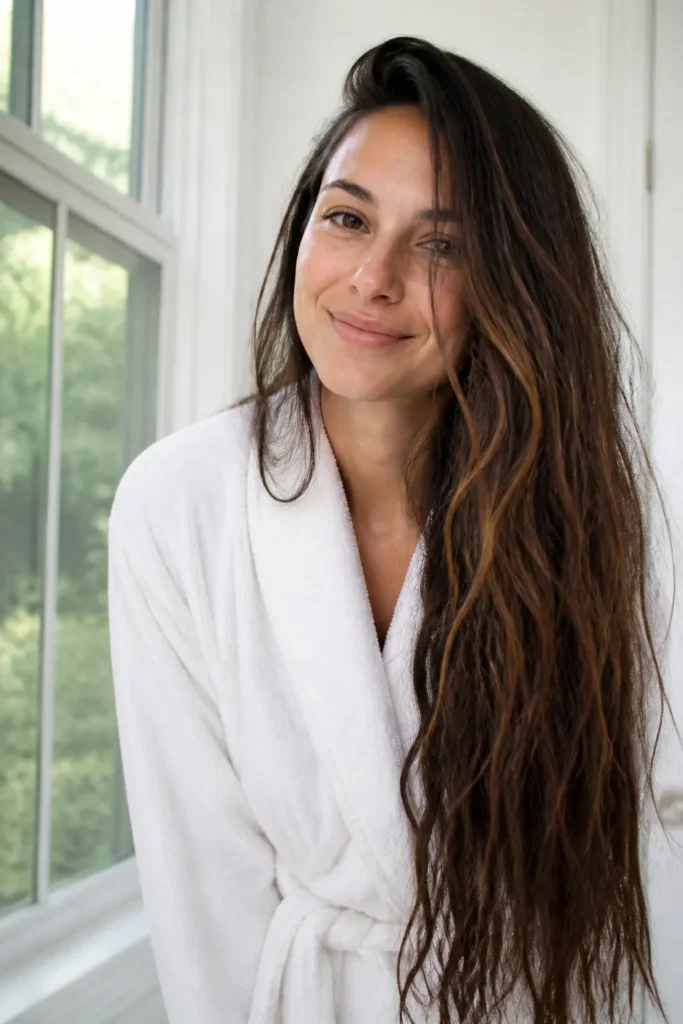
11. Air-Dry Long Layers
Some mornings you don’t have time for heat styling at all, and that’s fine. Air-dry long layers are a styling routine, not a new cut: it’s how you get layered long hairstyles for women in 30s to dry into something you actually like, instead of a frizzy triangle. The secret is what you do in the first five minutes after your shower, not what you do later.
Who it suits: wavy and slightly curly hair air-dries best, because your natural texture does half the work. Straight hair can wear it too, but expect a softer, flatter result, which is still perfectly fine for a casual day. If your hair is very curly, you’ll want a bit more definition work, but the same principles apply.
How to do it: after your shower, squeeze out water with a soft towel, never rub. Work a leave-in cream or curl cream through the mid-lengths and ends, then scrunch gently upward a few times. Part your hair where you want it to sit, and then leave it alone. Seriously. The more you touch it while it dries, the frizzier it gets.
Why it works: most air-dry disasters happen because we keep fussing with wet hair. Touch it once, set the part, and walk away.
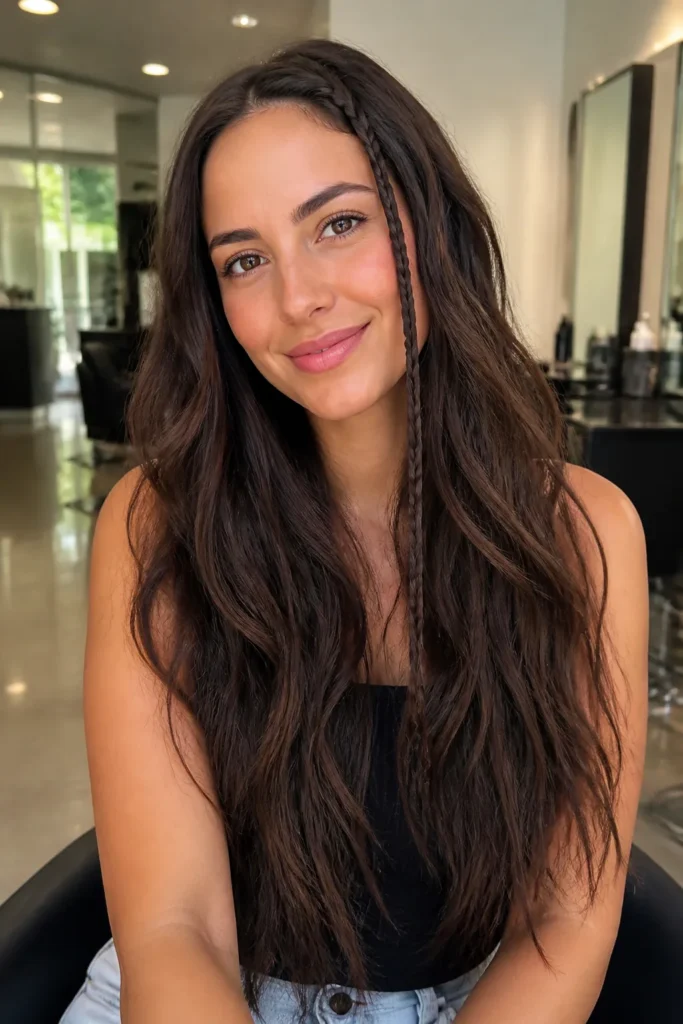
12. Long Hair With a Braided Accent
This is the one for days when you want your long hairstyles for women in 30s to look like you tried, even though you barely did. A braided accent means one or two small braids woven into otherwise loose hair: a thin braid along the hairline, a small braid pulled back from each temple, or a single loose braid down one side. It’s an evening look, a weekend look, a “I’m going somewhere nice” look.
Who it suits: anyone with long hair and ten spare minutes. It works on straight, wavy, and curly hair, and it’s especially lovely if you have highlights or dimension in your hair, because the braid shows off the different tones. If your hair is very fine, keep the braids thin and loose, or they can look sparse.
How to do it: take a small section near your temple, braid it loosely, and secure it with a tiny clear elastic. Then either let it hang free among the rest of your hair, or pin it back behind your ear. If you want a softer look, tug gently at the edges of the braid to loosen it up after you’ve secured it.
Styling tip: braid on second-day hair if you can, because clean hair is slippery and the braid slides out. A little texture spray on the section first gives it grip.
Which One Should You Pick?
If you’re standing in the salon chair right now trying to decide, here’s the shortcut. Start with your hair type, then your lifestyle, and let those two answers choose for you.
Fine hair: go for the blunt cut, the deep side part, or long layers kept long and minimal. All three protect your fullness while still giving you shape. Thick hair: long layers, the V-cut, or the grow-out friendly cut will take the weight out without losing your length. Wavy or curly hair: air-dry long layers, soft lived-in waves, and face-framing layers work with your texture instead of against it.
Now the lifestyle question. If you style your hair most mornings and enjoy it, the bouncy blowout and soft curls at the ends will reward you. If you have ten minutes and a long to-do list, the grow-out friendly cut, air-dry layers, and the deep side part are your friends. And if you’re growing your hair out or you just love it long, the V-cut and the blunt cut keep every inch while still looking like a real haircut.
One last honest note: you don’t have to pick just one. Most of us end up with a base cut, like long layers or a blunt cut, and then rotate through the styling ideas depending on the day. That’s the whole point of long hairstyles for women in 30s. It should bend around your life, not the other way around.
Frequently Asked Questions
How often should I trim long hair?
Every eight to twelve weeks is the sweet spot for most long cuts. Blunt cuts need the shorter end of that range, because split ends show fast on a straight line. Grow-out friendly cuts can stretch to twelve weeks comfortably. If you notice tangling at the ends or your hair won’t hold a style the way it used to, you’re overdue, even if the calendar says otherwise.
Can long layers work on fine hair?
Yes, but the layers need to stay long and few. Two or three blended layers, with the shortest still past your collarbone, give you movement without thinning out your ends. What you want to avoid is short, choppy layers, which can make fine hair look thinner instead of fuller.
Will a V-cut make my hair look thinner?
A shallow V won’t, but a steep one can, especially on fine hair. The V shape removes hair from the sides while keeping length at the center back, so if your hair is fine, ask for a soft, subtle V and keep the sides as full as possible. On thick hair, the V-cut usually makes hair look better, not thinner, because it removes bulk.
How do I keep long hair from going flat on top?
The fastest fixes are a deep side part, blow drying your roots in the opposite direction before sweeping them over, and a volumizing mousse applied only at the roots on damp hair. What doesn’t work is piling on heavy oils or serums near the scalp, which weigh everything down. Keep the rich products on your ends, where your hair actually needs them.
Is long hair high maintenance in your 30s?
It doesn’t have to be. The cut does most of the work: long layers, a grow-out friendly shape, and a good air-dry routine mean most days need ten minutes or less. Long hair becomes high maintenance when the cut fights your texture or your schedule. If your routine feels like a chore, that’s usually a sign the cut needs adjusting, not that you need more products.
For the full picture, see our hairstyles and haircuts guide.
The Bottom Line
Long hair in your 30s is not about having the patience for an hour of styling. It’s about a cut that moves, a routine that fits your mornings, and a few styling tricks you can rotate through the week. Pick the base cut that matches your hair type, steal one or two styling ideas from this list, and let the rest go. Your hair should make your life easier, not busier.
If you’re still deciding between cuts, start with long layers. They’re the most forgiving base on this list, and every styling idea here works on top of them. And if you want more hair ideas, the curtain bangs guide and the claw clip styles on this site pair beautifully with long hair when you want a change without losing your length.