
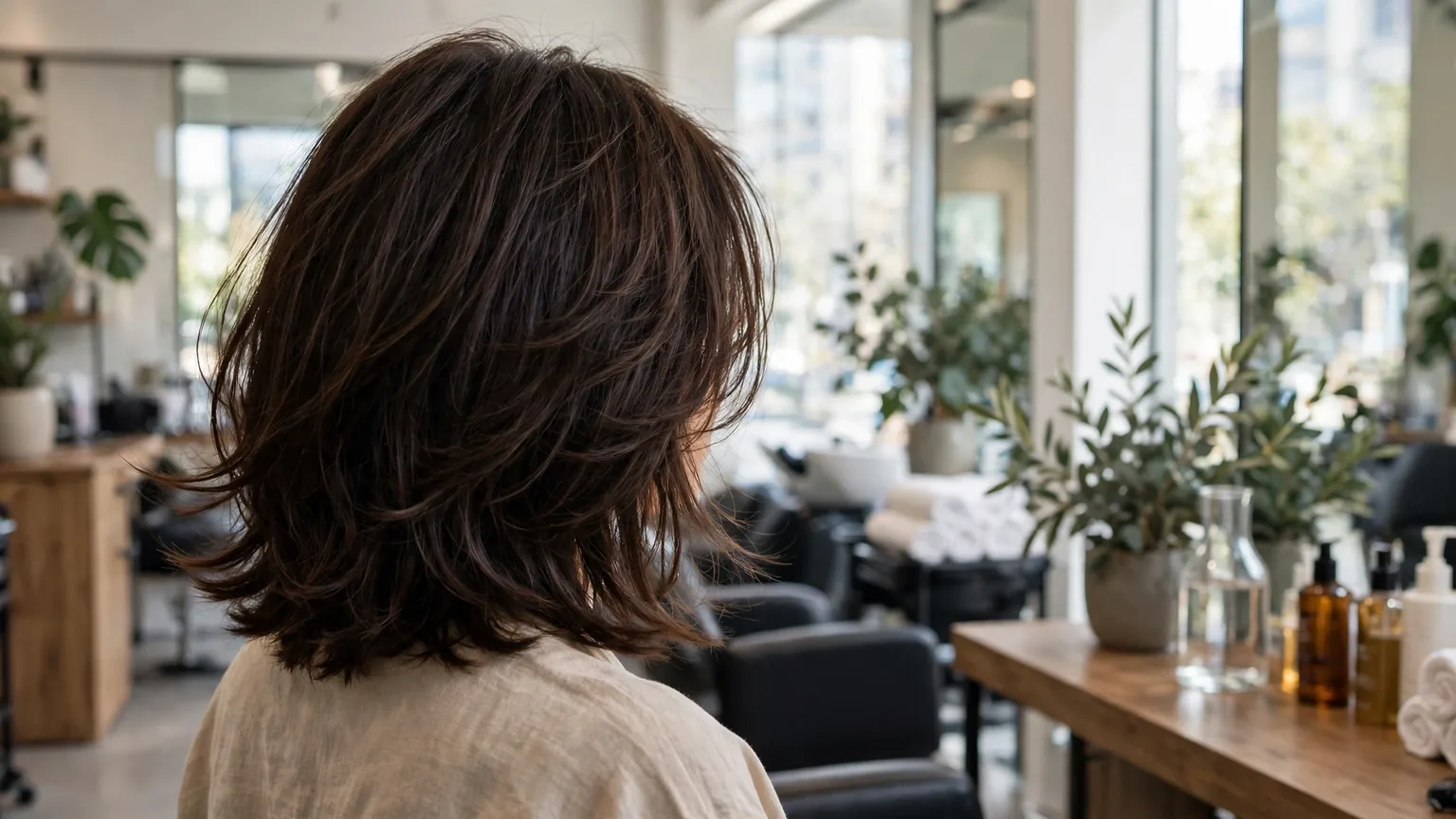
A long layered bob is a bob that falls at or just below the collarbone, with layers cut through the length to add movement, shape and volume without losing length. Long layered bob haircuts suit women in 30s because the length keeps styling options open, from a smooth blowout to a loose wave, while the layers stop the cut from looking heavy or flat. The style works on straight, wavy and curly hair, and the layers can be placed to flatter oval, round, square and heart-shaped faces. This guide covers ten versions of the cut, with what to ask for at the salon and how to style each one at home.
The long layered bob is having a moment because it sits between two trends: the polish of a bob and the movement of long layers. It is short enough to feel fresh and long enough to tie back on busy days, which makes it a practical choice for women in 30s who want a cut that works for the office, for weekends and for evenings out. Before booking, save two or three photos of the version you want and bring them to the appointment. A photo shows the length, the layer placement and the finish better than words alone. Ask the stylist how the layers will sit with your hair texture, and how often the cut will need a trim to hold its shape. For a wider look at bob and layered styles, see the full guide.
1. The Classic Face-Framing Long Layered Bob
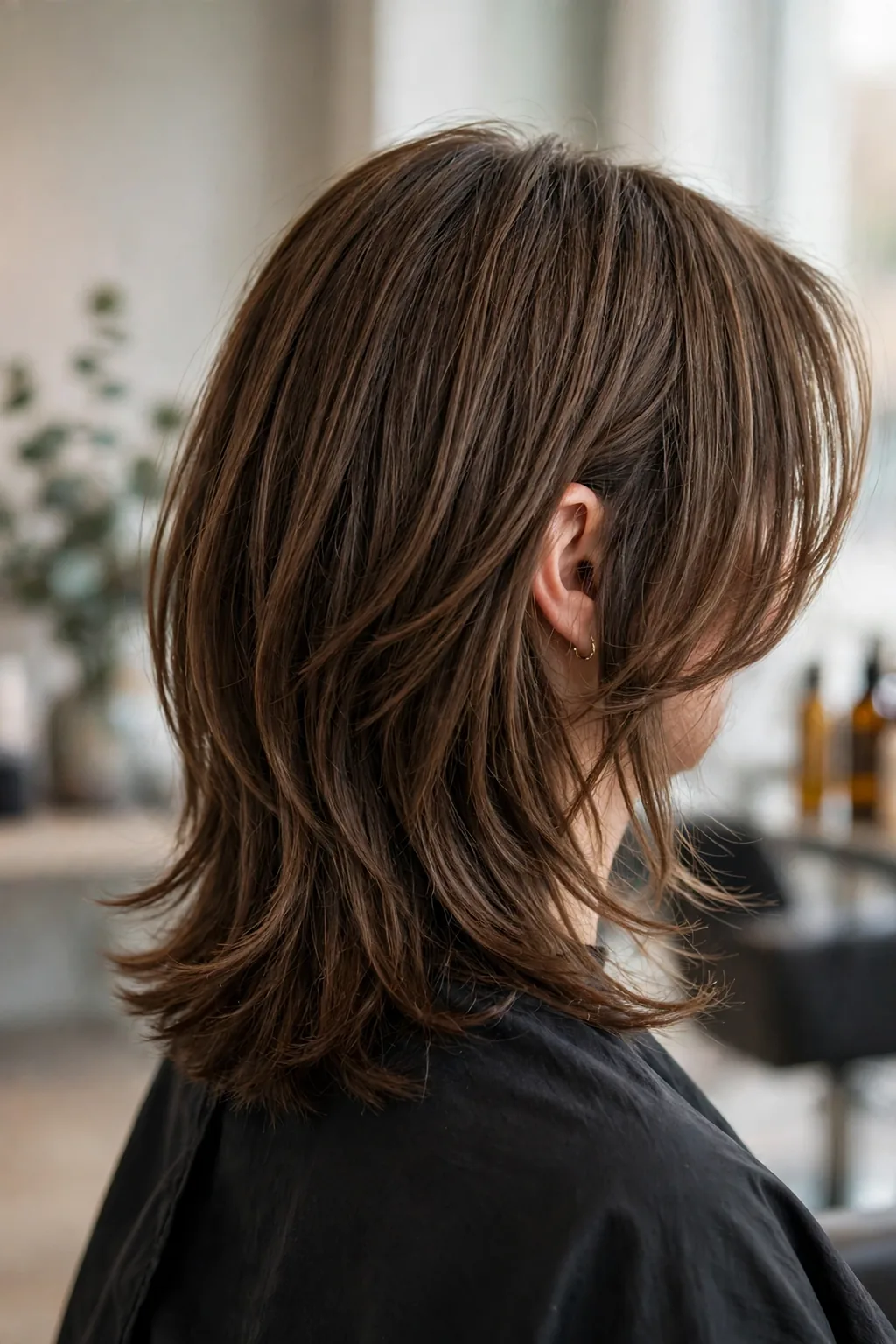
The classic face-framing long layered bob is the starting point for the whole family of cuts in this guide. The length sits at or just below the collarbone, and the layers begin around the cheekbones, getting gradually longer toward the back. The front pieces frame the face and soften the jaw, while the back keeps enough length to feel like a bob rather than a short cut. The result moves when you turn your head, but still looks neat when left to dry on its own.
This version flatters oval and heart-shaped faces most, because the face-framing layers draw attention to the cheekbones and balance a narrower chin. It also works on square faces, since the soft layers break up a strong jawline. Straight and slightly wavy hair show the layers best. Fine hair benefits from the movement, and medium hair holds the shape with little effort. Thick hair can wear it too, as long as the layers stay long enough to avoid bulk at the sides.
At the salon, ask for a long layered bob with face-framing layers that start at the cheekbone, and a perimeter blunt enough to hold weight at the ends. Ask the stylist to keep the shortest layer no higher than the cheekbone, so the cut can still be tied back. Bring a photo that shows the length from the side. For more on choosing layers by face shape, see the layered haircuts guide.
Styling at home starts with a heat protectant and a round brush. Blow dry the front sections forward and away from the face, rolling the brush under at the ends. For a straighter finish, run a flat iron through the lengths and bend the ends under slightly, then finish with a light texturizing spray. On second-day hair, dry shampoo at the roots and a quick pass over the front pieces is enough.
2. Long Layered Bob Haircuts With Curtain Bangs
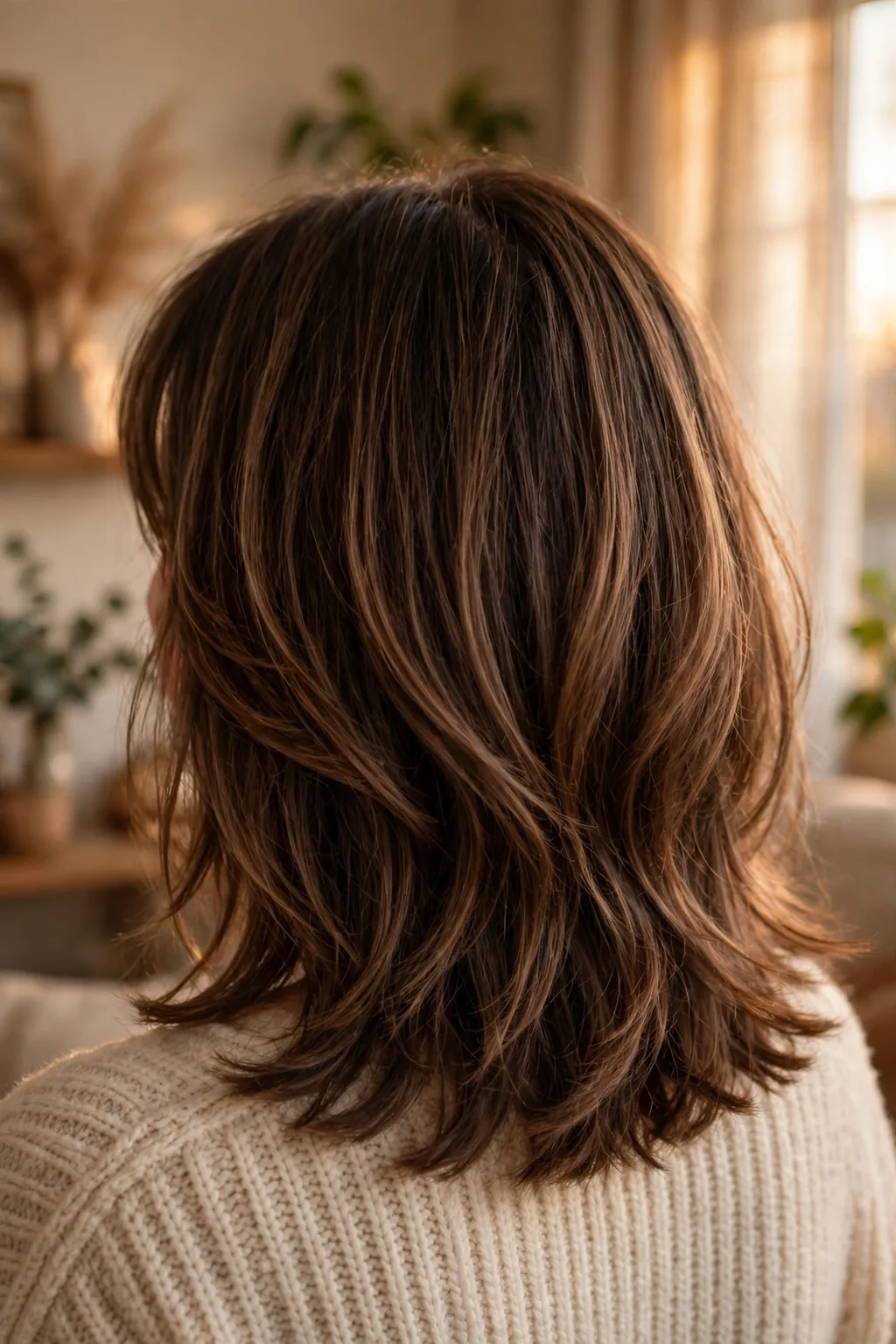
Curtain bangs are the softest way to add a fringe to a long layered bob. The bangs are parted in the centre and swept to each side, blending into the face-framing layers instead of sitting as a separate block. The longest pieces reach the cheekbones or the jaw, so they connect with the rest of the cut and grow out gracefully. The overall effect is romantic and relaxed, with movement around the face and length through the back.
This version flatters almost every face shape. On round faces, the centre part and the longer fringe pieces create a vertical line that makes the face look longer. On square faces, the soft sweep breaks up the jawline. On long faces, the fringe shortens the forehead and adds width at the cheekbones. Straight, wavy and slightly curly hair all work, as long as the fringe is cut to suit the natural texture. Fine hair gets volume at the front, and thick hair gets a softer outline.
At the salon, ask for curtain bangs that blend into the face-framing layers of the long layered bob, with the shortest piece at the brow and the longest piece at the cheekbone or jaw. Ask the stylist to cut the fringe dry if your hair has a wave, so the length is judged as it will actually sit. Bring a photo that shows the fringe from the front. Ask how the fringe will grow out and whether it needs a trim between full appointments, since bangs usually need attention sooner than the rest of the cut. For a full guide to the fringe itself, see the curtain bangs guide.
Styling at home takes a round brush and a little patience. Blow dry the fringe forward, then sweep each side away from the centre part, rolling the brush under at the ends. A flat iron can smooth the fringe, but bend it outward slightly rather than pressing it flat, so it keeps its curve.
3. Long Layered Bob Haircuts for Fine Hair
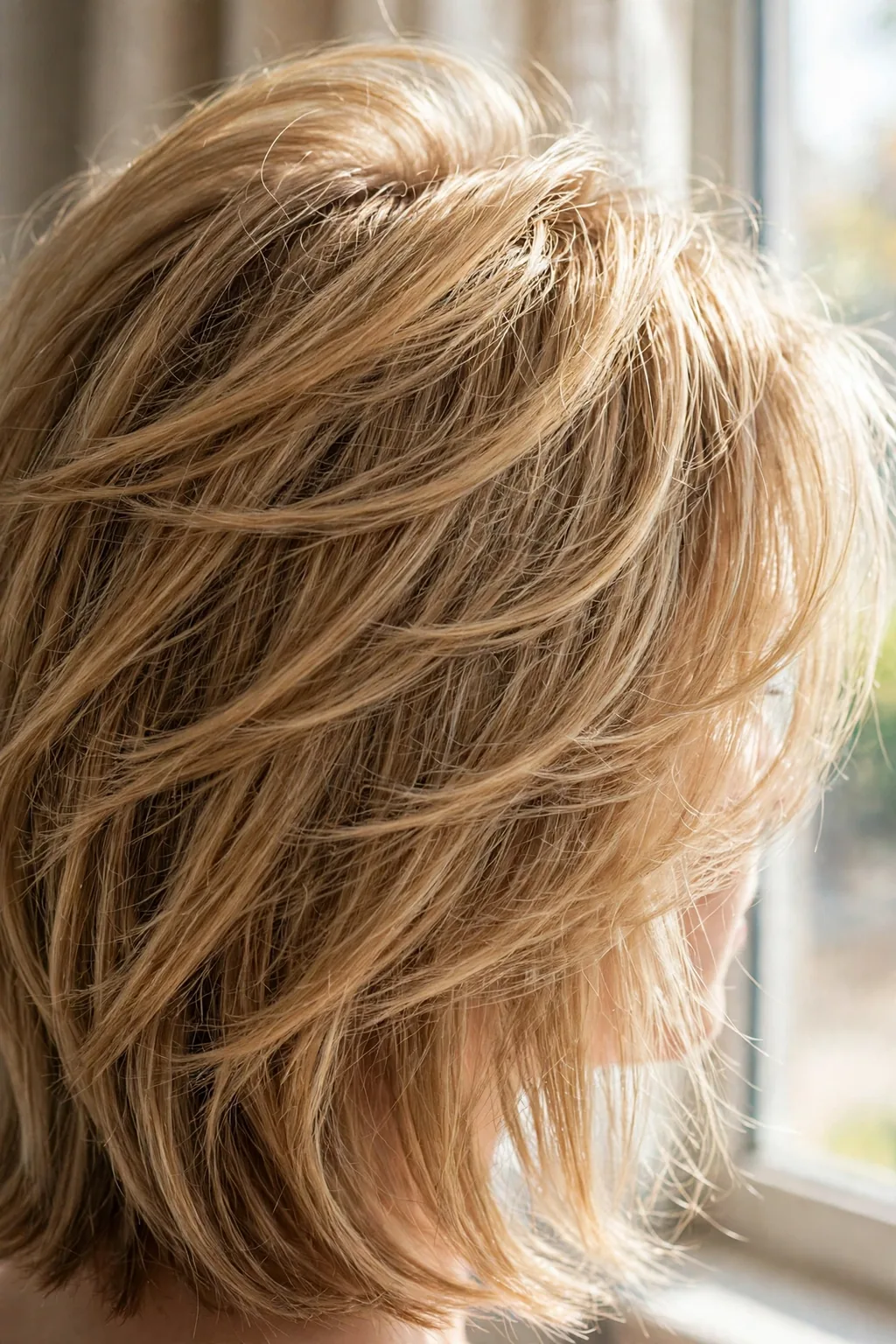
Fine hair is often told to avoid layers, but a long layered bob cut the right way can make fine hair look thicker, not thinner. The trick is restraint. The layers stay long and few, the ends stay blunt, and the shortest layer sits no higher than the chin. That keeps weight at the bottom of the cut, which is what makes fine hair look full, while the layers through the top and sides add lift and movement. When they are placed with care, the same hair looks twice as thick.
This version flatters oval, heart and long faces, since the blunt ends add width at the jaw and the layers add volume at the crown. It suits straight and slightly wavy fine hair best, because the cut relies on a clean line to create the impression of thickness. It is less suited to very curly fine hair, where the layers can make the curls look sparse. Women in 30s who have always had fine hair often find this the most wearable version of the bob, because it needs little product and holds its shape between washes.
At the salon, ask for a long layered bob with minimal layering, blunt ends and the shortest layer at chin length or below. Ask the stylist not to thin the ends or razor them, since both remove the weight that makes fine hair look full. Bring a photo that shows the ends clearly, because the blunt perimeter is the whole point of this version. A trim every six to eight weeks keeps the ends looking thick.
Styling at home starts with a volumizing mousse worked through damp roots, then a blow dry with the head tipped forward to lift the roots. A round brush rolled under at the ends gives the bob its shape, and a light texturizing spray through the mid-lengths adds grip without weight. Avoid heavy oils and thick creams, which flatten fine hair.
4. Long Layered Bob Haircuts for Thick Hair
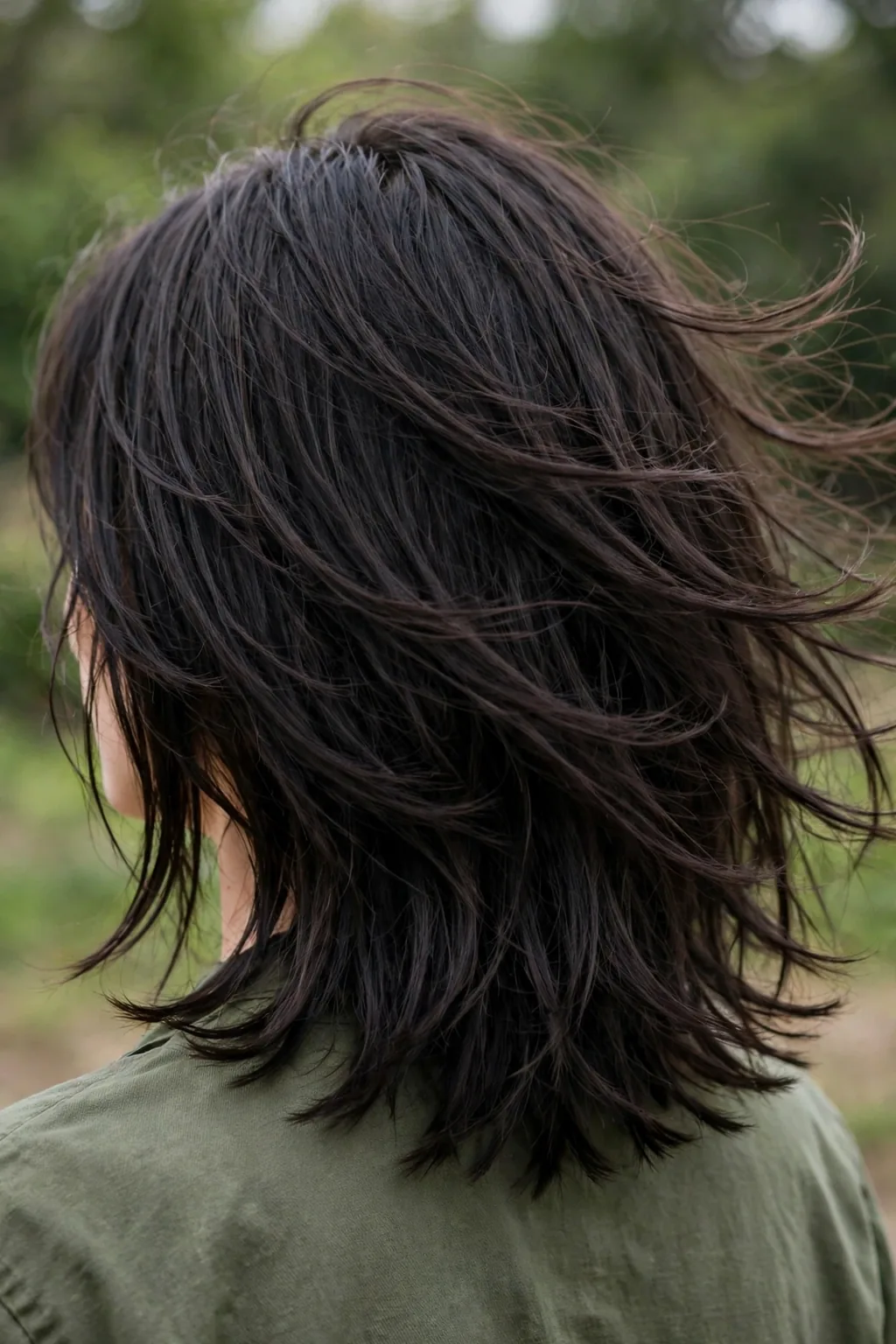
Thick hair and a bob can be a difficult combination, because a blunt cut on thick hair often turns into a heavy triangle. A long layered bob solves that problem by removing weight from the inside of the cut while keeping the length. The layers are cut through the interior, rather than only at the surface, so the bulk is reduced without shortening the outline. The ends stay long enough to sit neatly, and the shape stays narrow at the sides instead of widening toward the bottom. The result is a bob that looks light and moves freely, even on hair that is dense and heavy.
This version flatters oval, square and heart-shaped faces, since the internal layers stop the cut from adding width at the jaw. It works on straight, wavy and curly thick hair, as long as the layers are placed to suit the natural texture. Straight thick hair shows the layering most clearly, while wavy thick hair gets a softer, more lived-in shape.
At the salon, ask for a long layered bob with internal layers to remove weight, and a perimeter that stays long enough to hold the shape. Ask the stylist to avoid thinning shears on the ends, since they can create frizz on thick hair, and to check the shape with the hair dry as well as wet, because thick hair changes as it dries. Bring a photo that shows the cut from the back, since the back is where the weight sits.
Styling at home starts with a smoothing cream or a light leave-in conditioner on damp hair, worked through the mid-lengths and ends. Blow dry with a large round brush, or let the hair air dry and smooth the top layer with a flat iron once it is dry. A small amount of hair oil on the ends tames frizz without weighing the cut down. On humid days, a light anti-frizz spray keeps the shape.
5. Wavy Long Layered Bob
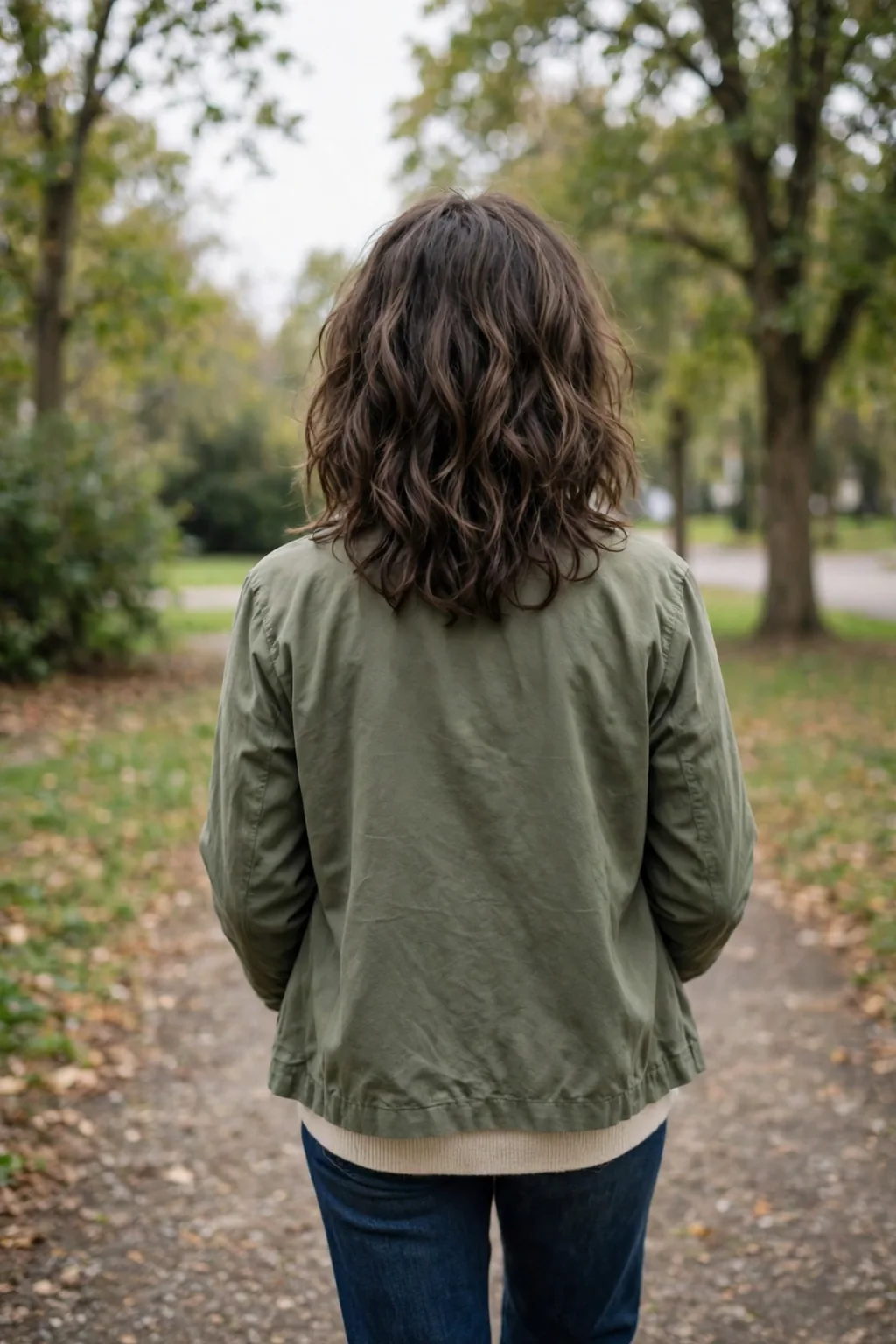
A wavy long layered bob works with the hair instead of against it. The layers are cut to follow the natural wave pattern, so each wave has room to form and the cut holds its shape without daily heat styling. The length sits at or just below the collarbone, and the layers are longest at the back and shortest around the face, which keeps the waves from bunching up at the ends. The result is a bob that looks effortless, with texture through the lengths and soft movement around the face. It is the version to choose when your hair already has a wave and you want a cut that makes the most of it.
This version flatters oval, round and heart-shaped faces, since the waves add width at the right places and soften the outline of the face. It suits naturally wavy hair best, from a loose bend to a defined wave, and it also works on straight hair that holds a wave after styling. Women in 30s who want a wash-and-go cut often land on this version, because it looks finished with minimal effort.
At the salon, ask for a long layered bob with layers cut to follow the natural wave, and ask the stylist to check the cut with the hair dry so the wave pattern is visible. Bring a photo of the wave you want, not just the cut, since the finish matters as much as the shape. Ask whether the layers should be cut with the hair wet or dry, and how the cut will look on days when the hair is worn straight.
Styling at home starts with a wave-enhancing cream or a light mousse on damp hair. Scrunch the lengths upward, then let the hair air dry or use a diffuser on a low heat setting. A sea salt spray adds texture on days when the wave needs help, but use it lightly so the hair does not feel dry.
6. Curly Long Layered Bob Haircuts
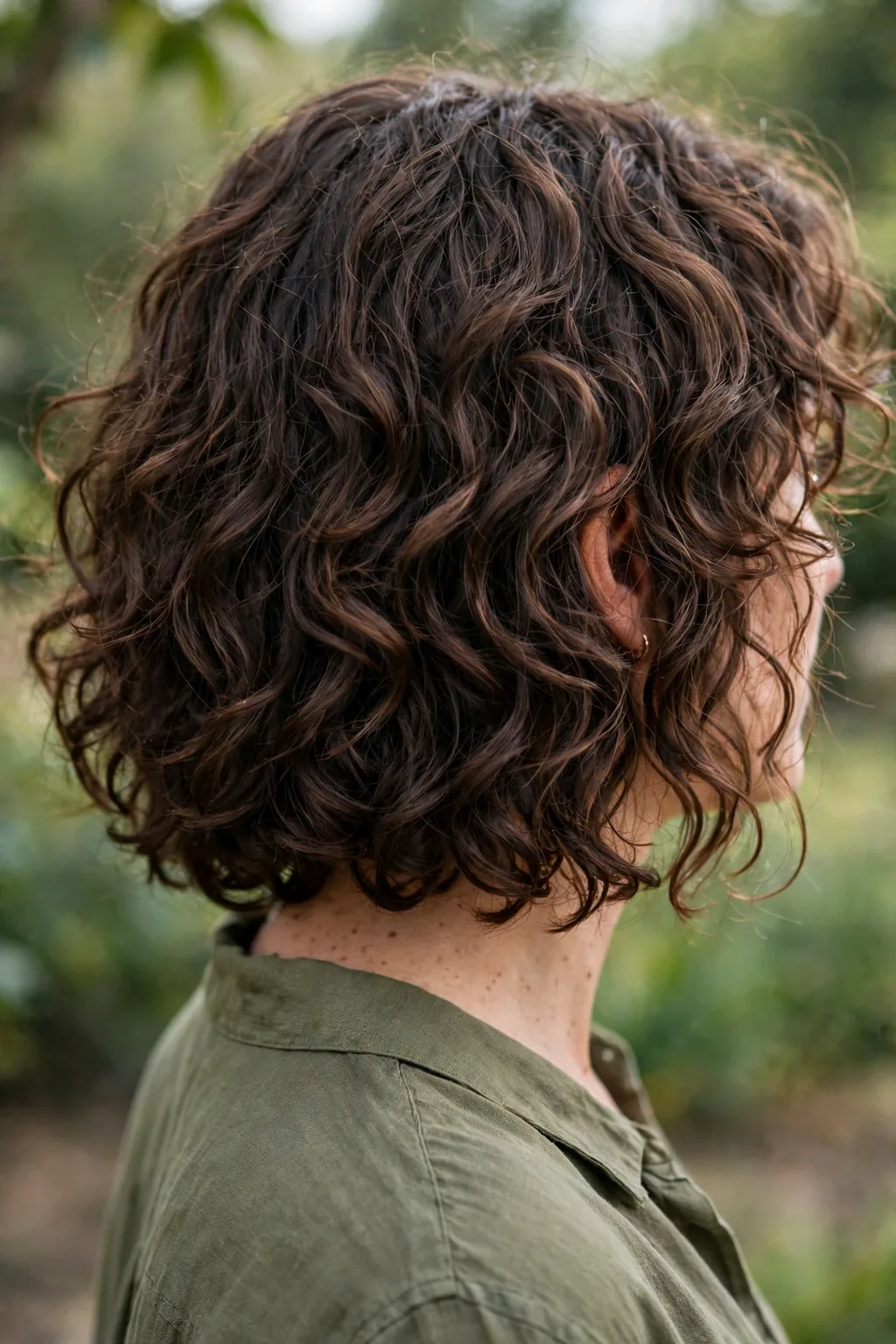
A curly long layered bob is cut to give curls shape without creating the wide triangle that happens when curly hair is cut in one length. The layers are placed through the crown and sides to distribute volume evenly, so the curls sit in a rounded shape rather than piling up at the bottom. The length stays at or below the collarbone, which gives the curls enough weight to hang nicely instead of springing up short. The result is a bob that shows off the curl pattern, with definition through the lengths and softness around the face.
This version flatters oval, square and heart-shaped faces, since the rounded shape balances a strong jaw and softens a long face. It suits curly and coily hair, from loose curls to tight coils, as long as the layers are placed for the specific curl pattern. Women in 30s with curly hair often find this the most practical bob, because the layers make wash day easier and the cut holds its shape for weeks.
At the salon, ask for a long layered bob cut for curly hair, with layers that shape the curls and a length that accounts for shrinkage. Ask whether the stylist cuts curly hair dry, curl by curl, since that shows the true length of each curl. Bring a photo of curls with a similar pattern to your own, not just any curly bob, since curl types behave very differently. Ask how much length to leave to allow for shrinkage.
Styling at home starts with a leave-in conditioner and a curl cream on soaking wet hair. Scrunch upward, then diffuse on a low heat setting or let the hair air dry without touching it. A light gel can add definition, and a small amount of oil on the ends seals in moisture. Avoid brushing dry curls, since that breaks the pattern and creates frizz.
7. Long Layered Bob With Flipped Ends
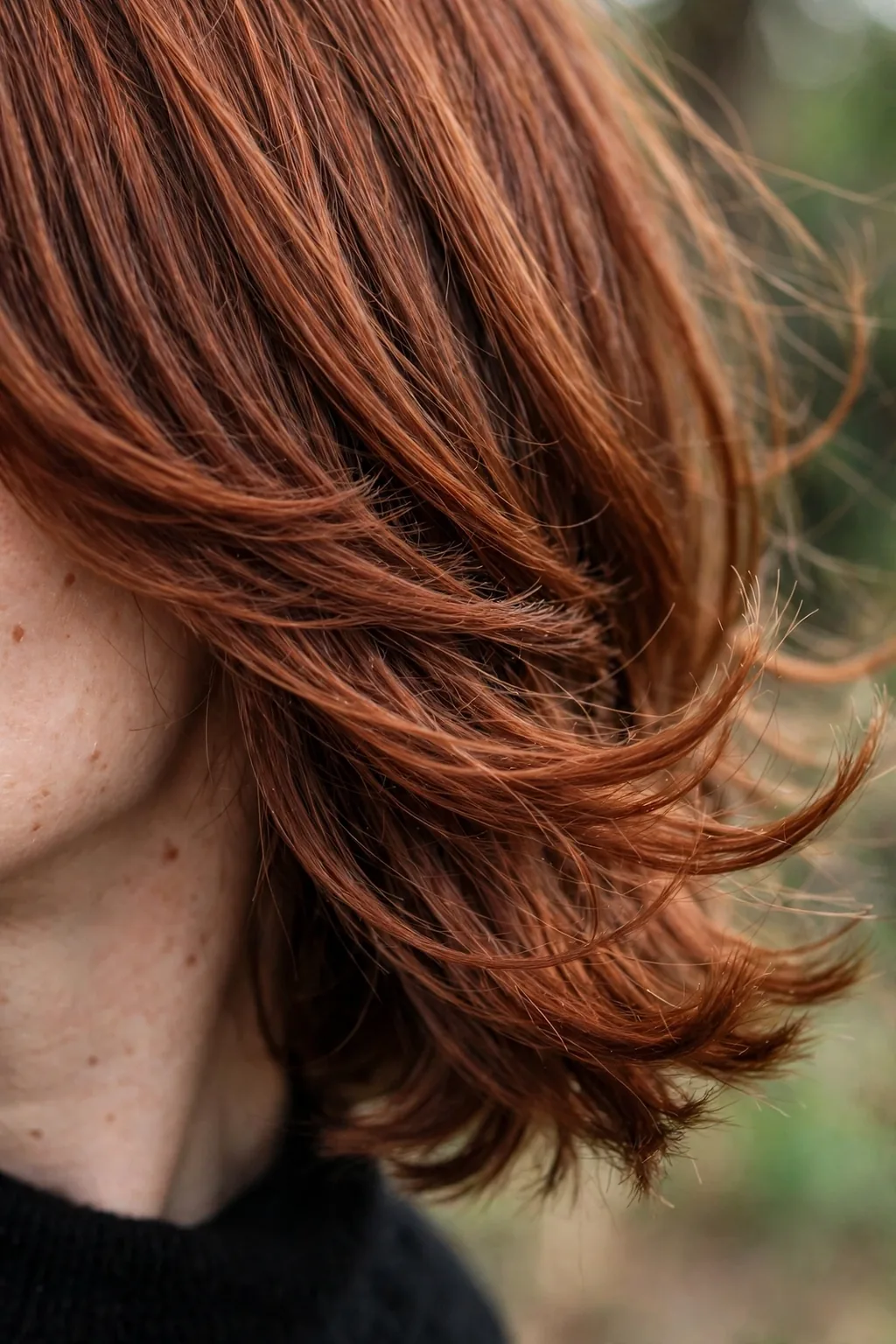
Flipped ends give a long layered bob a retro, playful finish. The ends of the hair turn outward instead of curling under, which creates a light, bouncy outline and shows off the layers. The flip is usually strongest at the front, where the face-framing pieces turn away from the face, and softer through the back, where the ends lift just enough to show movement. The length stays at the collarbone, and the layers are kept long so the flip reads as a deliberate finish rather than a mistake. It is the version to choose when you want a bob that looks styled and a little bit fun, without adding bangs or changing the length.
This version flatters oval and square faces most, because the outward flip adds width at the jaw and balances a strong or narrow chin. It also works on round faces, since the flip draws the eye outward and makes the face look less full. Straight and slightly wavy hair hold the flip best, because the ends need to be smooth enough to turn cleanly.
At the salon, ask for a long layered bob with flipped ends, and ask the stylist to show you how much of the flip comes from the cut and how much comes from styling. Bring a photo that shows the ends clearly from the front and the side, since the flip is the whole point of this version.
Styling at home starts with a round brush and a blow dryer. Blow dry each section with the brush rolling outward at the ends, away from the neck, and hold the heat on the ends for a few seconds to set the flip. A flat iron can create the same effect by turning the iron outward at the ends, but keep the iron moving so the hair does not crease.
8. Side-Part Long Layered Bob
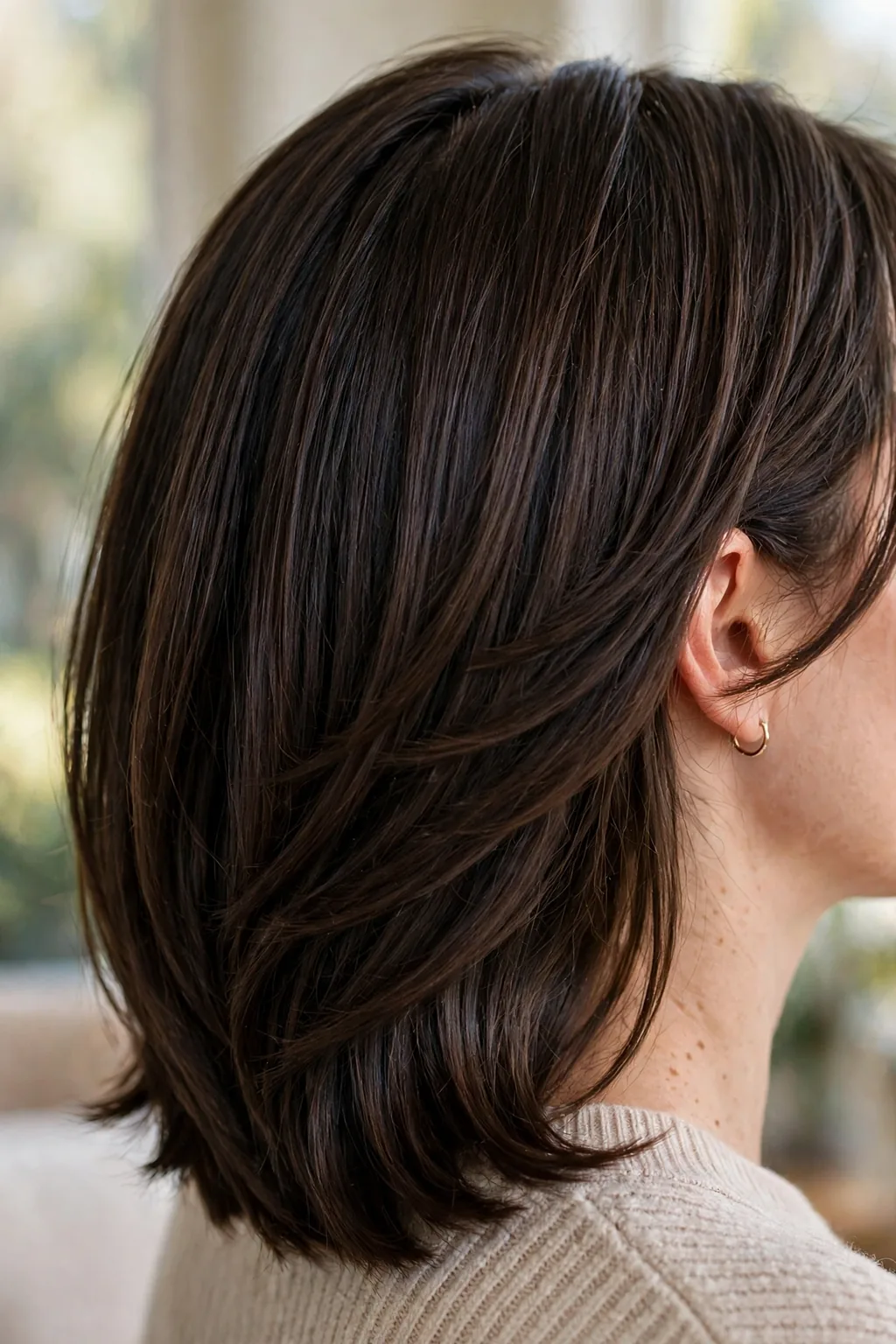
A side part changes a long layered bob without changing the cut itself. The part is moved deep to one side, which creates asymmetry: one side of the bob falls longer and fuller, while the other side tucks neatly behind the ear. The layers are cut to work with the part, so the longer side has more volume at the crown and the shorter side stays smooth. The length stays at the collarbone, and the finish can be smooth, wavy or softly curled. It is the version to choose when you want a bob that looks different from every angle, and when you like a part that does some of the styling work for you.
This version flatters round and square faces most, because the asymmetry breaks up the symmetry of the face and the longer side creates a diagonal line that makes the face look longer. It also works on oval faces, where any part suits, and on heart-shaped faces, where the volume on one side balances a narrow chin. Straight and wavy hair show the part best, since the line stays visible.
At the salon, ask for a long layered bob cut with a deep side part, and ask the stylist to check the layers with the part in place, since the layer placement depends on where the part sits. Bring a photo that shows the part from the front, and tell the stylist which side you naturally part on, since fighting the natural part makes daily styling harder. Ask whether the layers on the longer side should be kept longer to hold the volume, and how the cut will look if you switch to a centre part.
Styling at home starts with parting the hair while it is damp, on the side you chose. Blow dry the longer side with a round brush for volume at the roots, and smooth the shorter side back behind the ear. A flat iron can polish the lengths, and a light serum keeps the shorter side sleek.
9. Long Layered Bob Haircuts for Round Faces
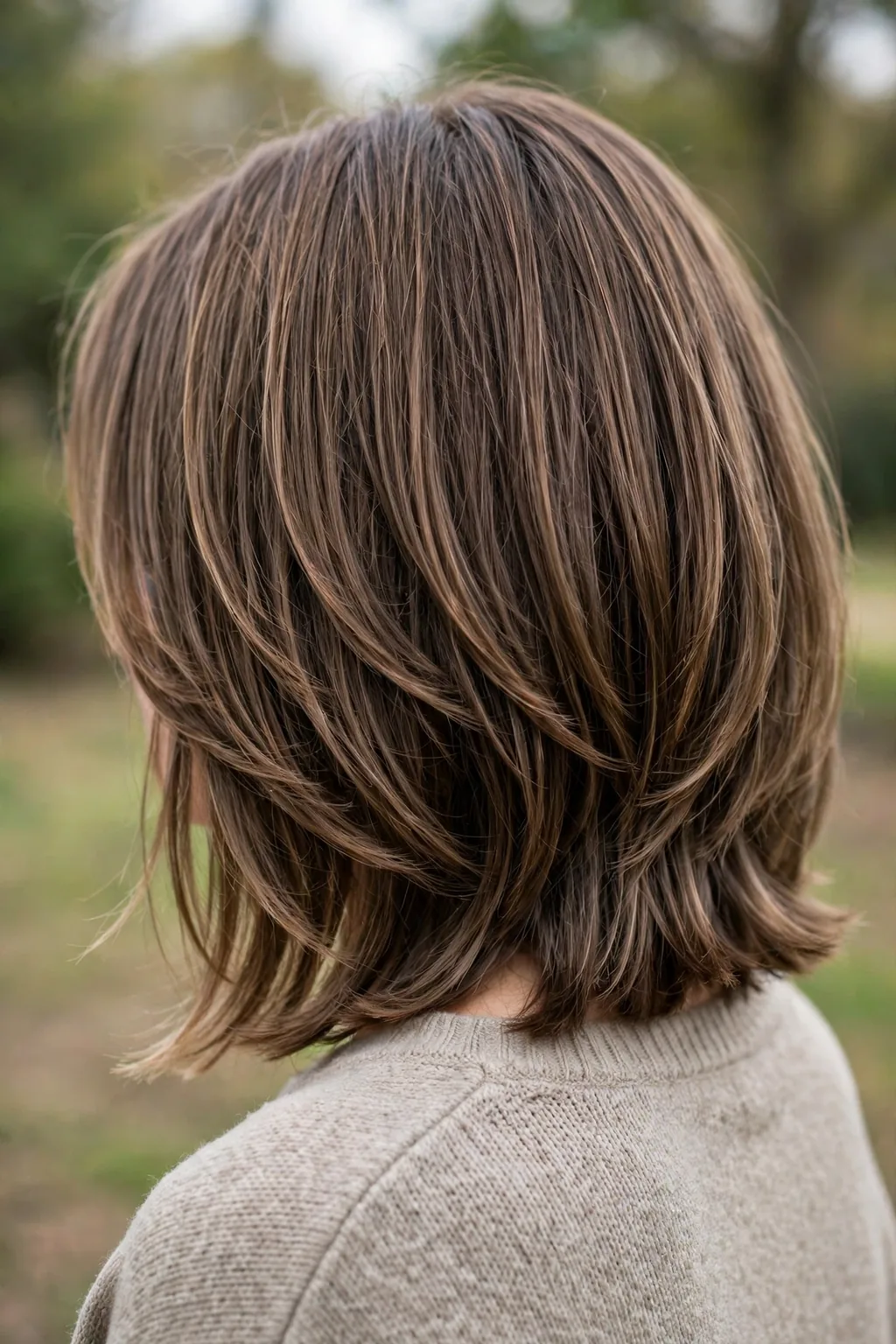
A long layered bob for round faces is cut with one goal: length. The front layers are kept long, falling below the chin, so they create vertical lines that make the face look longer and slimmer. The layers through the crown add height, while the sides are kept flat, so no extra width is added at the cheekbones. The length sits at or just below the collarbone, and the finish is usually smooth or softly waved, since a smooth finish shows the long lines best. It is the version to choose when you have a round face and want a bob that flatters it, rather than one that makes it look fuller.
This version flatters round faces first, and it also works on square faces, where the long front layers soften the jaw. It suits straight and wavy hair best, since the long lines stay visible and the cut holds its shape. Fine hair benefits from the length, since the ends keep their weight, and medium hair holds the smooth finish well.
At the salon, ask for a long layered bob with front layers that fall below the chin, and ask the stylist to keep the sides flat and the crown lifted. Bring a photo that shows the cut from the front, since the front view is what matters for this version. Ask whether a centre part or a deep side part suits your face better, since both can work but they create different lines. Ask how the cut will grow out, since the front layers need to stay below the chin to keep the effect.
Styling at home starts with a smooth blow dry. Blow dry the front sections forward and down, using a round brush to keep the ends straight rather than curled under. A flat iron through the lengths gives the smoothest finish, and a light serum adds shine without weight. Avoid adding volume at the sides, since that works against the lengthening effect.
10. The Low-Maintenance Air-Dry Long Layered Bob

The low-maintenance air-dry long layered bob is built for days when there is no time for a blow dry. The layers are cut to work with the natural texture of the hair, so the cut looks finished after a wash, with no heat styling at all. The length sits at the collarbone, and the layers are long and blended, which stops the cut from looking choppy when it dries on its own. The finish depends on the hair: straight hair dries smooth, wavy hair dries with a soft bend, and the cut holds its shape in both cases. It is the version to choose when you want a bob that fits a busy routine.
This version flatters oval, round and heart-shaped faces, since the soft, lived-in shape suits most faces without needing a precise finish. It works on straight and wavy hair best, because those textures dry into a clean shape. Women in 30s with busy mornings often choose this version, because it removes the daily styling step entirely.
At the salon, ask for a long layered bob with lived-in layers that work with the natural texture, and tell the stylist that you plan to air dry it most days. Ask the stylist to check the cut with the hair dry, since that is how it will be worn. Bring a photo that shows the cut air dried, not blow dried, since the two finishes look different. Ask how the layers will sit as the hair grows, and what product to use, since the right leave-in makes the difference between a cut that air dries well and one that does not.
Styling at home is simple. Wash, apply a leave-in conditioner or a light styling cream, and let the hair dry without touching it. A small amount of texturizing spray once the hair is dry adds definition, and a root lift spray can be used on days when the top needs volume.
Which One Should You Pick?
The right version depends on three things: face shape, hair type and how much time you want to spend styling. Start with face shape. Oval faces can wear any version in this guide, so choose by hair type and maintenance instead. Round faces do best with the version for round faces, or the side-part bob, since both add length and break up symmetry. Square faces suit the classic face-framing bob, the curtain bangs version and the version for round faces, since all three soften the jaw.
Then look at hair type. Fine hair does best with the version for fine hair, with its blunt ends and minimal layering, and the classic bob works too. Thick hair needs the version for thick hair, with internal layers to remove weight. Wavy hair suits the wavy bob and the air-dry bob, since both work with the natural texture. Curly hair needs the curly version, cut for the curl pattern. Straight hair can wear any version, but the flipped ends and side-part versions show off a smooth finish best.
Finally, be honest about maintenance. The air-dry bob and the wavy bob need the least daily work, since they are designed to be worn as they dry. The classic bob, the side-part bob and the version for round faces need a quick blow dry or a pass with a flat iron. Pick the version that fits the routine you actually have, not the routine you wish you had, and the cut will look good on ordinary days, not only on salon days. For a wider look at bob styles before deciding, compare with the bob hairstyles guide.
Frequently Asked Questions
What is a long layered bob haircut?
A long layered bob is a bob that falls at or just below the collarbone, with layers cut through the length. The layers add movement, shape and volume, while the length keeps the cut versatile enough to tie back, wave or wear smooth. It sits between a classic bob and long hair, which is why it suits so many face shapes and hair types.
Do long layered bob haircuts suit women in 30s?
Yes. Long layered bob haircuts suit women in 30s because the length keeps styling options open and the layers stop the cut from looking heavy or dated. The style works for the office, for weekends and for evenings, and it can be adjusted for straight, wavy and curly hair.
How often do long layered bob haircuts need a trim?
Most long layered bob haircuts need a trim every six to eight weeks to hold their shape. Fine hair and flipped ends show uneven growth sooner, so they sit at the shorter end of that range. Wavy hair and the air-dry version can stretch a little longer, since the texture hides uneven growth.
Can a long layered bob work on fine hair?
Yes, as long as the layers are kept long and few, and the ends stay blunt. Short or thinned layers make fine hair look thinner, so ask the stylist for minimal layering with the shortest layer at chin length or below. A volumizing mousse at the roots and a round brush blow dry help the cut look full. The version for fine hair in this guide is the one to show your stylist.
What should you ask for at the salon for long layered bob haircuts?
Bring two or three photos of the version you want, and tell the stylist your hair type, your face shape and how you plan to style it at home. Ask for the length first, then the layer placement, then the finish. Ask how the layers will sit with your natural texture, how the cut will grow out, and how often it will need a trim. A photo plus those three questions gives the stylist everything needed to cut the version you actually want.
The Bottom Line
Long layered bob haircuts work because they give you the polish of a bob and the movement of long layers in one cut. The length keeps your options open, the layers keep the shape from looking flat, and the ten versions in this guide cover straight, wavy and curly hair, fine and thick hair, and every face shape. Choose the version that matches your hair type and the routine you actually have, bring photos to the appointment, and ask the three questions that matter: how the layers will sit with your texture, how the cut will grow out, and how often it needs a trim. Do that, and the cut will look good on ordinary days, not only on salon days. For the full picture, see the hairstyles guide.