

Short hairstyles for women in 30s work when the cut is shaped for softness, not just for length. A good short cut keeps volume where it flatters, leaves the neckline clean, and uses texture around the face to keep the look feminine. The nine cuts in this guide range from a lean pixie to a shoulder-skimming lob, and each one suits a different face shape and hair type. Every section tells you who the cut suits, what to ask your stylist for, what to avoid, and one styling tip.
Going short is a bigger decision than changing a colour or adding layers, so it helps to know exactly what you are asking for before you sit in the chair. The fear most women name is the same: a short cut that feels severe, boyish, or hard to grow out. The cuts in this guide avoid that by keeping softness in the outline, with movement around the face that keeps a short cut feminine. They are a family of cuts, and the right one depends on your face shape, your hair texture, and how much time you want to spend styling in the morning. Before booking, save two or three photos of the version you want and bring them to the appointment. A photo shows the length, the texture, and the finish better than words alone. Ask the stylist how the cut will grow out, and how often it will need a trim to hold its shape. For a wider look at short and long styles together, see the full guide.
1. The Lean Pixie
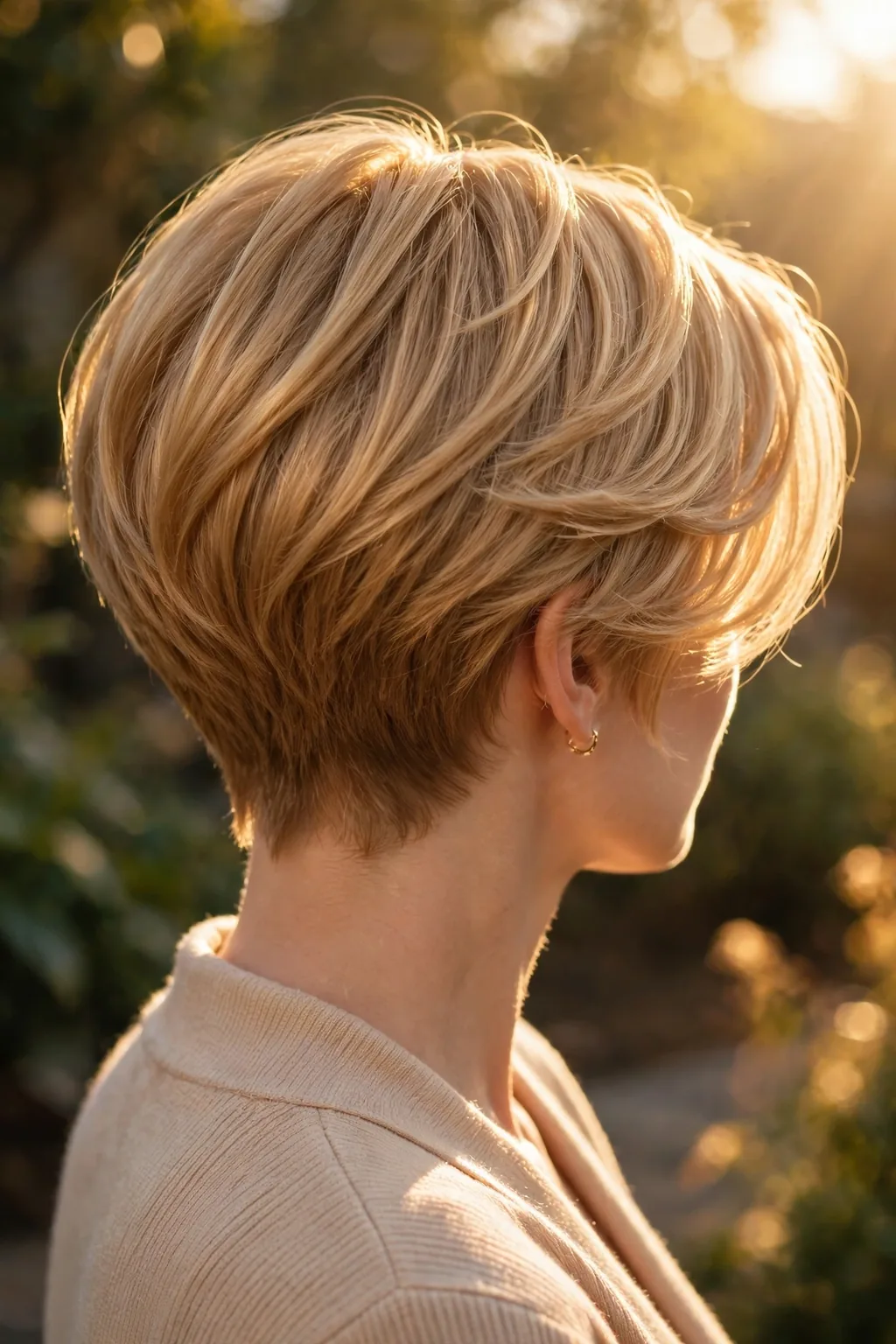
A lean pixie is short at the back and sides, with length kept on top. The top is long enough to sweep to one side, push back, or wear with a soft fringe, and that length is what keeps the cut from looking severe. The sides are tapered rather than shaved, and the nape is neat without being harsh. The result is a cut that looks polished with almost no effort, and that shows off the cheekbones and the neckline.
This version flatters oval and heart-shaped faces most, because the length on top balances a narrow chin and draws attention to the eyes. It also works on square faces, since the soft sweep across the forehead breaks up a strong jawline. It suits straight and slightly wavy hair best, because the cut relies on a clean line and a smooth finish to show its shape. Fine hair often looks thicker in a pixie, since the short lengths stand up at the roots instead of lying flat. Thick hair can wear it too, as long as the sides are thinned enough to keep the outline narrow.
At the salon, ask for a pixie with length on top and tapered sides, and tell the stylist you want the top long enough to sweep across the forehead. Ask how much length to leave at the front, and whether the cut should be done with scissors or a razor, since a razor gives a softer edge on thick hair. Bring a photo that shows the cut from the side, because the side view is where the taper matters most. Ask how often the cut needs a trim, since a pixie grows out faster than a longer cut, usually every four to six weeks.
What to avoid: sides cut too short or too square, which can make the cut look harsh, and a top cut so short that it cannot be swept or styled. Avoid heavy gel, which makes a pixie look stiff and dated.
Styling tip: work a pea-sized amount of light styling cream through damp hair, then blow dry the top forward and to one side with your fingers. A quick pass with a flat iron on the front section adds polish, and a little texturising spray at the roots gives the top lift that lasts all day.
2. The Classic Crop
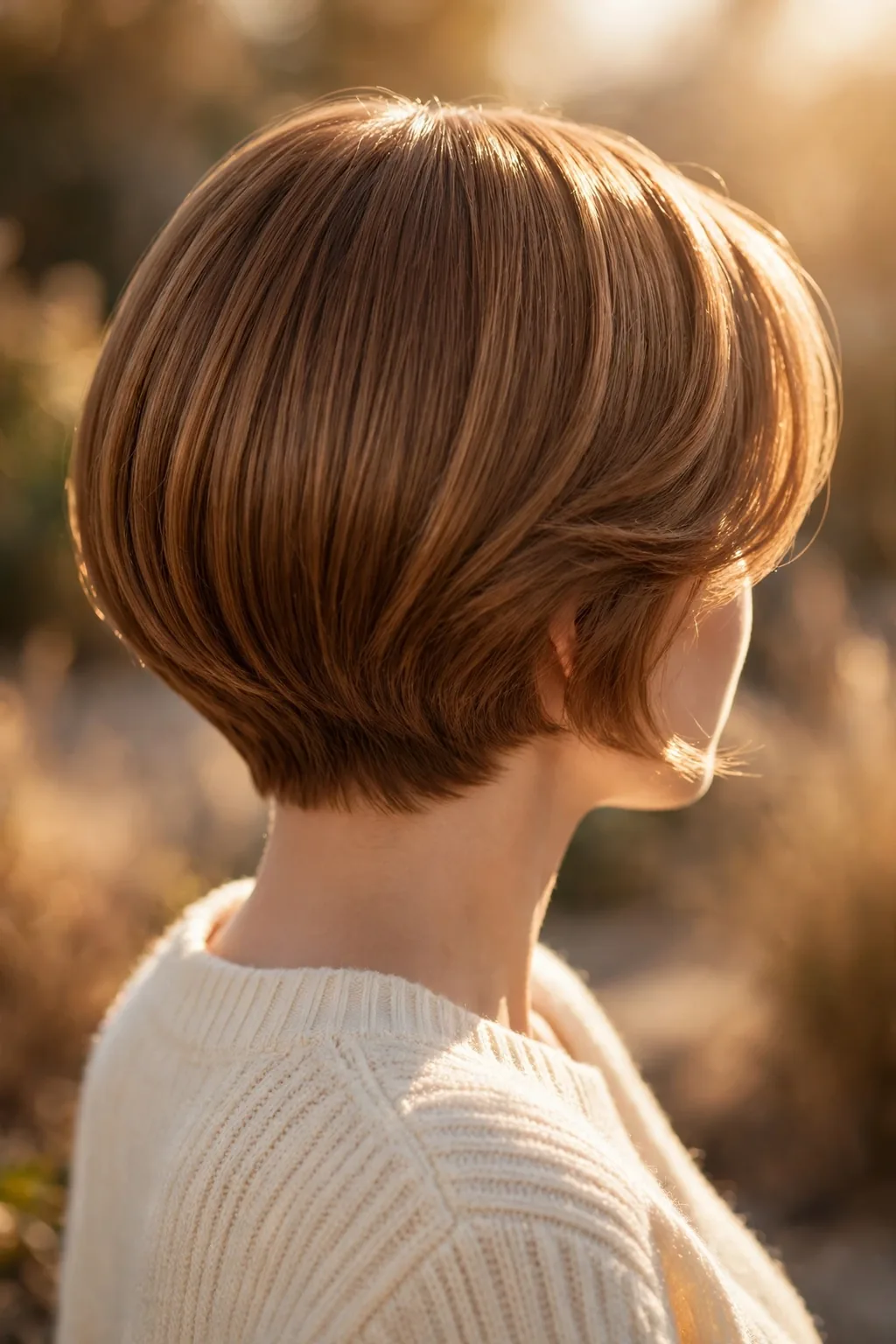
A classic crop is a short cut with even length all round, usually sitting above the ears, with a soft fringe or a side sweep at the front. It is the most structured of the short cuts in this guide, and also the easiest to wear, because there are no long pieces to manage. The shape comes from the cut itself, not from styling, so it looks finished straight out of the shower. The fringe keeps the face soft, and the even outline keeps the cut looking neat as it grows.
This version flatters oval and round faces most. On oval faces, the even length frames the face without adding width. On round faces, a side-swept fringe creates a diagonal line that makes the face look longer. It suits straight and wavy hair best, since the even outline shows clearly on smooth hair. Fine hair benefits from the structure, because the blunt ends make the hair look thicker. Thick hair needs the crop thinned through the interior, or the outline can look heavy.
At the salon, ask for a crop with a soft fringe or a side sweep, and a perimeter that sits above the ears. Ask the stylist whether the fringe should be cut straight across or swept to one side, and how the cut will look with your natural part. Bring a photo that shows the fringe from the front, since the fringe is what makes this cut different from a plain short back and sides.
What to avoid: a fringe cut too short or too straight across, which can look severe, and layers cut too short through the top, which remove the weight that holds the shape. Avoid round brushing the whole head, which can make a crop look puffy.
Styling tip: blow dry with a flat brush, directing the hair forward and down, then smooth the fringe with a flat iron if needed. A small amount of smoothing serum on the ends keeps the outline clean without weighing it down.
3. The Textured Bob

A textured bob is a chin-length cut with layers through the ends, so the outline looks soft and piecey rather than blunt. The length sits at or just below the jaw, and the texture comes from the ends being cut at slightly different lengths, which lets the hair move and separate naturally. The result is a bob that looks lived in rather than sculpted, with movement through the lengths and softness around the face. It is the most forgiving of the bob family, because the texture hides uneven growth and works on most hair types.
This version flatters almost every face shape. On round faces, the length at the jaw and the texture through the ends keep the cut from adding width. On square faces, the piecey ends soften the jawline. On long faces, the width at the jaw adds balance. It suits straight, wavy and slightly curly hair, as long as the texture is cut to suit the natural pattern. Fine hair gets movement without losing weight at the ends, and thick hair gets a lighter outline.
At the salon, ask for a textured bob with layers through the ends and a length at the jaw, and ask the stylist to cut the texture with the hair dry if your hair has a wave, so the length is judged as it will actually sit. Bring a photo that shows the ends clearly, since the texture is the whole point of this version. Ask how much texture is right for your hair type, since too much on fine hair can make the ends look thin.
What to avoid: texture cut too high up the head, which removes weight and makes the bob look thin, and a length cut above the jaw on a round face, which adds width where you do not want it. Avoid heavy wax, which clumps the texture into sticky pieces.
Styling tip: work a texturising spray through damp hair, scrunch the ends upward, and let the hair air dry or diffuse on a low heat setting. A flat iron through a few random pieces adds definition without flattening the texture.
4. The Lob
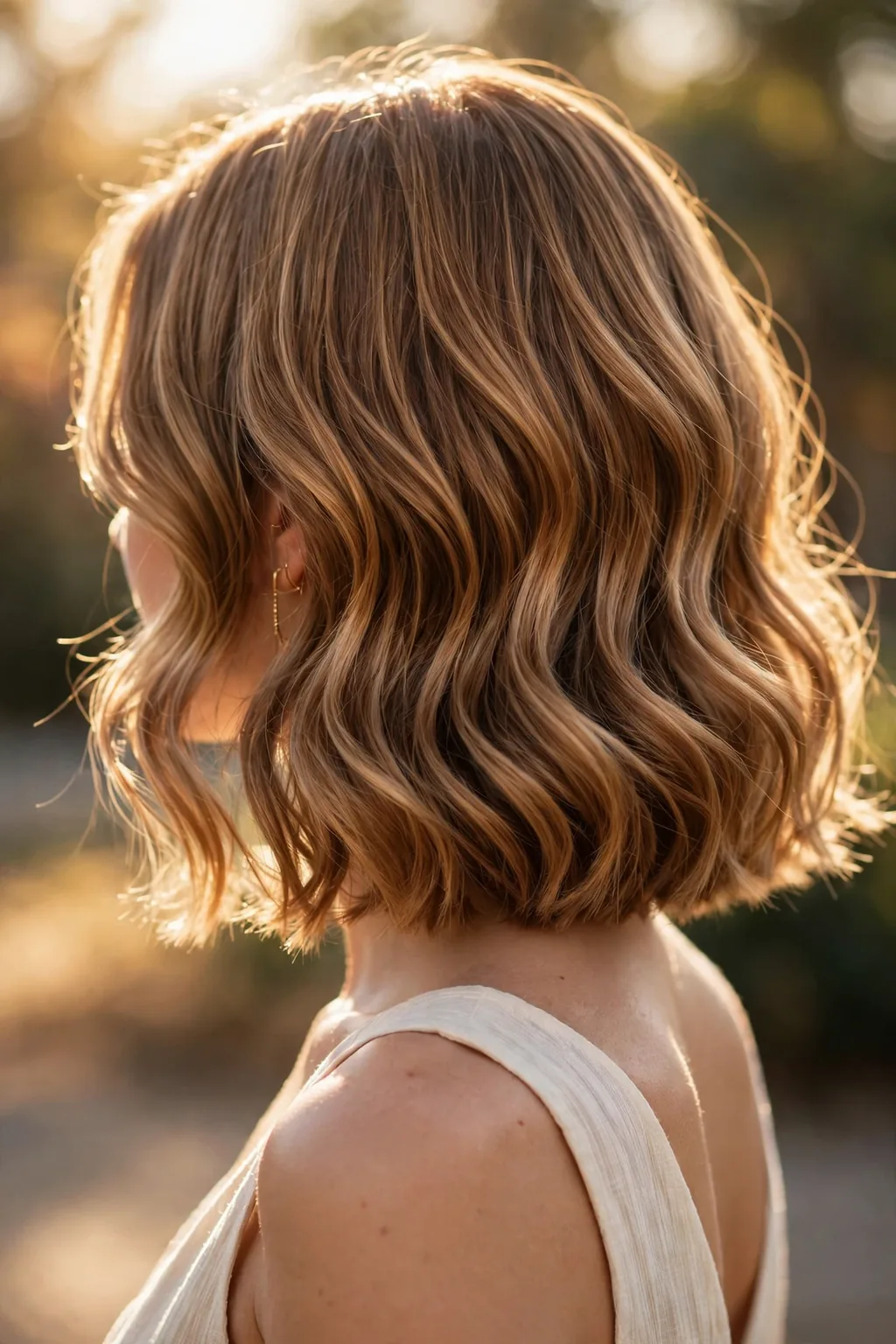
A lob, or long bob, is the gentlest way into short hair. The length sits at or just below the collarbone, so it reads as short compared with long hair, but it is long enough to tie back on busy days. The cut can be worn blunt, layered, or with textured ends, and the finish can be smooth, wavy, or softly curled. It is the version to choose when you want the feeling of a short cut without giving up the safety of length. For a full guide to the longer end of the bob family, see the long layered bob post.
This version flatters every face shape, which is why it is the most popular short cut of the last decade. On round faces, the length below the chin creates vertical lines that make the face look longer. On square faces, the length softens the jaw. On long faces, the width at the collarbone adds balance. It suits straight, wavy and curly hair, and fine and thick hair alike, since the length gives the stylist room to adjust the layering for the texture.
At the salon, ask for a lob at collarbone length, and decide with the stylist whether the ends should be blunt, layered, or textured. Ask how the cut will look worn straight and worn wavy, since the two finishes look quite different. Bring a photo that shows the length from the side, because the side view shows whether the cut sits at the collarbone or above it.
What to avoid: a lob cut above the chin, which is a bob, not a lob, and layers cut too short through the top, which can make the cut look top heavy. Avoid over-styling it every day, since the lob is meant to look easy.
Styling tip: blow dry with a large round brush, rolling the ends under slightly, then finish with a light texturising spray. On second-day hair, a few waves with a curling iron through the mid-lengths is enough to refresh the shape.
5. The Curly Short Cut
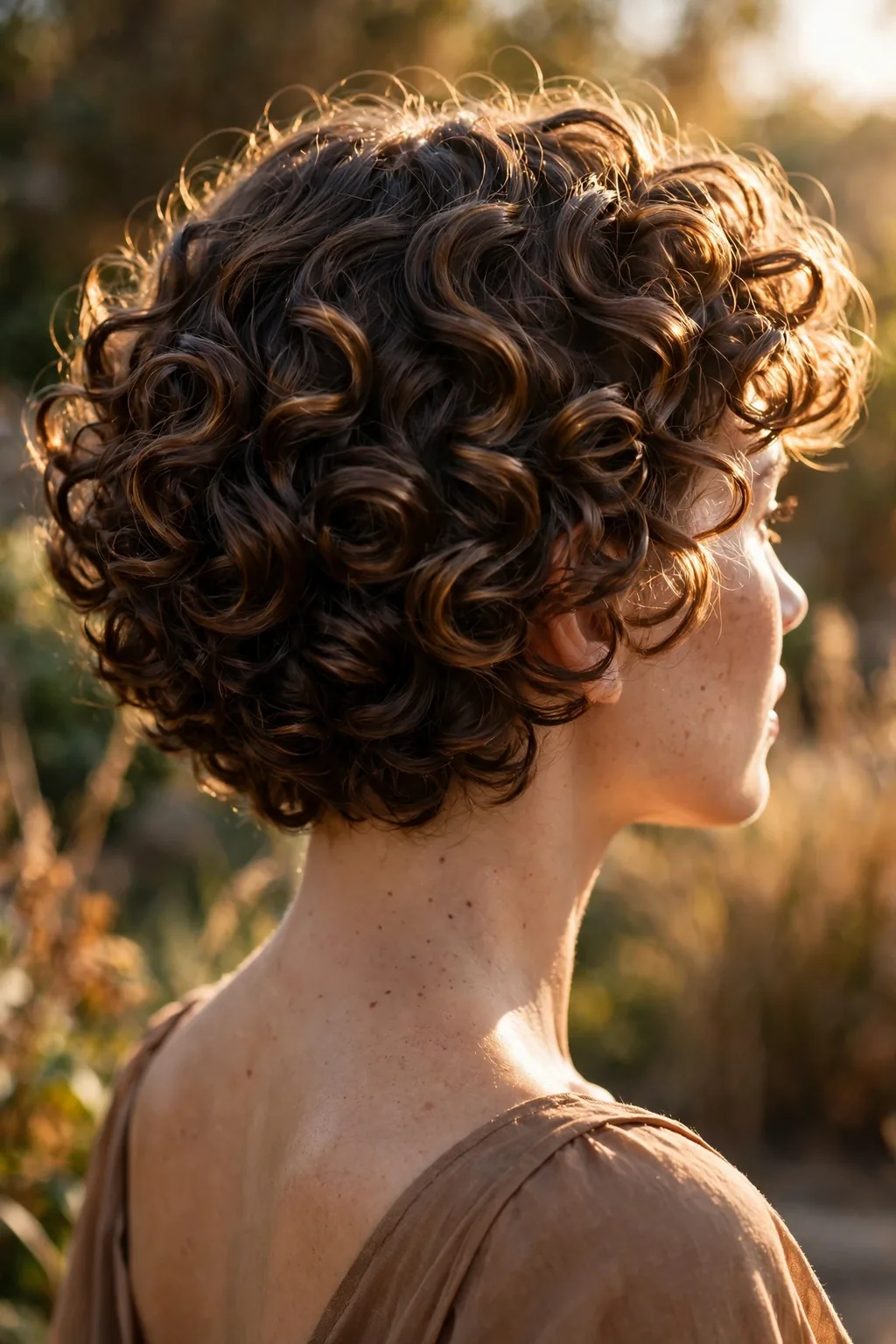
A curly short cut is shaped around the curl pattern, not against it. The length usually sits above the ears or at the jaw, with layers placed to distribute volume evenly, so the curls sit in a rounded shape rather than piling up at the bottom. The cut gives curls room to spring, and the shape is designed to look good as the curls dry naturally. The result is a short cut that shows off the curls, with definition through the lengths and softness around the face.
This version flatters oval, square and heart-shaped faces, since the rounded shape balances a strong jaw and softens a long face. It suits curly and coily hair, from loose curls to tight coils, as long as the layers are placed for the specific curl pattern. Women in 30s with curly hair often find this the most practical short cut, because the layers make wash day easier and the cut holds its shape for weeks without daily heat styling.
At the salon, ask for a short cut shaped for your curl pattern, with layers that distribute volume and a length that accounts for shrinkage. Ask whether the stylist cuts curly hair dry, curl by curl, since that shows the true length of each curl. Bring a photo of curls with a similar pattern to your own, not just any curly cut, since curl types behave very differently. Ask how much length to leave to allow for shrinkage.
What to avoid: cutting curly hair wet to a precise length, since it springs up much shorter when dry, and thinning the ends, which makes curls look sparse. Avoid brushing dry curls, since that breaks the pattern and creates frizz.
Styling tip: apply leave-in conditioner and curl cream to soaking wet hair, scrunch upward, then diffuse on a low heat setting or let the hair air dry without touching it. A small amount of oil on the ends seals in moisture and adds shine.
6. The Modern Shag
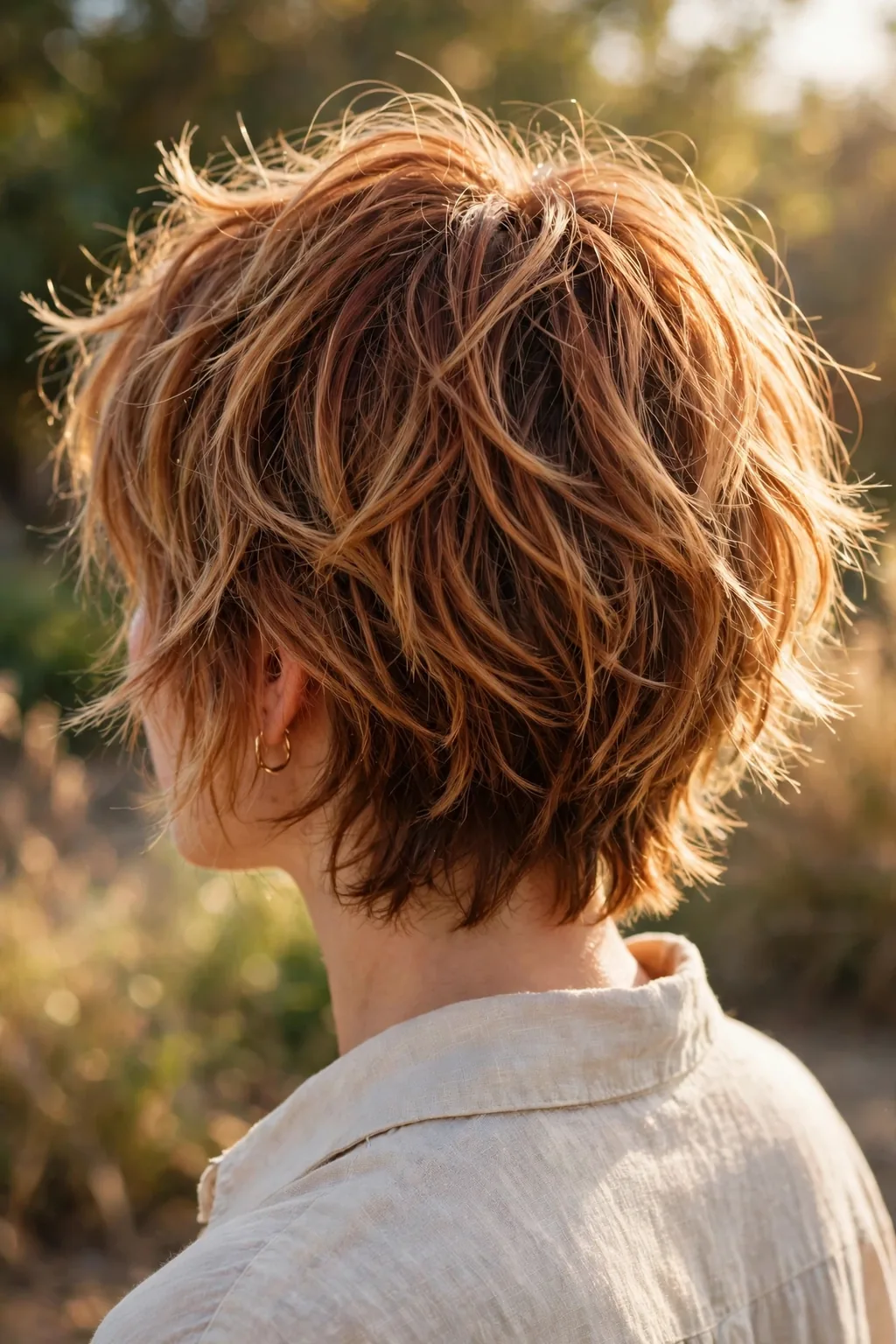
A modern shag is a short to medium cut with choppy layers through the crown and sides, and soft, piecey ends. The layers are shortest at the crown, which gives the cut height and movement, and longest at the nape, which keeps the outline soft. The finish is deliberately undone, with texture and separation rather than a smooth line. It is the version to choose when you want a short cut with attitude, and when you like a style that looks better slightly messy than perfectly neat.
This version flatters oval, round and heart-shaped faces most, since the layers at the crown add height and the piecey ends break up the outline of the face. It suits wavy and straight hair best, because the layers show clearly on hair with some texture. Fine hair gets volume at the crown from the short layers, and thick hair gets a lighter shape from the layering. Very curly hair can wear a shag too, as long as the layers are cut for the curl pattern.
At the salon, ask for a shag with choppy layers through the crown and soft, piecey ends, and tell the stylist how much texture you want. Ask whether the layers should be cut with a razor or scissors, since a razor gives a softer, more lived-in edge. Bring a photo that shows the layers from the front and the side, since the shag is all about the layering. Ask how the cut will grow out, since the crown layers grow faster than the rest.
What to avoid: layers cut too short and too even, which can make the shag look like a dated mullet, and too much product, which weighs the texture down and hides the layering. Avoid blow drying it perfectly smooth, since that defeats the purpose of the cut.
Styling tip: work a texturising spray or a light mousse through damp hair, scrunch the lengths, and let the hair air dry. A flat iron through a few pieces at the front adds definition, and a dry shampoo at the roots on day two brings the volume back.
7. The French Bob
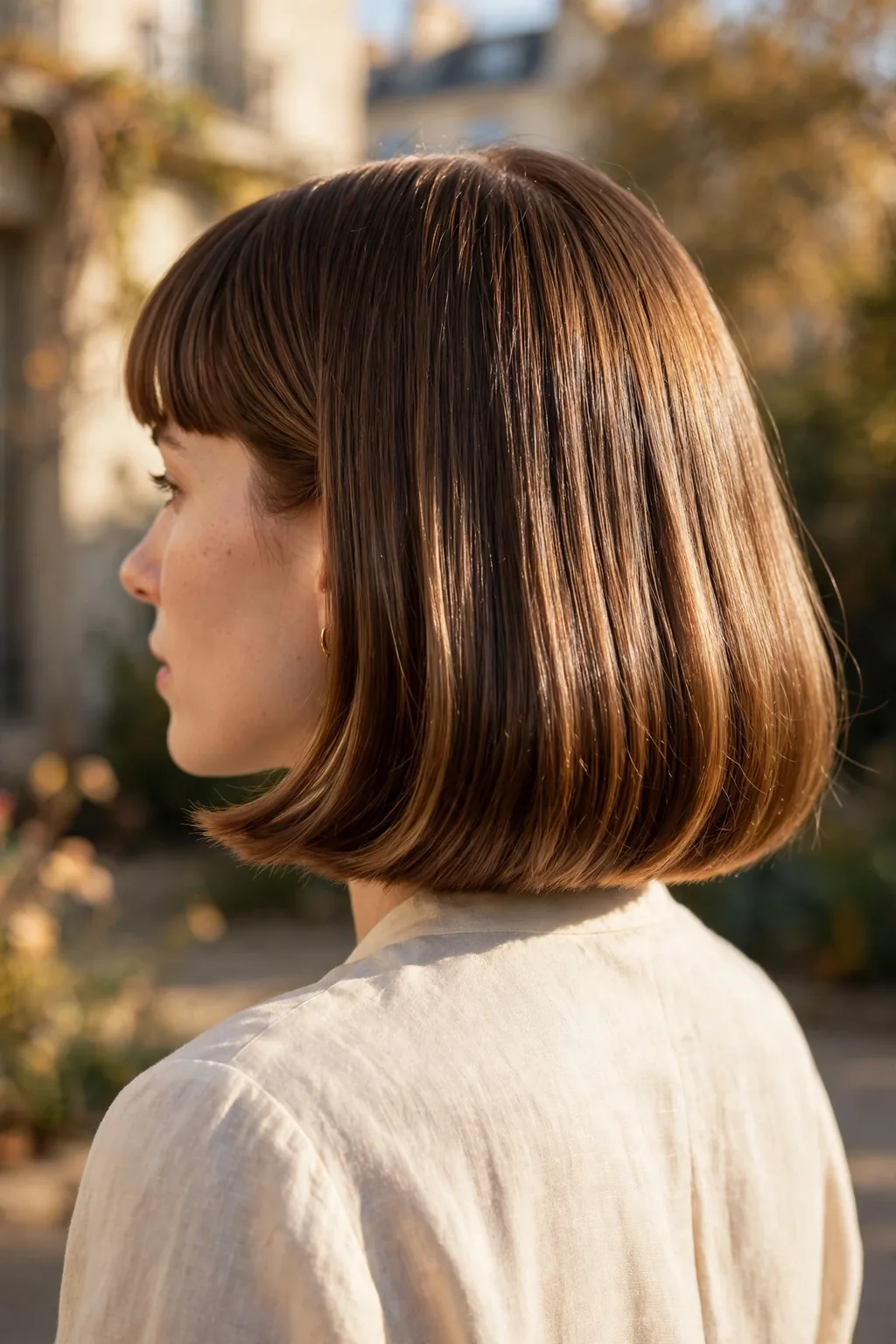
A French bob is a chin-length cut with a short, straight fringe, worn with a centre or slightly off-centre part. The ends are blunt, the outline is clean, and the fringe sits at or just above the brow. The look is simple and confident, with the fringe doing most of the work. It is the most polished of the short cuts in this guide, and the one that most depends on the fringe being cut well. When the fringe is right, the whole cut falls into place.
This version flatters oval and heart-shaped faces most, because the fringe shortens the forehead and draws attention to the eyes and cheekbones. It also works on long faces, since the fringe and the chin length balance the length of the face. It suits straight and slightly wavy hair best, because the blunt ends and the straight fringe need a smooth finish to show their line. Fine hair looks thicker in a French bob, since the blunt perimeter holds weight at the ends. Thick hair needs the interior thinned, or the outline can look heavy.
At the salon, ask for a French bob at chin length with a straight fringe at the brow, and ask the stylist to cut the fringe dry if your hair has any wave, so the length is judged as it will actually sit. Bring a photo that shows the fringe from the front, since the fringe is what makes this cut. Ask how often the fringe needs a trim, since a fringe grows out faster than the rest of the cut and usually needs attention between full appointments.
What to avoid: a fringe cut too short, which looks severe, and a bob cut above the chin, which loses the French shape. Avoid heavy styling products on the fringe, which make it look greasy by the afternoon.
Styling tip: blow dry the fringe forward with a flat brush, then smooth it with a flat iron if needed, bending the ends slightly under. A small amount of dry shampoo at the roots of the fringe on day two keeps it fresh without a wash.
8. The Asymmetrical Cut
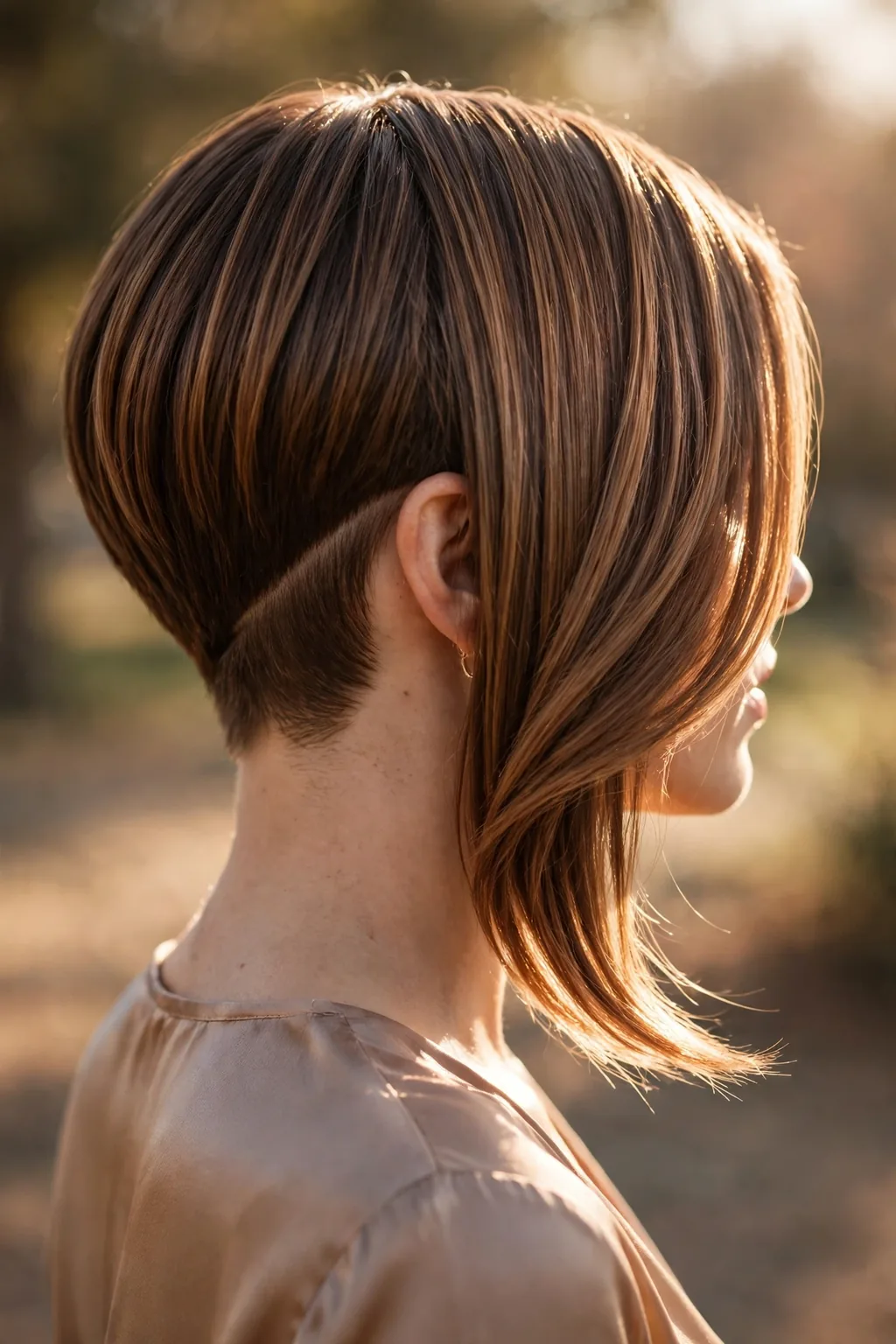
An asymmetrical cut is short on one side and longer on the other, with the difference in length doing the styling work. The longer side usually falls to the jaw or the chin, while the shorter side sits above the ear or tucks neatly behind it. The part is deep on one side, which creates a diagonal line across the face. The result is a cut that looks different from every angle, and that feels modern without needing daily effort. It is the version to choose when you want a short cut with a clear point of view.
This version flatters round and square faces most, because the asymmetry breaks up the symmetry of the face and the longer side creates a diagonal line that makes the face look longer. It also works on oval faces, where any part suits, and on heart-shaped faces, where the volume on one side balances a narrow chin. It suits straight and wavy hair best, since the line between the two lengths stays visible. Fine hair benefits from the longer side, which keeps weight at the front, and thick hair needs the shorter side thinned to keep the outline narrow.
At the salon, ask for an asymmetrical cut with a deep side part, and decide with the stylist how much difference in length you want between the two sides. Bring a photo that shows the cut from the front, and tell the stylist which side you naturally part on, since fighting the natural part makes daily styling harder. Ask how the cut will look if you switch to a centre part, and how the shorter side will grow out.
What to avoid: too little difference between the two sides, which looks like a mistake rather than a choice, and a longer side cut too blunt, which can look heavy next to the short side. Avoid over-styling the shorter side, since it is meant to sit neatly on its own.
Styling tip: part the hair while it is damp, on the side you chose. Blow dry the longer side with a round brush for volume at the roots, and smooth the shorter side back behind the ear. A light serum keeps the shorter side sleek, and a flat iron through the longer side polishes the lengths.
9. Short With Curtain Bangs
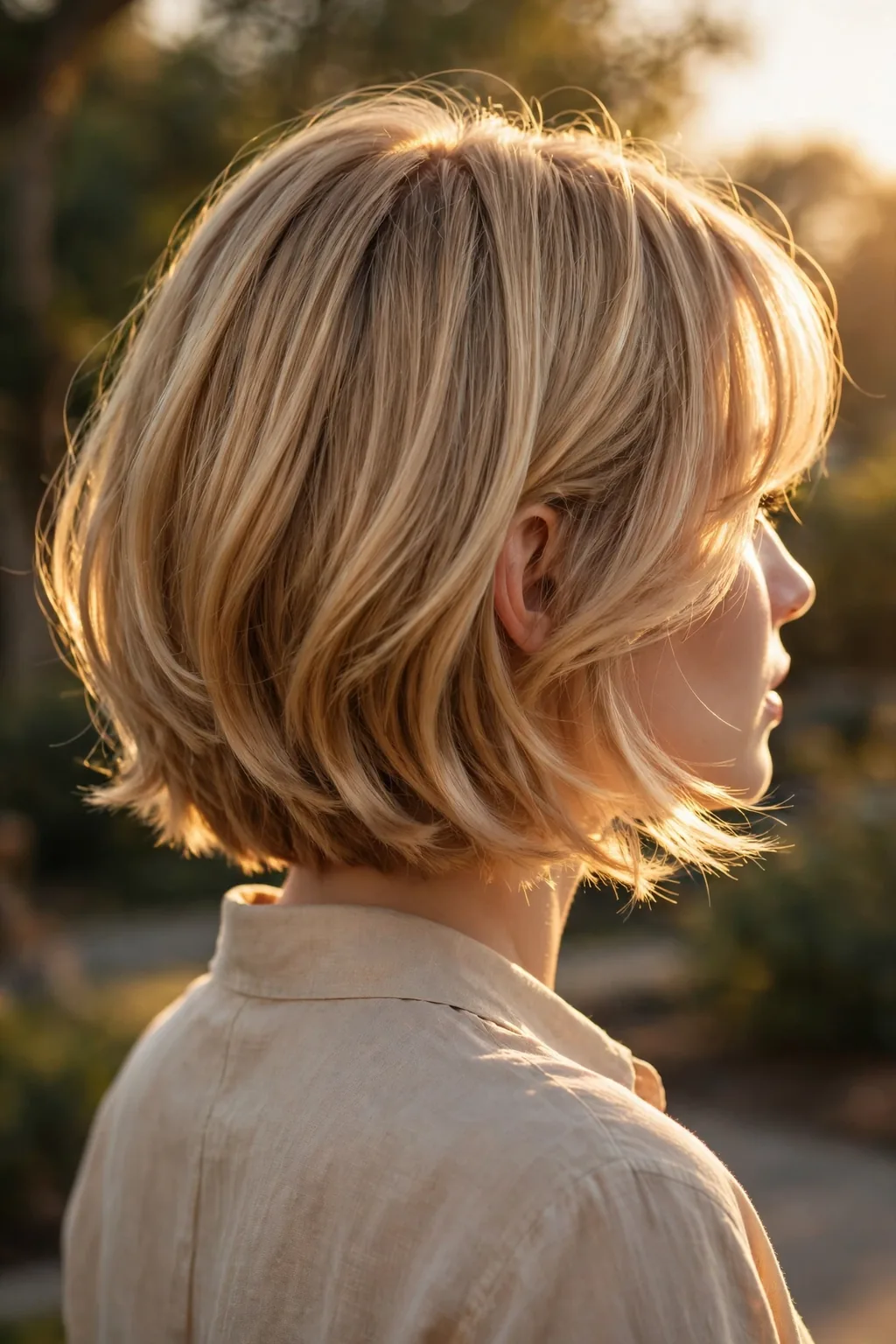
Short hair with curtain bangs pairs a chin-length or shorter cut with a soft fringe parted in the centre and swept to each side. The bangs blend into the face-framing layers instead of sitting as a separate block, so the fringe feels like part of the cut rather than an addition. The longest pieces reach the cheekbones or the jaw, which connects the fringe with the rest of the cut and lets it grow out gracefully. The overall effect is soft and romantic, with movement around the face and a clean outline through the back.
This version flatters almost every face shape. On round faces, the centre part and the longer fringe pieces create a vertical line that makes the face look longer. On square faces, the soft sweep breaks up the jawline. On long faces, the fringe shortens the forehead and adds width at the cheekbones. It suits straight, wavy and slightly curly hair, as long as the fringe is cut to suit the natural texture. Fine hair gets volume at the front, and thick hair gets a softer outline. It is the easiest of the fringe cuts to grow out, since the bangs blend into the layers.
At the salon, ask for curtain bangs that blend into the face-framing layers of a short cut, with the shortest piece at the brow and the longest piece at the cheekbone or jaw. Ask the stylist to cut the fringe dry if your hair has a wave, so the length is judged as it will actually sit. Bring a photo that shows the fringe from the front. Ask how the fringe will grow out and whether it needs a trim between full appointments.
What to avoid: bangs cut too short to sweep to the sides, which leaves a blunt fringe instead of a curtain, and a centre part that is too severe on a very round face, where a slightly off-centre part works better. Avoid pressing the fringe flat with a flat iron, which removes the curve that makes curtain bangs work.
Styling tip: blow dry the fringe forward, then sweep each side away from the centre part, rolling a round brush under at the ends. A flat iron can smooth the fringe, but bend it outward slightly rather than pressing it flat, so it keeps its curve.
Which One Should You Pick?
The right short cut depends on three things: face shape, hair type, and how much time you want to spend styling. Start with face shape. Oval faces can wear any cut in this guide, so choose by hair type and maintenance instead. Round faces do best with the textured bob, the lob, the asymmetrical cut, or the short cut with curtain bangs, since all four add length or break up symmetry. Square faces suit the lean pixie, the textured bob, the lob, and the short cut with curtain bangs, since all four soften the jaw. Long faces do well with the French bob and the short cut with curtain bangs, since the fringe shortens the forehead. Heart-shaped faces suit the lean pixie, the curly short cut, and the asymmetrical cut, since all three balance a narrow chin.
Then look at hair type. Fine hair does best with the lean pixie, the classic crop, the French bob, or the textured bob, since all four keep weight at the ends and make fine hair look thicker. For more ideas on fine hair, see the layered cuts for fine hair. Thick hair needs the textured bob, the modern shag, or the curly short cut, since the layering removes weight. Wavy hair suits the textured bob, the modern shag, and the lob, since all three work with the natural texture. Curly hair needs the curly short cut, cut for the curl pattern. Straight hair can wear any cut in this guide, but the French bob and the classic crop show off a smooth finish best.
Finally, be honest about maintenance. The lob and the textured bob need the least daily work, since they look good air dried or with a quick blow dry. The lean pixie and the classic crop need a trim every four to six weeks to hold their shape, so they ask for more salon visits but less daily styling. The French bob needs the fringe trimmed between appointments. Pick the cut that fits the routine you actually have, not the routine you wish you had. For the full picture, see the hairstyles guide.
Frequently Asked Questions
Do short hairstyles for women in 30s still look feminine?
Yes. Short hairstyles for women in 30s look feminine when the cut keeps softness around the face: length on top of a pixie, textured ends on a bob, a soft fringe, or curtain bangs. The femininity comes from the shape and the movement, not from the length. A cut that is all one length with hard edges can look severe, but every cut in this guide keeps a soft outline.
How often do short hairstyles need a trim?
Most short hairstyles need a trim every four to eight weeks to hold their shape. Pixies and crops sit at the shorter end, every four to six weeks, since they grow out fastest. Bobs and lobs can stretch to six to eight weeks, and the textured bob and the lob hide uneven growth best, so they can go a little longer between appointments.
Can short hairstyles work on fine hair?
Yes, and fine hair often looks thicker in a short cut. The lean pixie, the classic crop, and the French bob all keep weight at the ends, which makes fine hair look fuller. Ask the stylist for blunt ends and minimal thinning, since thinning removes the weight that makes fine hair look thick. A volumising mousse at the roots and a round brush blow dry help the cut hold its shape.
What should you ask for at the salon for a short cut?
Bring two or three photos of the version you want, and tell the stylist your hair type, your face shape, and how you plan to style it at home. Ask for the length first, then the texture, then the finish. Ask how the cut will grow out, and how often it will need a trim. A photo plus those questions gives the stylist everything needed to cut the version you actually want.
Will a short cut be hard to grow out?
A short cut takes time to grow out, and the awkward stage usually comes around the ears and the nape. The lob and the textured bob grow out most gracefully, since their length and texture hide the in-between stages. A pixie needs the most patience, but regular trims at the back while the top grows out keep it looking deliberate. Tell the stylist you plan to grow it out one day, and they can cut it with that in mind.
The Bottom Line
Short hairstyles for women in 30s work when the cut is shaped for softness, not just for length. A pixie with length on top, a bob with textured ends, a shag with soft layers, all of them keep movement around the face, and that movement is what keeps a short cut feminine. The nine cuts in this guide cover straight, wavy and curly hair, fine and thick hair, and every face shape. Choose the cut that matches your hair type and the routine you actually have, bring photos to the appointment, and ask the three questions that matter: how the cut will sit with your texture, how it will grow out, and how often it needs a trim.