

These 13 winter styles actually survive a real winter day by keeping your ends protected and clearing your coat collar, and still looking polished when you take your hat off indoors, from a low chignon to a tucked French braid.
Winter is when my hair stops cooperating. I leave the house with something that looked fine in the bathroom mirror, and by the time I get out of the car, the wind has rearranged it, my coat collar has rubbed the back into a tangle, and the dry air has turned the ends into something resembling straw. Sound familiar?
Here is the thing: winter hair is not a styling problem, it is a weather problem. Wind, hats, scarves, dry indoor heat, and static are all working against you at once, and a style that looks beautiful in October will fall apart by January if it does not account for them. I learned this the hard way, through years of wearing my hair down under a scarf and wondering why it looked like I had been dragged through a hedge by lunchtime.
The thirteen styles below are the winter hairstyles for women in 30s that actually survive a real winter day. Every one of them keeps your ends protected, clears your coat collar or works with it, and still looks polished when you take your hat off indoors. None of them needs an hour in front of the mirror, and none of them asks you to choose between warm and presentable.
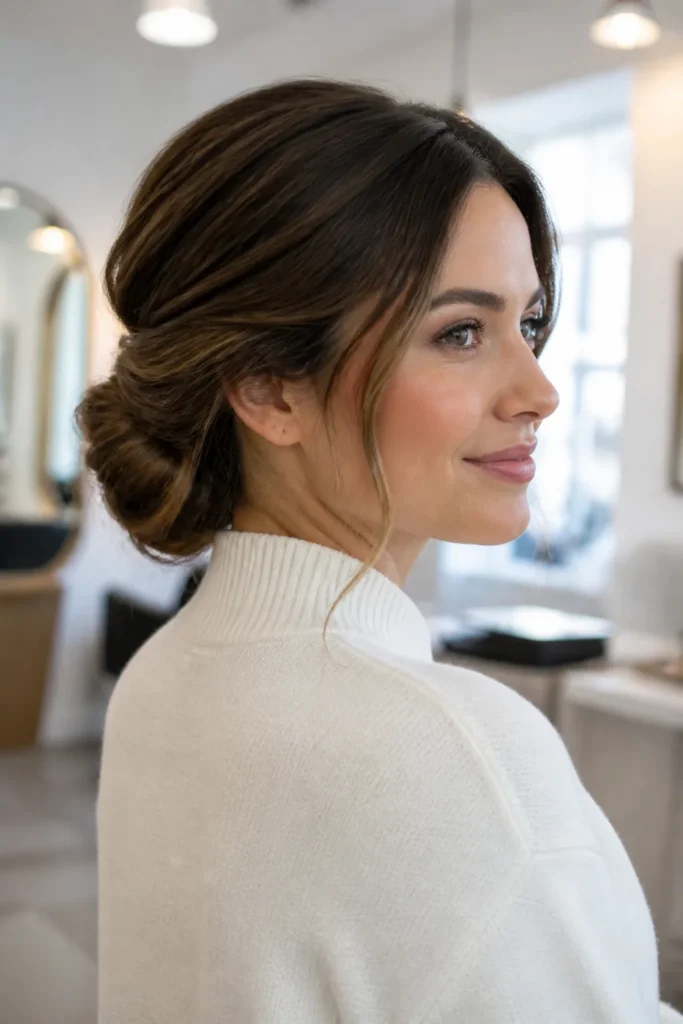
1. The Low Chignon That Clears Your Collar
This is my winter workhorse, and it is the first style I reach for on a cold morning. A low chignon sits at the nape of your neck, right where your coat collar ends, so the collar rubs against the bun instead of shredding your loose ends. The trick is placing it high enough that it does not sit underneath the collar (that is how you get a matted nest by noon) and low enough that a hat still fits over it.
Who it suits: honestly, everyone with hair long enough to twist up, but it is a lifesaver if your ends go dry and split every winter. Tucking them away for the day is the simplest protection there is in winter hairstyles for women in 30s, and it costs you nothing. If your hair is fine, do not pull the chignon too tight, or it looks smaller than you want. Keep it a little loose and let a few soft pieces frame your face.
How to do it: gather your hair at the nape, twist it loosely, and coil it into a bun. Pin it with bobby pins that match your hair colour, and finish with a light mist of hairspray. If you want it to look intentional rather than “I gave up,” wrap one small section of hair around the base of the bun to hide the elastic.
Winter tip: put your coat on before you check the mirror, not after. The collar will nudge the bun a little, and you want to fix that once, not discover it in the office elevator.
2. The Tucked French Braid
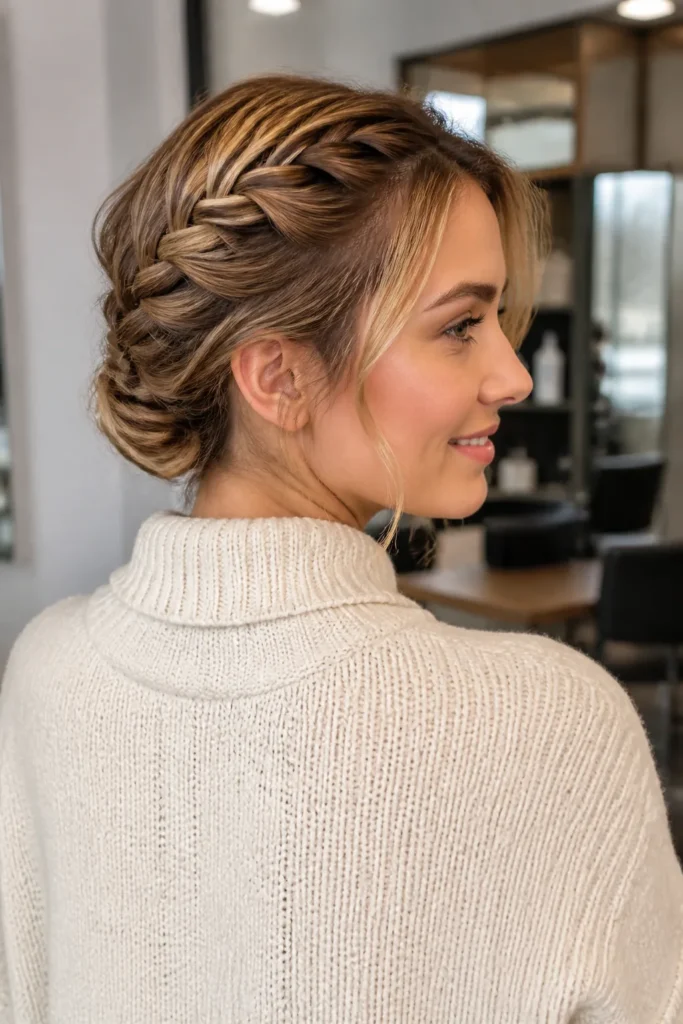
A French braid is already one of the most windproof styles there is, because every section is locked in as you go. The winter version adds one step: tuck the ends under and pin them, so nothing dangles loose to whip around in the wind or catch on your scarf. The result is a braid that looks neat at 8 a.m. and still looks neat at 6 p.m.
Who it suits: this is brilliant for medium to long hair, and especially for wavy or thick hair that turns into a tangle the second the wind picks up. If your hair is very fine, braid a little looser than you think you should, then gently tug at the edges to widen it. A skinny tight braid on fine hair can look a bit severe, but a softened one looks full and intentional.
How to do it: French braid from the crown down the back, keeping the sections even and the tension steady. When you reach the ends, fold the tail underneath the braid and pin it flat with two or three bobby pins. A drop of smoothing cream on your palms, run over the top of the braid, keeps flyaways down without making it crunchy.
Winter tip: this braid fits beautifully under a hat, because it lies flat against your head. Put the hat on over it, and when you take the hat off indoors, the braid is exactly where you left it. That is the whole point.
3. The Sleek Low Ponytail
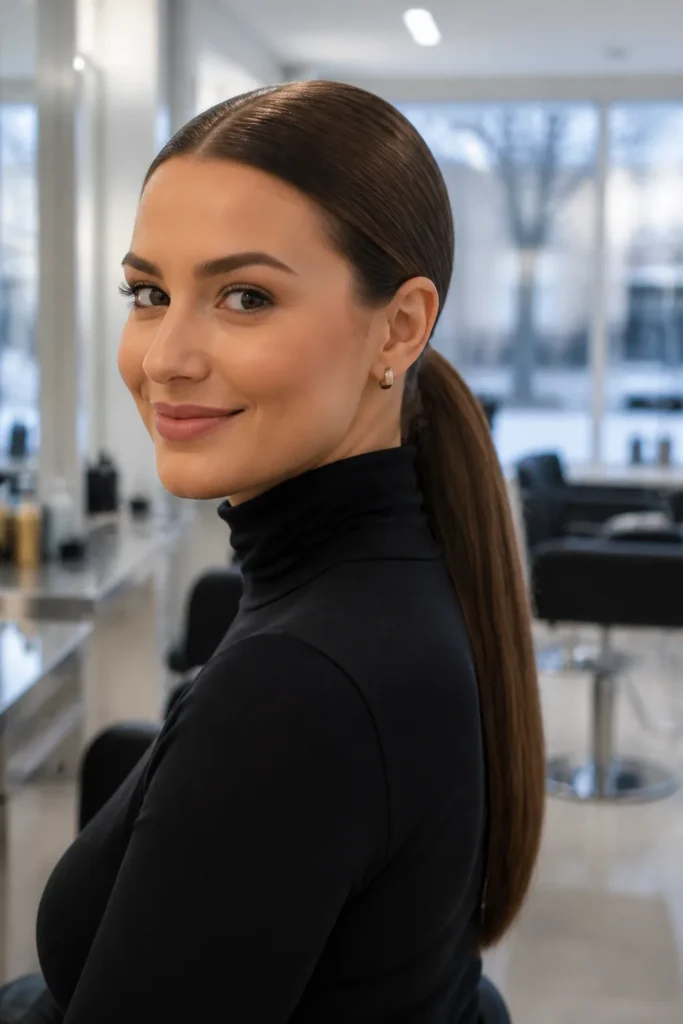
Among winter hairstyles for women in 30s, there is something about a smooth low ponytail and a wool coat that reads instantly polished. No fuss, no volume tricks, just clean lines and a smooth finish. I reach for this one on work days when I want to look like I have my life together, even if my inbox says otherwise, and it survives winter better than most loose styles because there is nothing free to tangle.
Who it suits: straight and slightly wavy hair takes to this style most easily, because the sleek finish comes naturally. If your hair is curly, you can still wear it, but you will need to smooth the top section first, so it becomes a sometimes style rather than an everyday one. It also suits you if you wear scarves a lot, because a low ponytail sits neatly above or beside a scarf instead of getting buried under it.
How to do it: part your hair in the middle or slightly off center, smooth the top with a brush, and secure it low at the nape with a covered elastic. Wrap a small section of hair around the elastic to hide it, and finish with a pea-sized amount of smoothing cream on the lengths only, never the roots. The cream is your static defense, so do not skip it in January.
Winter tip: static is the enemy of this style, and it shows up the second you pull a knit hat on and off. Keep a tiny bottle of leave-in spray in your coat pocket for a midday touch-up. Ten seconds, and the flyaways settle.
4. The Low Twisted Ponytail
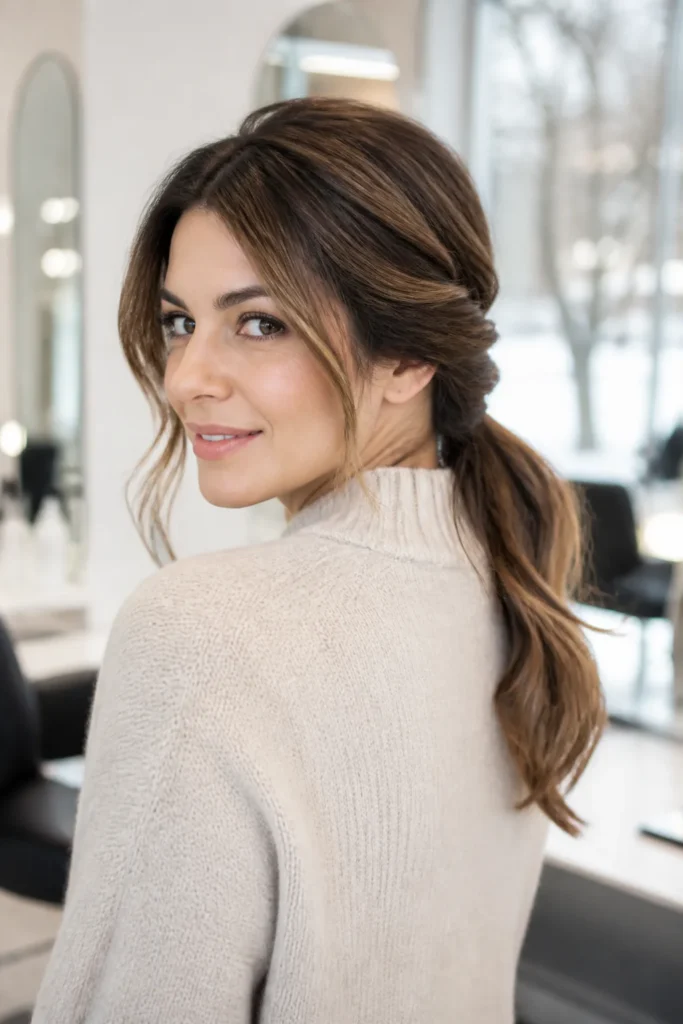
If braids feel like too much effort on a cold morning, a twist gives you most of the same protection with half the work. You divide your hair into two sections, twist each one in the same direction, then wind them around each other in the opposite direction and secure the ends. The twist locks the hair together, so the wind cannot pull it apart the way it does a loose ponytail, and there are no braid sections to loosen over the day.
Who it suits: this is a gift for fine and medium hair, because a twist looks thicker than a plain ponytail without any backcombing. It also suits you if braids slip out of your hair or take too long, since a twist takes about two minutes once you have done it twice. If your hair is very thick, keep the twist loose, or it turns into a rope that pulls at your scalp.
How to do it: part your hair down the middle or slightly off center, split it into two equal sections at the nape, and twist each section away from your face. Then cross the two twists over each other in the opposite direction, all the way down, and secure the ends with a covered elastic. Wrap a small section of hair around the elastic to finish it.
Winter tip: this twist sits low enough to clear your coat collar, and it holds up under a hood better than a plain ponytail, because the twisted structure does not tangle. When you come indoors, give the twist a gentle tug at the sides to loosen it, and it looks soft instead of severe.
5. The Winter French Twist
The French twist sounds fancy, and I will be honest, it intimidated me for years. Then I realized it is just a roll and a few pins, and it is one of the best winter hairstyles for women in 30s, because every inch of hair is tucked away. No ends in the wind, nothing for your scarf to catch, and it clears your coat collar completely.
Who it suits: this is a gift for medium and long hair, and it works on straight, wavy, and thick hair alike. If your hair is very fine, backcomb the section you are rolling very lightly first, just enough to give the pins something to grip. Otherwise fine hair slides out of a twist by lunchtime, and you will spend the afternoon re-pinning it in every mirror you pass.
How to do it: sweep your hair to one side, hold it in place, and roll it upward and inward, tucking the ends into the roll as you go. Pin along the seam with bobby pins, working from the bottom up, and finish with a light mist of hairspray. The roll should feel snug but not tight. If your scalp hurts, you have pinned it too hard.
Winter tip: wear this one on days when you are going in and out of the cold a lot, like errands or a long lunch. It does not care about wind, it does not care about hats, and it looks just as good under a coat as it does without one.
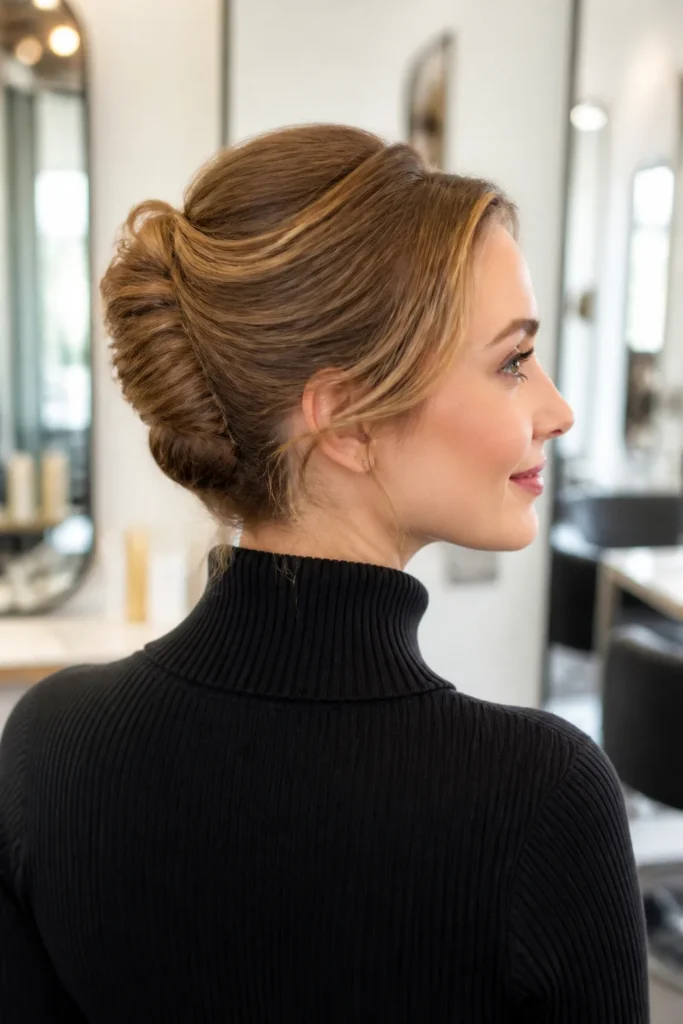
6. The Twisted Crown
This is the style for days when you want your hair down but the wind has other plans. Two twisted sections from the front, pinned back at the crown, keep the hair off your face while the rest hangs loose. It is not a full updo, so you still get the feeling of wearing your hair down, but the front is locked in and the wind cannot blow it across your eyes every three seconds.
Who it suits: this is lovely on medium and long hair, and it works on straight, wavy, and curly textures, because the twists are about control, not about the texture of the rest. If you have layers around your face, this style is your best friend in winter, because those short front pieces are exactly the ones the wind grabs first.
How to do it: take a section from each temple, twist it back away from your face, and cross the two twists at the back of your crown. Pin them in place with two bobby pins crossed over each other (that is the grip trick), and let the rest of your hair hang loose. If you want a softer look, tug gently at the twists to loosen them after pinning.
Winter tip: this is the style I wear under a hood. The twists hold the front in place, the hood covers the rest, and when the hood comes down, the front still looks like you meant it.
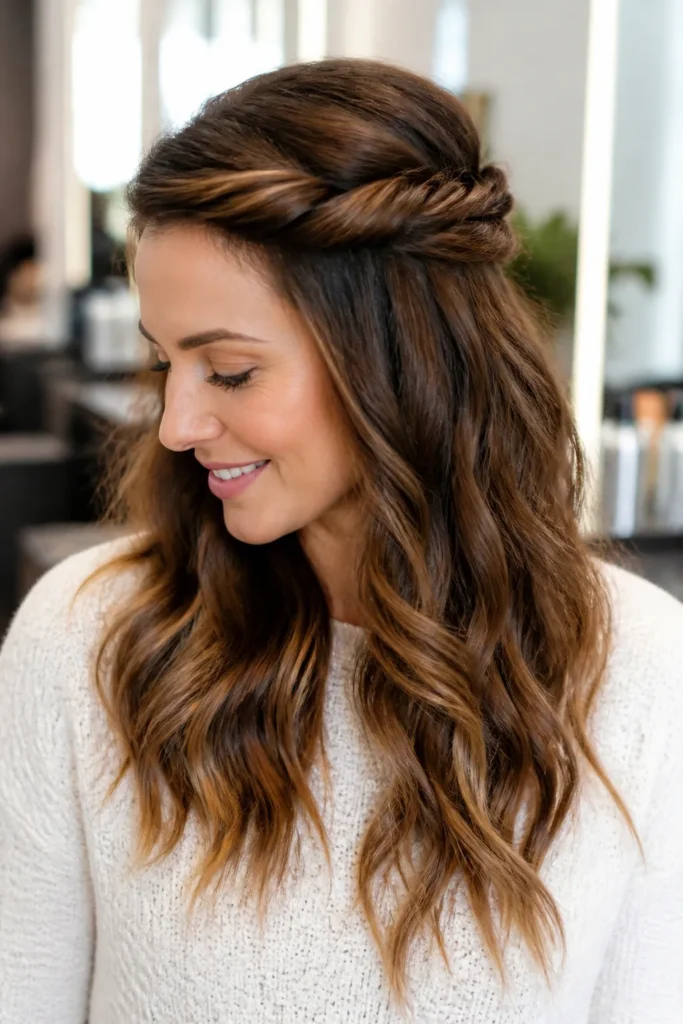
7. The Low Bubble Ponytail
The bubble ponytail is a low ponytail with extra elastics spaced down the tail, and each section puffed out slightly to make a “bubble.” It sounds playful, and it is, but it is also genuinely practical among winter hairstyles for women in 30s, because the elastics keep the tail from whipping around in the wind, and the whole thing holds its shape under a hood in a way that a plain ponytail does not.
Who it suits: this works best on medium to long hair, because you need enough length to make at least three bubbles. It suits straight and wavy hair most easily, but curly hair can wear it too if you smooth the tail lightly first. If your hair is fine, keep the bubbles small and close together, or the tail looks sparse between the elastics.
How to do it: make a low ponytail, then add small clear elastics every few inches down the tail. After each elastic, gently pull the section above it outward to puff it into a bubble. Finish with a light mist of hairspray, and you are done. The whole thing takes about five minutes once you have done it twice.
Winter tip: this is my ski-weekend and long-walk style. It stays put under a hat and a hood, it does not tangle the way a loose tail does, and it looks like you tried, even though you barely did.
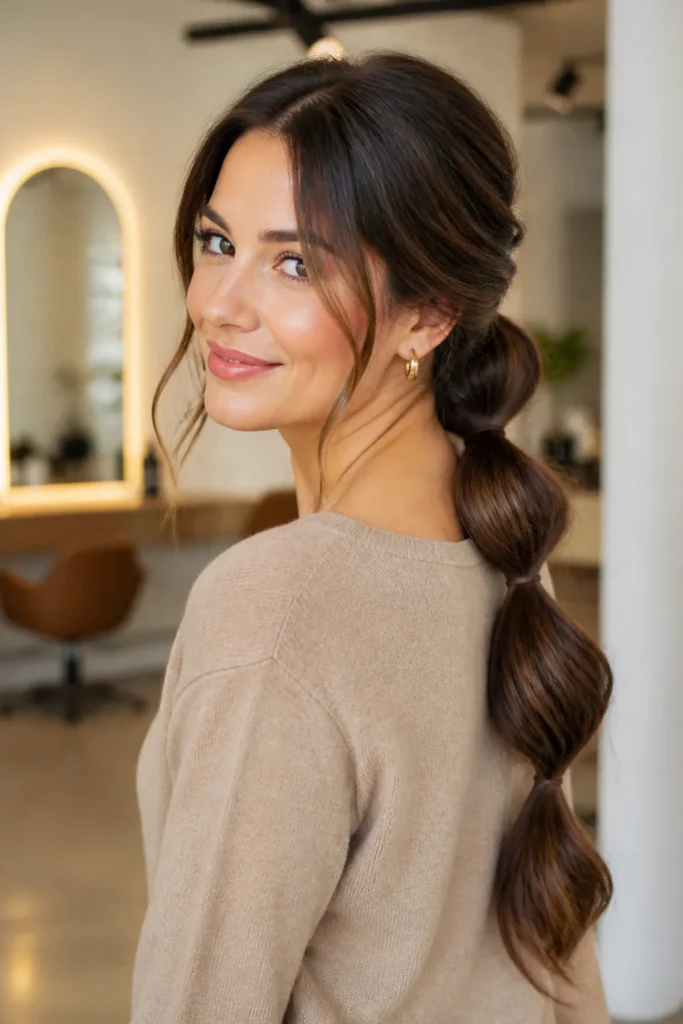
8. The Side-Swept Low Ponytail
A ponytail worn over one shoulder is the simplest way to keep your hair out of your coat collar and your scarf. Instead of sitting at the back of your neck, where your coat rubs it all day, the tail rests in front of your shoulder, where you can see it, fix it, and keep it out of trouble. It looks softer than a center ponytail, and it survives winter better, because the tail is not trapped between your back and your coat.
Who it suits: this is lovely on medium and long hair, and it works on straight, wavy, and curly textures, because the side placement does the work, not the texture. If your hair is fine, sweep it over gently without pulling it tight, so the tail keeps some fullness. If your hair is thick, a side ponytail is a relief, because it takes the weight off the back of your neck.
How to do it: sweep all your hair over one shoulder, smooth the top lightly with a brush, and secure it low, just in front of your shoulder, with a covered elastic. Keep the tension soft, not scraped back, and pull a few small pieces loose around your face. A drop of smoothing cream on the tail keeps flyaways down without making it stiff.
Winter tip: wear this one on scarf days. A center ponytail gets buried under a scarf and comes out matted, but a side ponytail sits beside the scarf, not under it, so it arrives indoors looking the way it left the house.

9. The Side Braid, Worn Inside Your Coat
Here is a trick I swear by: braid your hair over one shoulder, and then tuck the braid inside your coat before you zip up. The coat becomes a windbreak for your hair, and the braid stays smooth, soft, and tangle-free all day. When you get indoors and take your coat off, the braid looks like you just made it.
Who it suits: anyone with hair long enough to braid over a shoulder, and especially anyone whose hair tangles the second it meets a scarf. If your hair is thick, a single loose side braid is best, because a tight one takes forever and pulls at your scalp under a coat. If your hair is fine, braid a little loosely and tug the edges to widen it, so it does not look like a thin rope.
How to do it: sweep your hair over one shoulder and braid it loosely, securing the end with a small clear elastic. Then, before you put your coat on, lay the braid flat against your chest and zip the coat over it. That is it. The only rule is to remember it is there before you yank your coat off in a hurry.
Winter tip: this is the style for bitter, windy days when nothing else survives. It feels a bit odd the first time you do it, and then you wonder why you spent years letting the wind have your hair.

10. The Double Dutch Braids
Among winter hairstyles for women in 30s, two Dutch braids, one on each side, are the sportiest style on this list, and they are the ones I wear for winter walks, sledging with the kids, and any day when I am going to be outside for hours. Dutch braids sit on top of the hair rather than woven in flat, so they hold their shape under a hat better than most styles, and they keep every strand locked down.
Who it suits: this is brilliant for thick and wavy hair, because the braids handle volume instead of fighting it. It also suits you if you exercise outdoors in winter, because the braids do not bounce loose the way a ponytail does. If your hair is fine, braid with slightly larger sections and tug the edges gently to widen each braid, so they look substantial rather than skinny.
How to do it: part your hair down the middle, then Dutch braid each side from the hairline down, crossing the sections under rather than over. Secure each braid with a small elastic, and if you want, tuck the two tails together at the back with one more elastic for a tidier finish. A little texture spray on your hands before you start gives fine hair the grip it needs.
Winter tip: these braids are the best hat style on this list. They lie flat, they do not create bumps under a hat, and when you take the hat off, the braids are undisturbed. If you only learn one winter style, make it this one.
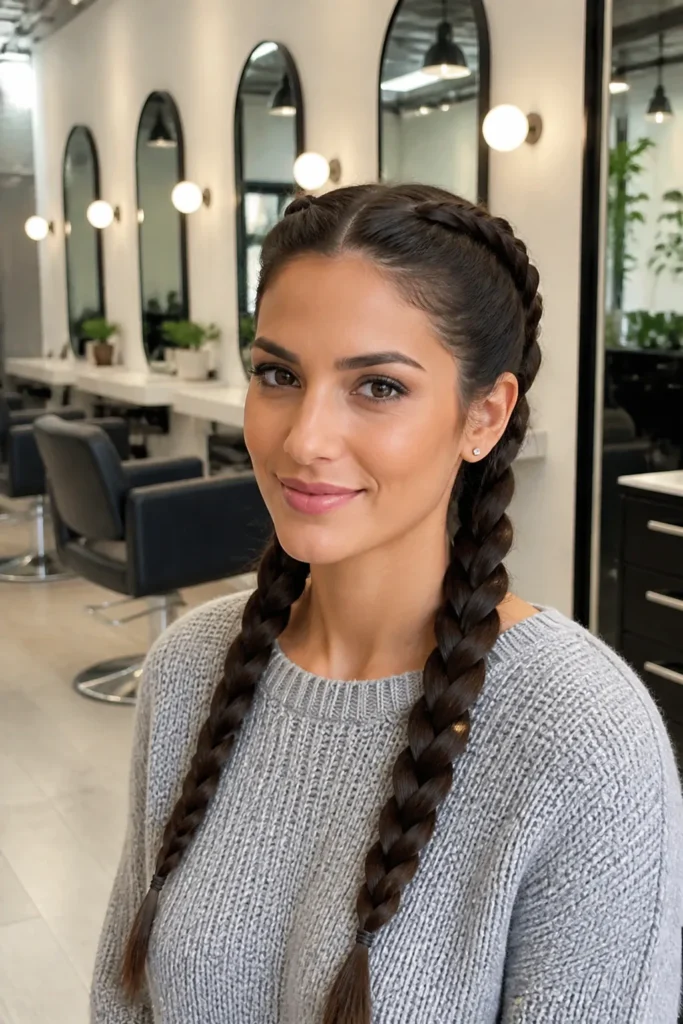
11. The Milkmaid Braid Crown
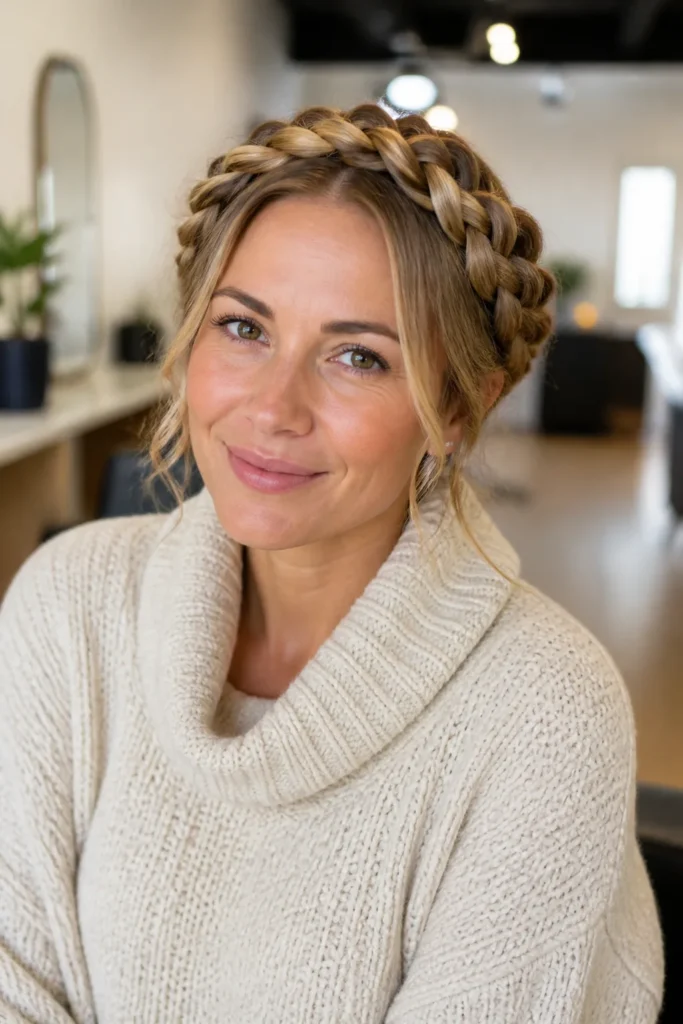
The milkmaid crown is two braids wrapped up and over the top of your head and pinned in place, so your hair forms a crown around your face. It sounds like a lot of effort, and it does take a few extra minutes, but it is the most windproof of these winter hairstyles for women in 30s, because there are literally no loose ends anywhere. Wind, hats, scarves, none of them can touch it.
Who it suits: this needs medium to long hair, because you need enough braid to wrap around your head. It works on straight, wavy, and curly hair, and it is especially lovely if you have highlights or dimension in your hair, because the wrapped braids show off the different tones. If your hair is very fine, braid loosely and tug the edges to widen, or the crown looks thin.
How to do it: part your hair down the middle, braid each side loosely, then cross the braids over the top of your head and pin them in place with bobby pins, tucking the ends underneath. Pin from the inside of each braid outward, so the pins hide. Finish with a light mist of hairspray, and check the back in a mirror, because that is where a loose end hides.
Winter tip: wear this one on the coldest, windiest days, and on days when you are wearing a high coat collar that would destroy anything looser. It is the style that makes winter feel like it cannot touch you.
12. The Twin Low Buns
Two small buns, one behind each ear at the nape, are the most windproof non-braid style I know. Everything is tucked away, there are no loose ends anywhere, and the buns sit flat enough to fit under a hat or a hood without bumps. They look a little playful, but done low and soft, they read as intentional, not childish.
Who it suits: this is brilliant for thick hair, because splitting it in two makes each bun manageable instead of one heavy lump. It also suits you if a single chignon always feels too heavy or slips out, since two smaller buns grip better and balance each other. If your hair is fine, keep the buns loose and tug at the edges to widen them, so they look soft rather than tiny.
How to do it: part your hair down the middle, then gather each side into a low bun behind the ear, twisting loosely and pinning with bobby pins. Keep both buns at the same height, and wrap a small section of hair around each base to hide the elastics. Finish with a light mist of hairspray, and check the back in a mirror, because uneven buns are easy to miss.
Winter tip: these buns are your hat-day secret weapon. They sit completely flat under a hat, they do not dent the way loose hair does, and when the hat comes off, the buns are exactly where you left them.
13. The Second-Day Low Knot
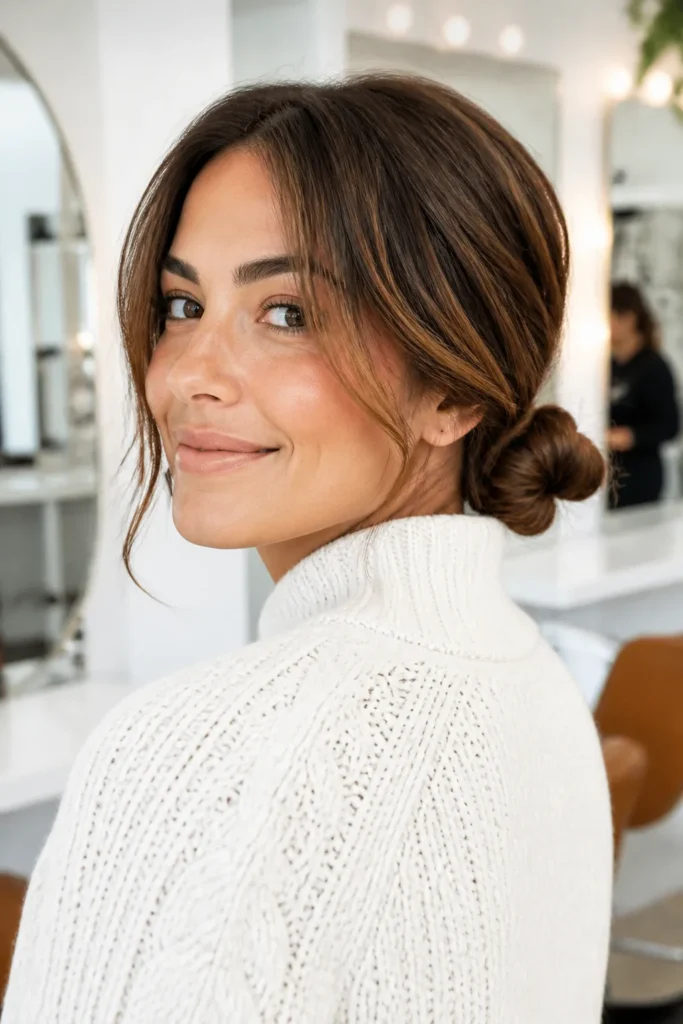
Some winter mornings you do not wash your hair, and that is fine. Second-day hair has more grip and less static than freshly washed hair, which makes it perfect for a low knot: a soft, loose bun at the nape that hides dry ends, tames flyaways, and looks deliberately undone instead of accidentally messy.
Who it suits: this is the style for busy mornings, and for anyone whose hair goes flat and static-prone the day after washing. It works on all textures, because second-day hair holds a knot better than clean hair does. If your hair is very short, this becomes a low twist instead of a knot, and that is fine too.
How to do it: gather your hair loosely at the nape, twist it once or twice, and coil it into a soft knot. Pin it with two or three bobby pins, and pull a few small pieces loose around your face to soften it. If the roots look a little flat, a quick shake of dry shampoo at the crown before you start gives you lift without a full wash.
Winter tip: this knot is your static rescue. On days when your hair is crackling with static and nothing will lie flat, gathering it into a knot takes the static out of the equation entirely, because there is no loose hair left to fly away.

Which One Should You Pick?
If you are standing in front of the mirror on a cold morning trying to decide, here is the shortcut. When choosing winter hairstyles for women in 30s, start with the weather, then your hair, and let those two answers choose for you.
Windy day: go for the tucked French braid, the double Dutch braids, the twin low buns, or the milkmaid crown. All four lock every strand down, and the wind cannot do anything to them. Hat day: the tucked French braid, the double Dutch braids, the twin low buns, and the low chignon all sit flat under a hat, so you will not get bumps or a dented style when the hat comes off. Scarf and coat-collar day: the low chignon, the sleek low ponytail, the side-swept low ponytail, and the winter French twist all clear your collar, so nothing gets matted or tangled by lunchtime.
Now the hair question. Fine hair: go for the low chignon kept loose, the sleek low ponytail, the low twisted ponytail, or the second-day low knot. All four protect your fullness while keeping everything tucked away. Thick hair: the tucked French braid, the double Dutch braids, the twin low buns, and the milkmaid crown will handle your volume instead of fighting it. Wavy or curly hair: the twisted crown, the side braid inside your coat, the side-swept low ponytail, and the double Dutch braids work with your texture instead of against it.
One last honest note: you do not have to pick just one. Most of us end up with two or three winter styles we rotate through the season, depending on the weather and the morning. That is the whole point of winter hair in your 30s. It should bend around your life and your forecast, not the other way around.
Frequently Asked Questions
How do I stop static in winter hair?
Static comes from dry air and friction, so the fixes are moisture and less rubbing. Use a leave-in cream or spray on the lengths, never the roots, and keep a small bottle in your coat pocket for midday touch-ups. Silk or satin pillowcases help overnight, and so does switching from a plastic brush to a natural-bristle one. What does not work is piling on more hairspray, which just makes static-prone hair stiff and still flyaway.
Why does my hair break more in winter?
Cold air outside and dry heated air inside both pull moisture out of your hair, and dry hair snaps more easily than moisturised hair. The simplest protection is keeping your ends tucked away in a braid, a bun, or inside your coat, so they are not exposed to the cold and the wind all day. A weekly deep-conditioning mask helps too, but the style you wear matters just as much as the products you use.
Can I wear my hair down in winter at all?
Yes, but pick your days. On calm, mild days, loose hair is fine, especially if you finish with a smoothing cream on the ends. On windy, bitter days, loose hair tangles, dries out, and rubs against your scarf until it breaks. That is when the styles on this list earn their keep. Think of it as wearing your hair down when the weather allows it, not as a rule you have to follow every day.
How do I avoid hat hair?
Hat hair happens when a hat presses your hair flat and leaves a line where the band sat. The fix is choosing styles that sit flat under a hat in the first place, like braids, a low chignon, or a low ponytail, so there is nothing to dent. When you take the hat off, shake your roots gently with your fingers and, if you need it, a quick spritz of dry shampoo at the crown brings the lift back in seconds.
Should I wash my hair less in winter?
Most women find that washing a little less often in winter helps, because every wash strips some natural moisture, and winter air is already drying your hair out. Two or three washes a week is plenty for most hair types, and second-day hair actually styles better for the updos and knots on this list, because it has more grip. If your scalp gets oily, dry shampoo on the roots between washes is a better fix than an extra wash.
For the full picture, see our hairstyles and haircuts guide.
The Bottom Line
Choosing winter hairstyles for women in 30s is not about having the patience for an hour of styling. It is about a style that survives the wind, the hat, the scarf, and the dry air, and still looks like you when you get indoors. Pick the style that matches the forecast, keep your ends protected, and let the rest go. Your hair should make your winter easier, not harder.
If you are still deciding where to start, start with the tucked French braid. It is the most forgiving winter style on this list, it fits under any hat, and it looks good from morning to night. And if you want more hair ideas, the long hairstyles guide and the claw clip styles on this site pair beautifully with these winter styles when the weather turns mild again.