
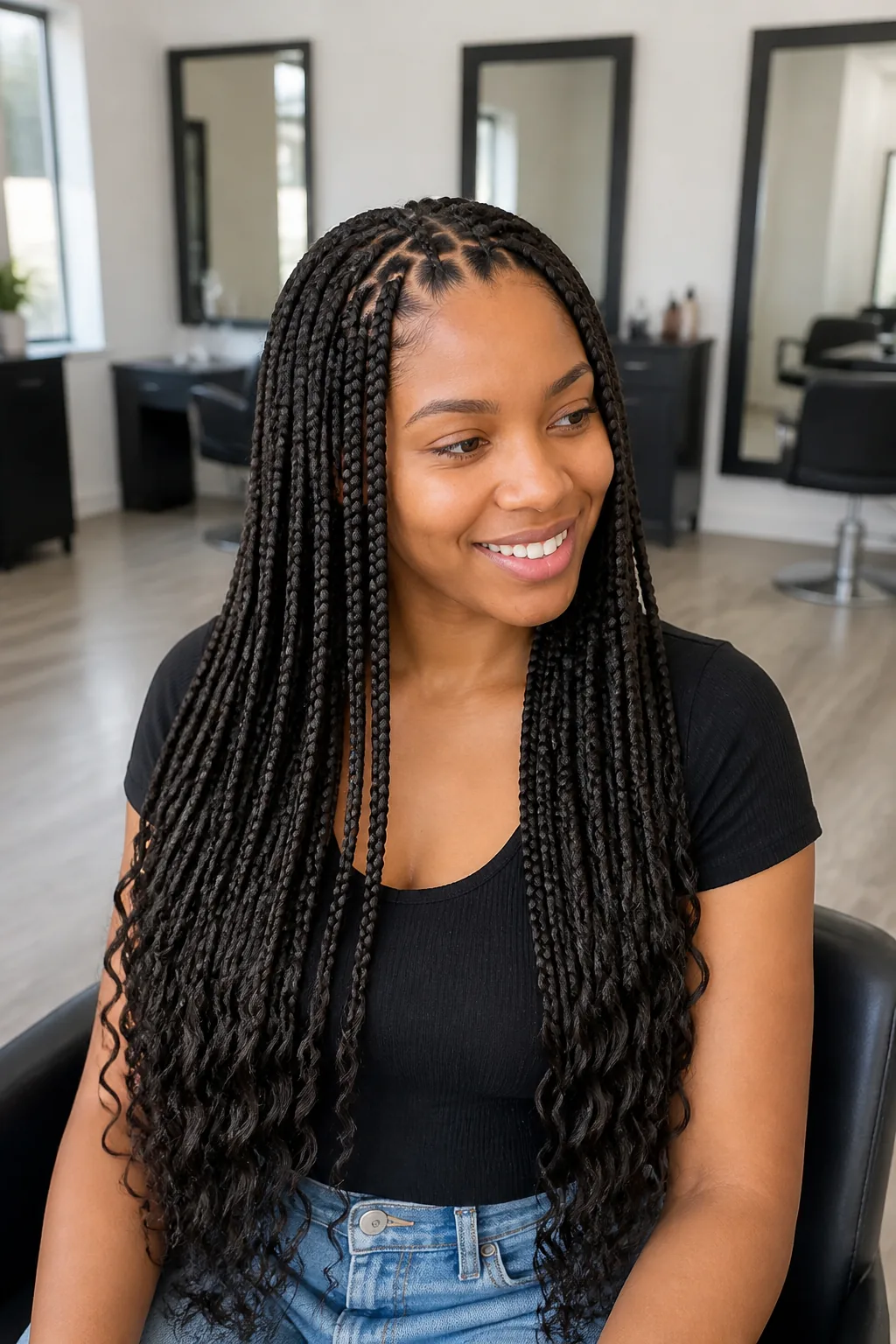
These 9 braids stay put from morning to night by keeping your hair out of your way and looking intentional, with a secure method for each one, from the classic French braid to double Dutch braids for active days.
I avoided braids for years because I was convinced they belonged to people with better coordination than me. Every tutorial I watched made it look like a five minute job, and then I’d stand in front of my mirror with three uneven sections, one arm aching, and a braid that unraveled before I reached the front door. Sound familiar?
Here’s the thing: braids are not a talent. They’re a habit, and like most habits, they get easier once you stop trying to make them perfect. A slightly loose braid looks better than a tight, fussy one anyway, because it has softness around your face and movement through the lengths. And in your 30s, braided hairstyles for women in 30s solve a very specific problem: they keep your hair out of your way, looking intentional, on days when you don’t have time to style it properly. Work, school runs, weekends away, dinners out. One braid, done in ten minutes, and you’re set until bedtime.
The nine braided hairstyles for women in 30s below are the ones I actually wear, not the ones that only work on a photo shoot. Each one tells you who it suits, how to do it step by step, and how to keep it secure, because a braid that slips out by lunchtime is worse than no braid at all. Start with the first two if you’re a beginner. They’re the foundation for everything else on this list.
1. The Classic French Braid
This is the braid to learn first, because every other one of the braided hairstyles for women in 30s on this list is a variation of it. A French braid starts at the top of your head and picks up new hair as it travels down, so it sits close to your scalp and holds all day. It looks polished at work and it keeps every layer tucked in, which matters if your hair is layered and shorter pieces keep escaping.
Who it suits: honestly, almost everyone, but it’s a gift if your hair is layered or you have face framing pieces that fall out of ponytails. It’s also the best braid for medium to long hair, because you need enough length for the braid to travel down the back of your head.
How to do it: brush your hair back and take a section from the front top of your head, about three inches wide. Split it into three equal strands. Cross the right strand over the middle, then the left strand over the new middle. Now, each time you cross a strand over, pick up a small new section of loose hair from that side and add it to the strand before you cross it. Keep your sections even and your hands close to your head. When you run out of loose hair, finish with a regular three strand braid and tie it off.
How to keep it secure: braid on second day hair if you can, because clean hair is slippery and the braid slides. A little texture spray or dry shampoo at the roots before you start gives your fingers something to grip. And tie the end with a small clear elastic, then tug gently at the edges of the braid to loosen it. That tug, called pancaking, makes the braid look fuller and stops it from feeling too tight.
Styling tip: if your braid feels too severe, pull out two soft pieces at the front before you start. They frame your face and make the whole style look relaxed instead of scraped back.
2. The Dutch Braid
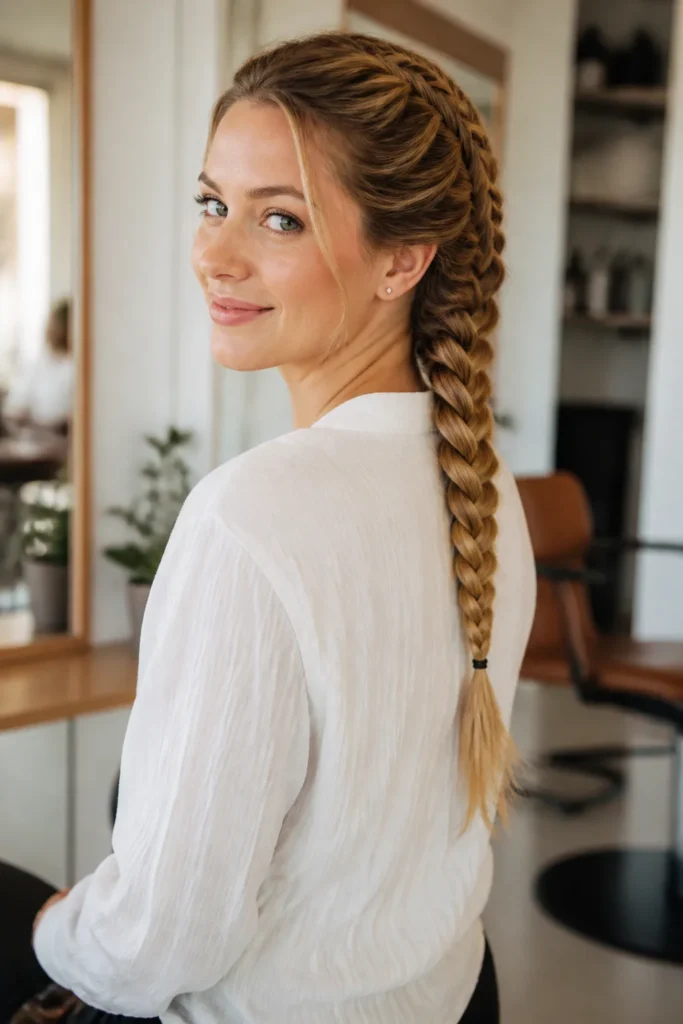
The Dutch braid is the French braid’s bolder sister. Instead of crossing strands over the middle, you cross them under, so the braid sits on top of your hair instead of tucked into it. It looks thicker, more defined, and it holds even better, which is why it’s the braid I reach for on active days.
Who it suits: this is the braid for thick hair, because the raised shape shows off all that volume. It’s also brilliant for fine hair that disappears into a French braid, since the underhand technique pushes the braid outward and makes it look fuller. And if you work out, chase kids, or spend your weekends outdoors, this is your braid. It does not budge.
How to do it: start exactly like a French braid, with a section from the front top of your head split into three strands. The only difference is direction. Cross the right strand under the middle, then the left strand under the new middle, adding a new section of loose hair to each strand before you cross it under. Keep the tension even and your hands close to your scalp. Finish with a regular braid (still crossing under) and tie it off.
How to keep it secure: because the braid sits on top, it can feel looser at first, so keep your sections small and your tension steady. A few bobby pins at the nape, pushed in against the direction of the braid, lock the tail in place. If you have layers, a light mist of hairspray along the braid before you finish catches the shorter pieces.
Styling tip: Dutch braids look fantastic slightly loosened. Once it’s tied, tug the outer edges gently, one section at a time, starting from the bottom. You get a thick, soft braid that looks like you have twice as much hair.
3. The Fishtail Braid
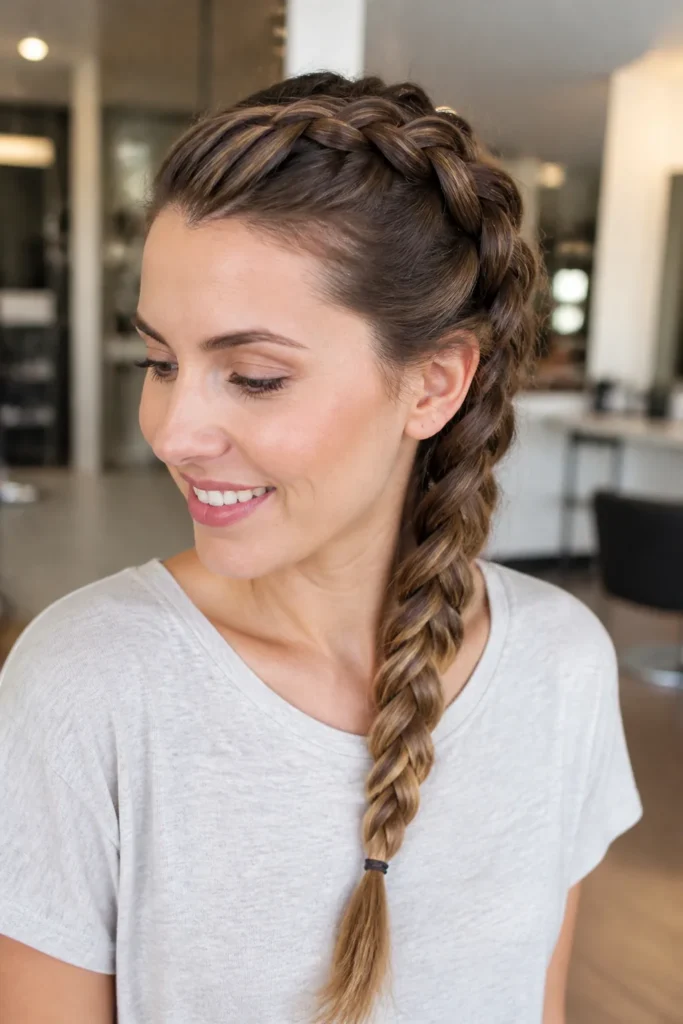
Among braided hairstyles for women in 30s, the fishtail looks complicated and it really isn’t. Instead of three strands, you use two, and you pass small pieces from one side to the other. The result is a flat, intricate looking braid that reads as fancy, even though it takes about the same time as a regular braid once you’ve done it twice.
Who it suits: long hair shows off a fishtail best, because the pattern needs length to repeat enough times to be visible. It suits straight and slightly wavy hair most easily, since very curly hair hides the pattern. And it’s a lovely weekend braid, because it looks detailed without trying too hard.
How to do it: gather your hair into a low ponytail at the nape (you can remove the tie later, or keep it for grip while you learn). Split the ponytail into two equal sections. Take a thin piece from the outside of the right section, cross it over to the inside of the left section. Then take a thin piece from the outside of the left section and cross it over to the inside of the right section. Keep going, alternating sides, with small even pieces. The smaller your pieces, the more detailed the braid looks. Tie it off at the end.
How to keep it secure: fishtails loosen more easily than French or Dutch braids, so start with hair that has some grip, second day hair or hair with a little texture spray. Keep your pieces small and your tension consistent. When you finish, hold the end firmly while you tie it, because the whole braid can slip if you let go.
Styling tip: a fishtail looks best messy. Once it’s tied, pull it gently wider along its whole length, and let a few pieces fall out around your face. The undone finish is the whole point.
4. The Crown Braid
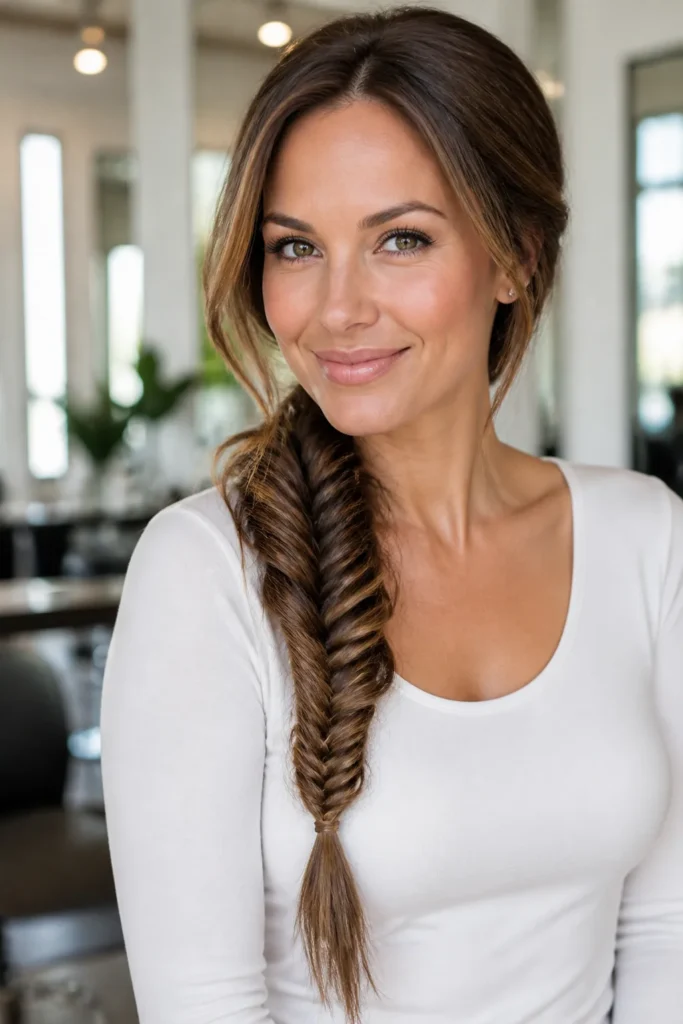
A crown braid wraps around your head like a headband made of your own hair. It sounds like an occasion style, and it is, but it’s also one of the most practical styles on this list, because it keeps every single hair off your neck and face. I wear it to dinners out, to work events, and on hot days when I want my hair completely up without a bun.
Who it suits: medium to long hair works best, because you need enough length for the braid to travel all the way around. It suits you if you like the look of an updo but don’t want the fuss of pins and rolls. And it’s kind to round and full faces, because the braid sits high and draws the eye upward.
How to do it: part your hair down the middle or to one side, whichever you prefer. Start a Dutch braid (crossing under, so it sits raised) just above one ear, and braid along your hairline, picking up hair as you go, all the way around your head. When you reach the other side, finish the remaining hair as a regular braid and pin the tail underneath the start of the crown, tucking it in with bobby pins. This is the fiddliest braid on the list, so give yourself fifteen minutes the first time.
How to keep it secure: pins are everything here. Use bobby pins that match your hair color, and push them in so they catch both the braid and the hair underneath. Cross two pins in an X at the spots that feel loosest, usually just above each ear and at the nape. A light hairspray mist over the finished crown sets it without stiffness.
Styling tip: don’t aim for a perfect circle. A slightly uneven crown, with a few soft pieces loose at the front, looks romantic. A ruler straight one looks like a costume.
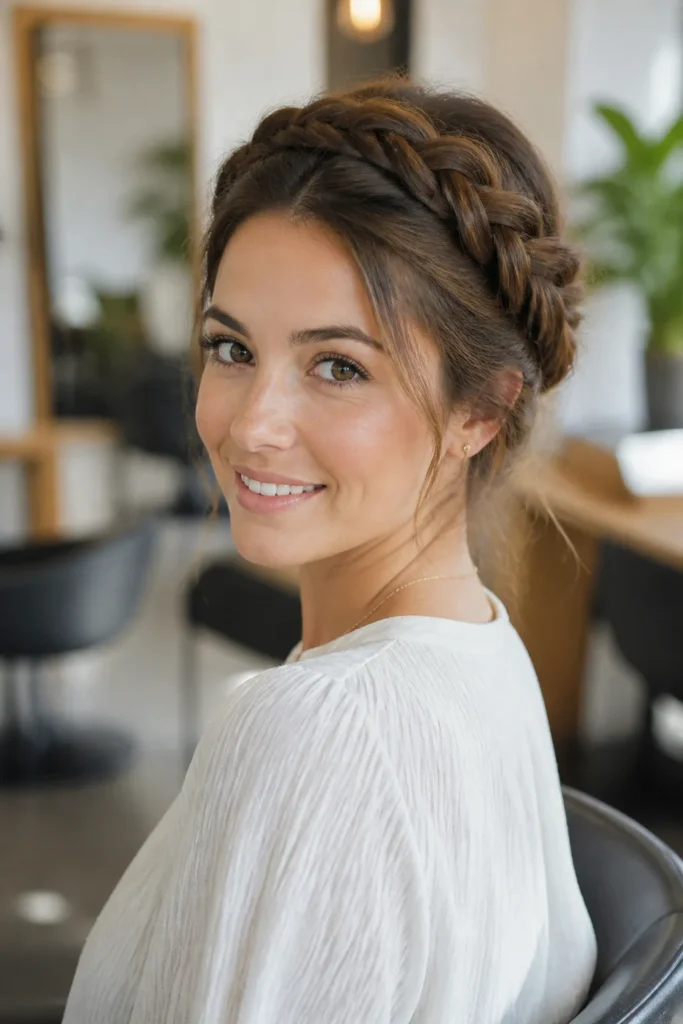
5. The Side Braid
The side braid is the easiest of these braided hairstyles for women in 30s and the one I wear most. You sweep all your hair over one shoulder and braid it loosely down the front. It takes five minutes, it looks soft and pretty, and it works on days when your hair is neither clean enough to wear down nor dirty enough to hide.
Who it suits: everyone, honestly, but it’s especially good for long hair, because the braid sits where people can actually see it, over your shoulder instead of down your back. It’s also the best braid for fine hair, because a loose side braid with pulled out edges looks much fuller than a tight braid down the back.
How to do it: sweep all your hair over one shoulder. Split it into three sections and braid normally, crossing over, all the way down. Don’t pull tight. Let the braid be loose and a little uneven. Tie it off with a small elastic, then tug the edges gently to widen it. Pull out a few face framing pieces at the front.
How to keep it secure: side braids slip because gravity pulls them forward, so start the braid a little higher than you think, just behind your ear, and braid at a slight angle toward your shoulder. A clear elastic holds better than a fabric one here, because it grips without sliding. If your hair is very slippery, braid it slightly damp and let it dry in the braid.
Styling tip: drape the finished braid over the opposite shoulder from your part. That little diagonal across your chest is what makes it look styled instead of accidental.
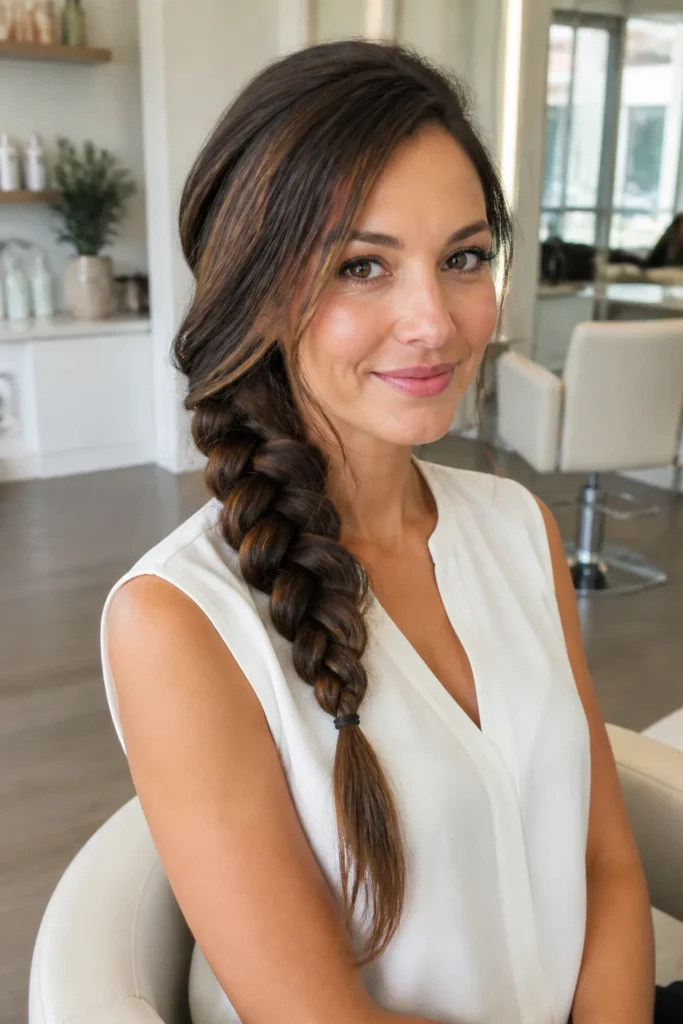
6. The Half-Up Braid
The half-up braid is for days when you want your hair off your face but you still want to wear it down. You braid just the top section, from your temples back, and pin it at the back of your head, leaving the rest of your hair loose. It’s polished at work, pretty at dinner, and it takes about five minutes.
Who it suits: this is the braid for layered hair, because the top section is usually the part that falls in your face, and braiding it back solves that without putting all your hair up. It also suits you if you love wearing your hair down but you’re tired of pushing it out of your eyes by 10 a.m.
How to do it: take a section from each temple, about two inches wide, and bring them toward the back of your head. You have two options. The simplest is to braid each side separately into a small braid and pin them together at the back. The prettier option is to start a small French braid at one temple, braid across the back of your head picking up hair as you go, and finish it at the other temple. Either way, pin the ends with bobby pins hidden underneath.
How to keep it secure: the half-up braid fails when the pins slide, so use two pins crossed in an X at the meeting point, and push them into the hair underneath, not just into the braid. If your hair is fine, tease the crown lightly before you start, which gives the pins something to hold.
Styling tip: leave the bottom layers completely alone. The contrast between the neat braided top and the loose lengths underneath is what makes this style look good.
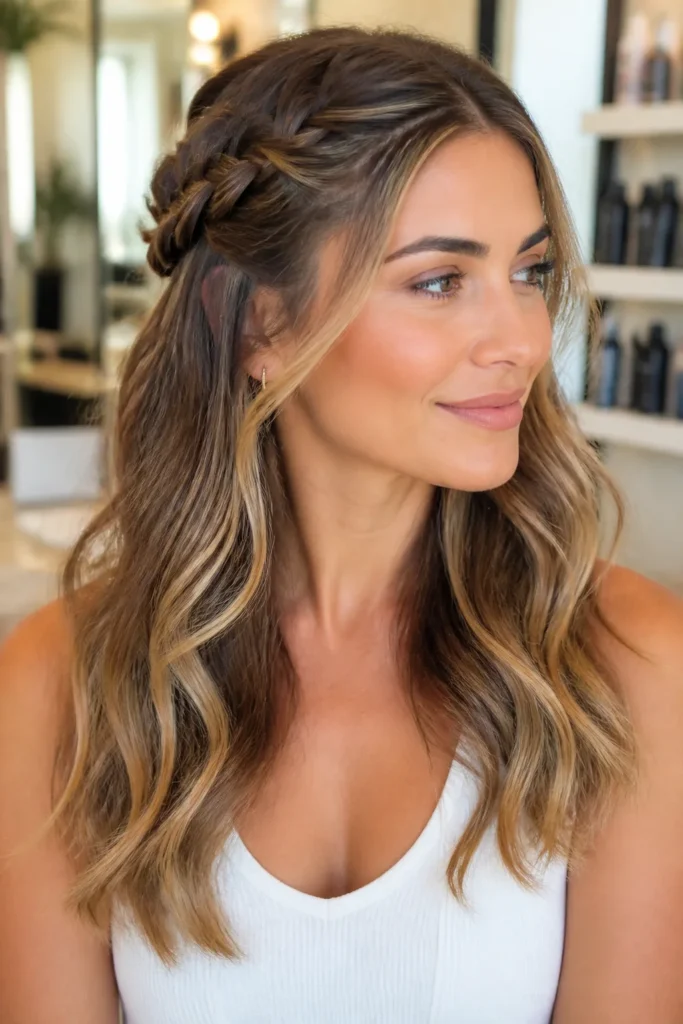
7. Double Dutch Braids
Double Dutch braids, the ones people call boxer braids, are two Dutch braids, one on each side of your head. They’re the most secure of these braided hairstyles for women in 30s, full stop. Nothing moves, nothing falls out, and you can wear them from a morning workout straight through to dinner without touching them.
Who it suits: active days, first and foremost. Gym, hiking, a long day out with the kids, a day when you know you won’t get a moment to fix your hair. They also suit thick hair beautifully, because two braids distribute all that volume. And they’re a great option if you’re growing out a shorter cut, because they catch every layer.
How to do it: part your hair straight down the middle, from forehead to nape. Clip one side out of the way. Dutch braid the other side from the front hairline all the way down to the nape, crossing under and picking up hair as you go, then finish the remaining length as a regular braid and tie it off. Repeat on the other side. Keep your part straight and your sections even, because asymmetry shows with two braids.
How to keep it secure: these braids hold themselves, honestly, but two things help. Braid with steady, even tension, not maximum tension, because a too tight braid pulls at your hairline all day. And tie each braid with a small elastic, then wrap a tiny section of hair around the elastic and pin it underneath for a clean finish.
Styling tip: loosen both braids the same amount. If one is fat and soft and the other is tight and skinny, the whole style looks lopsided. Tug section by section, checking in the mirror as you go.
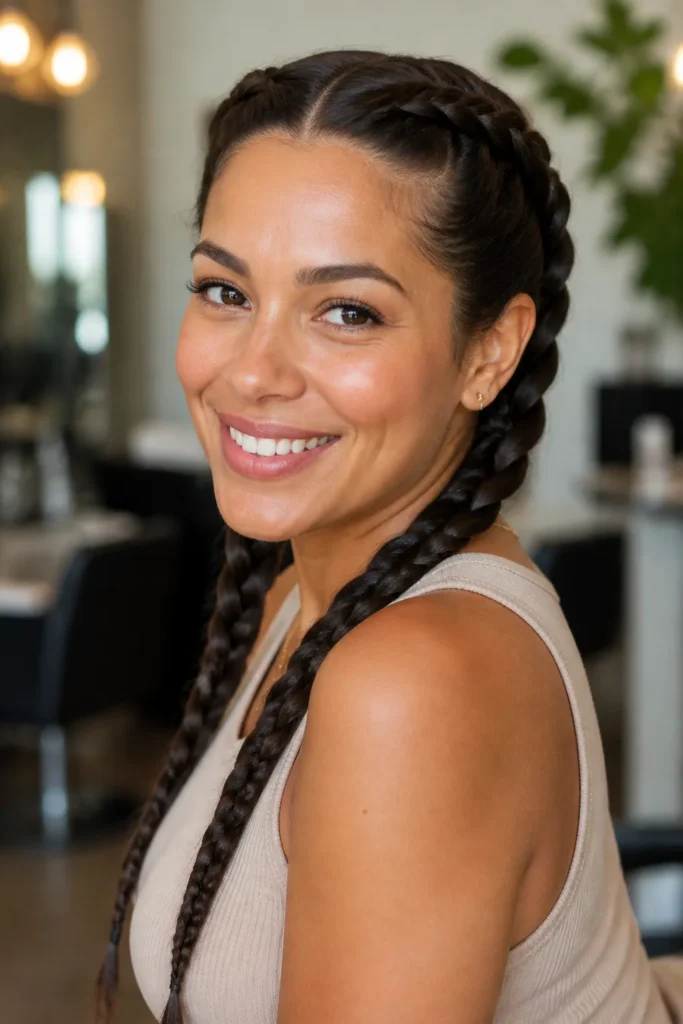
8. The Waterfall Braid
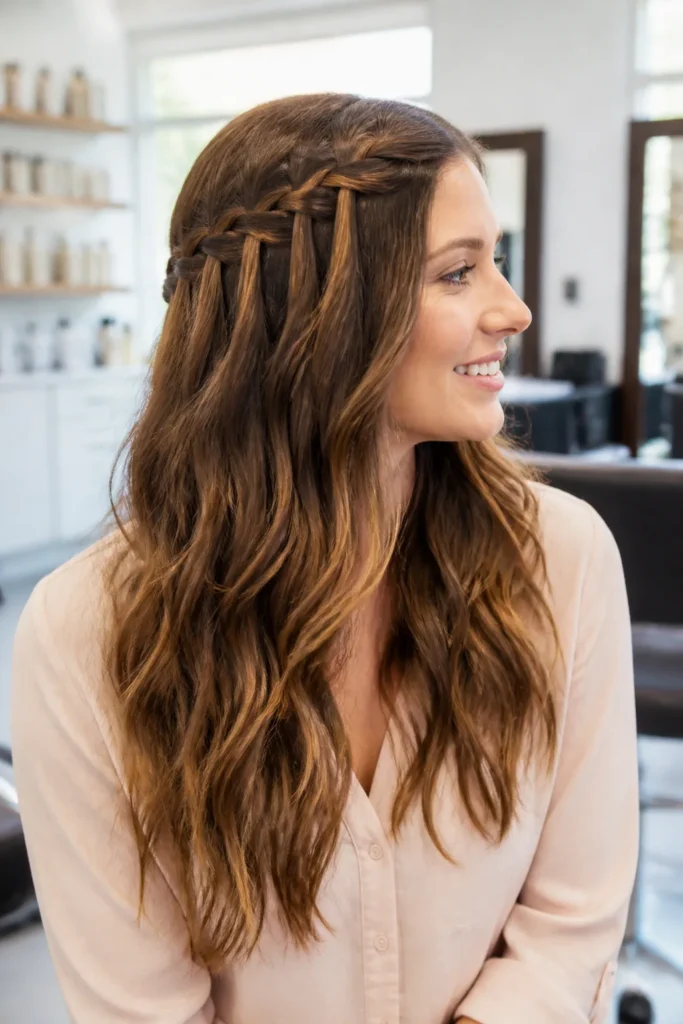
The waterfall braid is the prettiest braid on this list, and the one that gets the most compliments. It’s a French braid where, instead of picking up every strand, you drop one strand each time and pick up a new one, so pieces of hair cascade down through the braid like a waterfall. It looks intricate, but once you understand the drop, it’s just a French braid with one twist.
Who it suits: dinner out, a date, a weekend lunch where you want to look like you tried. It shows best on long hair with some length to cascade, and on hair with highlights or dimension, because the dropped pieces show off the different tones. Straight and wavy hair show the pattern most clearly.
How to do it: start a French braid at one temple, braiding back along your head. Here’s the twist: each time you would normally add a new section to the top strand, drop that strand completely and let it fall, then pick up a fresh section of hair from just below it and continue. So the braid travels across your head while pieces drop out of it along the way. When you reach the other side, pin the end behind your ear or continue into a small regular braid.
How to keep it secure: the waterfall is the loosest braid on this list, so it needs help. Start with hair that has grip, and use a light hairspray on each section as you braid. Pin the end firmly behind your ear with two crossed pins, and pin the braid itself to your head at two or three points along its path, so it doesn’t slide down.
Styling tip: the dropped pieces are the style, so don’t tuck them back in. Let them fall naturally, and if one falls in your face, that’s fine. It looks soft, not messy.
9. The Braided Low Bun
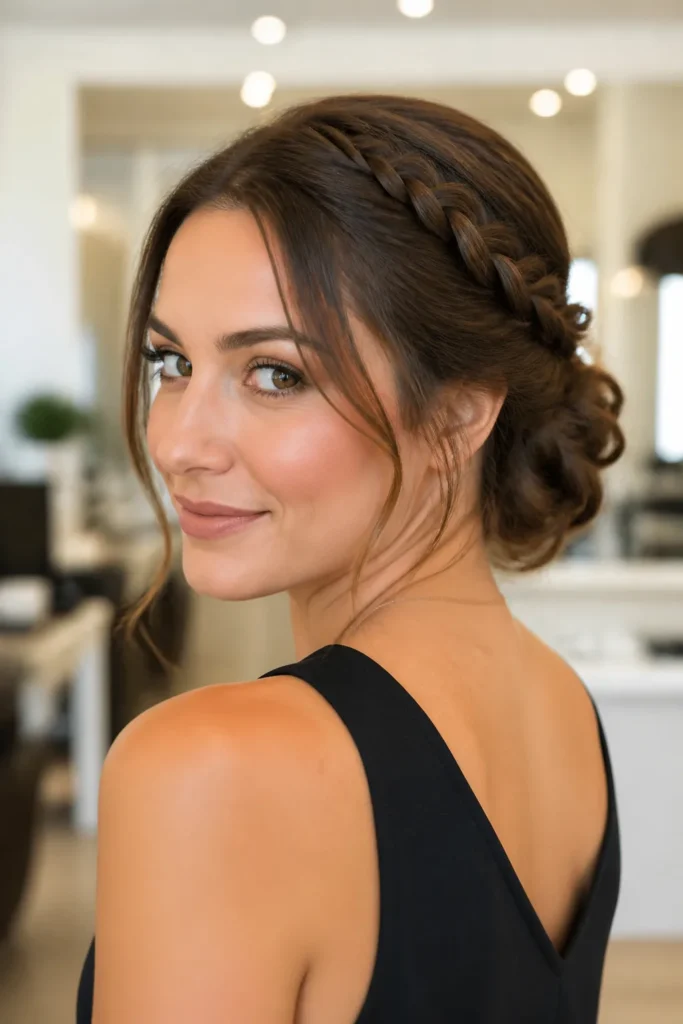
The braided low bun is my workhorse for days when I need to look polished but I don’t have time for a full updo. You braid your hair, then coil the braid into a low bun at the nape. The braid gives the bun texture and grip, so it holds far better than a plain bun, and it looks like you spent twenty minutes on it when you spent five.
Who it suits: work, interviews, dinners, any day when a loose style feels too casual. It’s also the best braid for thick, heavy hair, because the braided coil distributes the weight and doesn’t pull the way a ponytail does. And it suits you if your hair is long enough to braid but you find loose braids get in your way.
How to do it: gather your hair into a low ponytail at the nape and braid it normally, or French braid from the top of your head all the way down if you want a neater finish. Tie the end. Then coil the braid around its own base at the nape, tucking the end underneath, and pin it in place with bobby pins all the way around. Use at least six pins, more if your hair is thick.
How to keep it secure: pins, again, are everything. Push each pin through the coil and into the hair underneath, not just into the braid itself. Cross pins in an X at the bottom of the bun, where gravity pulls hardest. A mist of hairspray over the finished bun sets it without making it crunchy.
Styling tip: pull out two soft pieces at the front before you start, and leave them loose. A braided bun with no softness around the face can look severe. Those two pieces change the whole feeling of it.
Which One Should You Pick?
If you’re standing in front of the mirror right now trying to decide, here’s the shortcut. Start with your day, then your hair type, and let those two answers choose the right braided hairstyles for women in 30s for you.
For a regular workday: the classic French braid, the half-up braid, or the braided low bun. All three look polished, hold until evening, and don’t need fixing. For an active day: double Dutch braids, no contest. Nothing else on this list survives a workout and a school run back to back. For a dinner out or a special evening: the crown braid or the waterfall braid. The waterfall is the prettiest, and the crown is the most secure.
Now your hair type. Fine hair: Dutch braids and side braids add fullness instead of hiding it. Thick hair: French braids, double Dutch braids, and the braided low bun handle all that volume without pulling. Layered hair: the French braid and the half-up braid catch the shorter pieces that escape other styles. Long hair: the fishtail and the waterfall show off your length best.
One last honest note: you don’t have to master all nine. Learn the French braid properly and the rest follow, because the Dutch, the crown, the double Dutch, and the waterfall are all the same technique with one change. Pick two that fit your life, wear them until they feel easy, and then add a third. That’s how braids become a habit instead of a project.
Frequently Asked Questions
Can I braid short hair?
Yes, but pick the right braid. The half-up braid and the crown braid work on shoulder length hair, because they only need the top sections to reach around your head. Full French and Dutch braids need more length to travel down the back. If your hair is above your chin, try a small side braid at the front instead, which needs only a few inches.
How long will a braid last?
Among braided hairstyles for women in 30s, a French or Dutch braid done on second day hair will usually last all day and often into the next morning. Looser styles like the fishtail and the waterfall last more like six to eight hours before they soften, which is fine, because they look good soft. If you need a braid to survive a full day plus an evening, double Dutch braids are your safest bet.
Do braids damage your hair?
Braids done with gentle tension don’t damage hair, and they can actually protect it, because your ends are tucked away instead of rubbing on your clothes. What causes damage is braiding too tightly, especially at the hairline, and leaving tight braids in for days. If your scalp hurts or you see tiny bumps along your hairline, the braid is too tight. Redo it looser.
Should I braid clean or dirty hair?
Second day hair is ideal, because it has natural grip and the braid holds its shape. Clean hair is slippery, so if you just washed it, add texture spray or dry shampoo before you start, and braid slightly damp if you can.
How do I make thin hair braids look fuller?
Three tricks. First, use the Dutch technique, which pushes the braid outward. Second, pancake the braid by tugging the edges wider after you tie it, section by section. Third, start with texture spray at the roots, which gives fine hair the grip and volume it needs to hold a braid shape. Skip tight, small braids, which make thin hair look thinner.
For the full picture, see our hairstyles and haircuts guide.
The Bottom Line
Braided hairstyles for women in 30s are not about looking like you stepped out of a tutorial. They’re about having a style you can do in ten minutes, on a busy morning, that still looks good at dinner. Learn the French braid first, add one occasion braid for evenings out, and keep one secure braid for active days. That’s a complete braid wardrobe, and it covers every day you actually live.
If you’re still deciding where to start, start with the side braid. It’s the easiest on this list, it takes five minutes, and it teaches your hands the rhythm of braiding without any pressure. Once that feels easy, the French braid is one small step away. And if you want more hair ideas that pair with braids, the long hairstyles guide and the 5-minute hairstyles on this site work beautifully alongside these braids, whether you wear your hair braided, loose, or half up.