
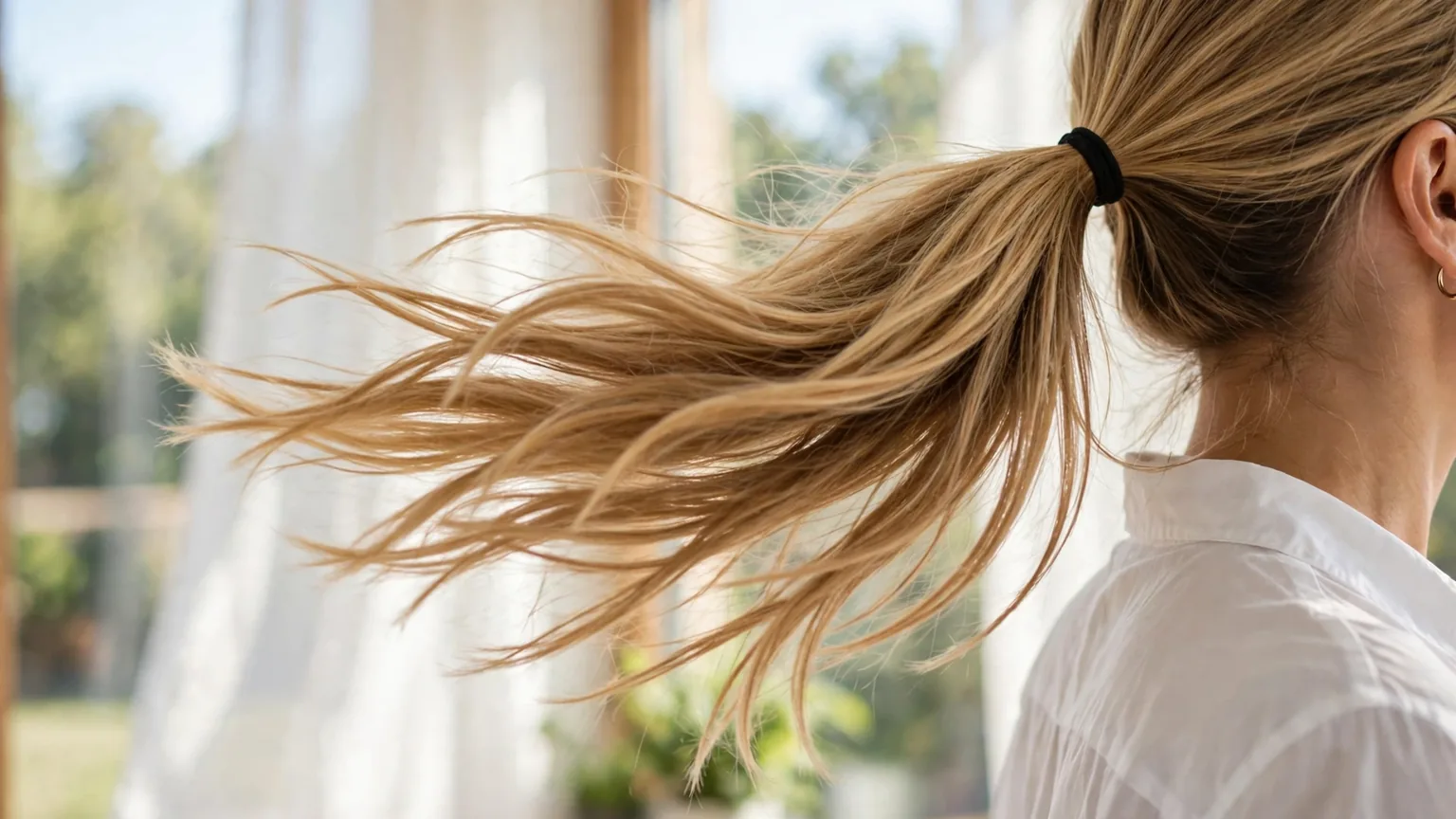
The secret to side part ponytail hairstyles for women in 30s is a deep, clean part paired with softness everywhere else: place the part deliberately, then keep the ponytail full and the face-framing pieces loose. That contrast is what makes the style look considered instead of accidental.
A side part changes everything about a ponytail, and that is exactly why it can go wrong. Done casually, it looks like your hair just fell that way. Done deliberately, it looks like a styling choice, and it is one of the most flattering choices there is: a deep side part adds volume at the crown, softens a strong jaw, and gives the whole style a sense of direction.
The side part ponytail hairstyles for women in 30s below all follow one rule: the part is precise, everything else is soft. The part itself should be clean and deep, while the ponytail stays full and textured and the front pieces stay loose. That balance keeps the style from looking severe, which is the risk with any deep part.
Before we start, find your better side. Part your hair on the side that gives you more volume naturally, which is usually the side you already favor without thinking about it. A side part fights you if it goes against your hair’s natural fall, so work with the grain, not against it, and the style will hold far longer. You do not need much kit for these styles: a tail comb for a clean part line, thick fabric-covered elastics, bobby pins matched to your hair color, a light texturizing spray, and a flexible hold spray for finishing. That small kit covers every version below, and it is worth assembling before you start, since hunting for pins with half-gathered hair is how a good style goes wrong. Keep the comb and pins by the mirror and the sprays within reach, and each style gets faster the second time you do it.
1. The Deep Side Part High Ponytail
This is the signature version, and the one to master first. Create a deep part, roughly in line with the arch of your eyebrow, using the end of a comb for a clean line. Smooth the heavier side back gently, keeping the volume at the crown, and gather everything into a high ponytail at the crown.
The heavy side is where the style lives. Let it sweep back with a little height, rather than flattening it, because that sweep is what gives the ponytail its shape. Once secured, backcomb the ponytail lightly underneath for fullness, wrap a strand around the elastic, and pull one soft piece free on the lighter side of the part.
This version lifts the face and photographs beautifully from the front, because the deep part creates a natural diagonal line, and that diagonal is what makes side part ponytail hairstyles for women in 30s so flattering. It suits oval, round, and heart-shaped faces especially well. If the part keeps sliding back toward the middle during the day, set it with a light mist of spray right after parting, before you gather the hair.
2. The Soft Side Part Low Ponytail
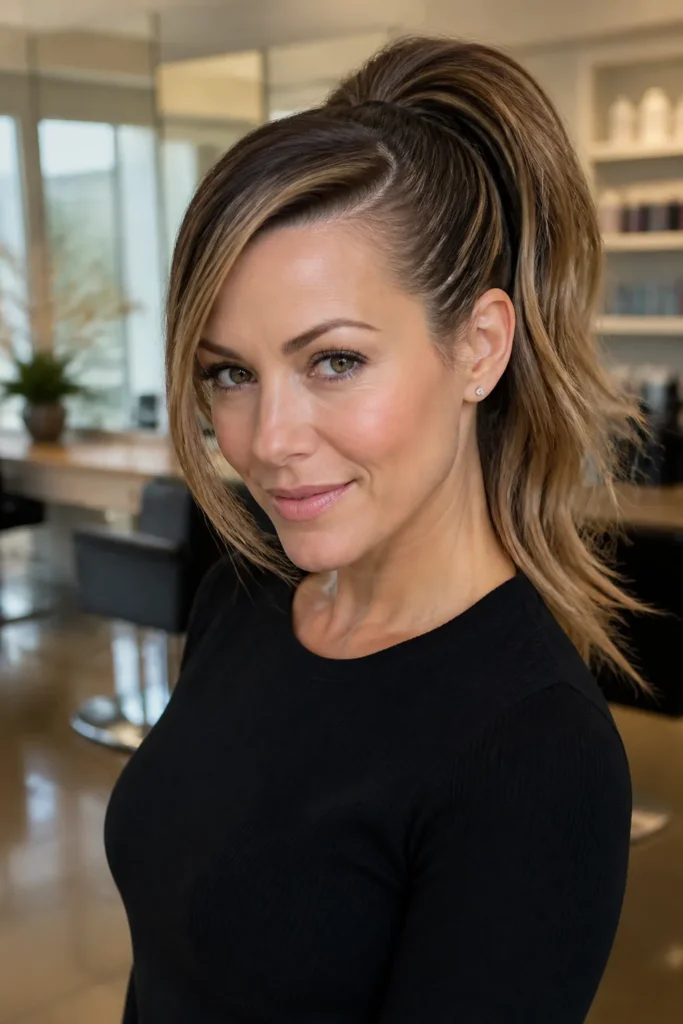
The low version is the grown-up, office-friendly take on the side part ponytail. Part the hair deeply but softly, without a razor-sharp line, and gather it low at the nape, slightly to the opposite side of the part. The low placement keeps the whole style calm and understated.
Keep the front soft here. Let a few pieces fall around the face on the heavier side, and do not pull the hair tight against the scalp. A low side part ponytail that is pulled tight looks severe, while one with a little looseness at the front looks relaxed and expensive. One pin at the nape, placed upward into the base, anchors it without showing. Pin direction is the detail most people get wrong with a low ponytail: pins pushed downward slide out as the head moves, while pins pushed upward into the base catch the hair above them and stay put. Check the nape with a hand mirror before you leave, since the nape is the angle everyone behind you sees and the one you never check. A quick check catches the pin that is showing or the section that has slipped lower on one side, both of which take seconds to fix at home and hours of annoyance if discovered later.
This is the best choice for work days and for any occasion where you want to look polished without drawing attention to the hairstyle itself. It pairs beautifully with a blazer, a coat, or a simple dress, because it stays out of the way of the outfit while still looking finished. Setting the part is worth thirty extra seconds in the morning: draw the line with the end of a tail comb, mist it lightly, and press it flat with your fingers for a few seconds so it sets before you gather the hair. If the part drifts by midday, which happens on fine hair, a quick re-draw with a comb in the bathroom takes seconds and restores the whole style. The part is the foundation of every version in this list, so keeping it clean is the highest-value maintenance you can do.
3. The Side Part Ponytail With Crown Volume
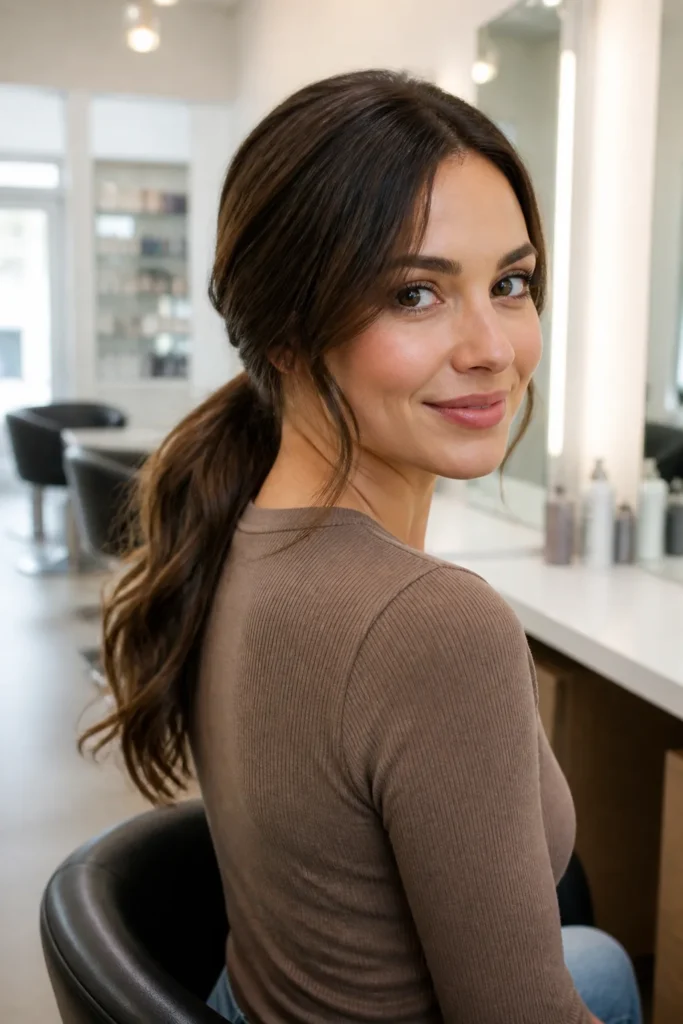
If your hair tends to fall flat, this version builds the volume in on purpose. After parting deeply, backcomb the roots on the heavier side of the part in small sections, working from the crown forward. Mist each section lightly before you move on, so the lift sets instead of collapsing when you gather the hair.
Gather the hair into a mid-height ponytail, keeping the crown height you just built. Do not smooth the crown down as you gather, which is the most common mistake with this style. Use your fingers, not a brush, and let the volume stay. This version of side part ponytail hairstyles for women in 30s is the one that makes the biggest difference for fine or flat hair, because the part and the backcombing work together to create lift that a center part cannot give.
Finish with a flexible hold spray, applied from underneath the crown rather than on top, so the spray supports the lift without flattening it. The result should look like your hair naturally has more body than it does, which is exactly the point.
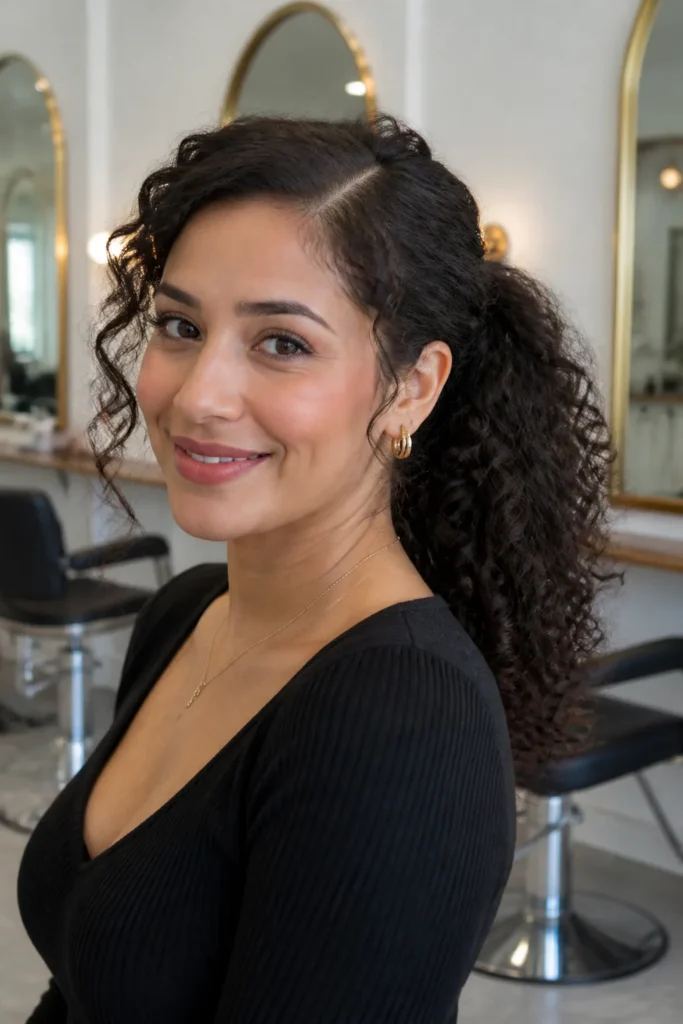
4. The Side Part Curly Ponytail
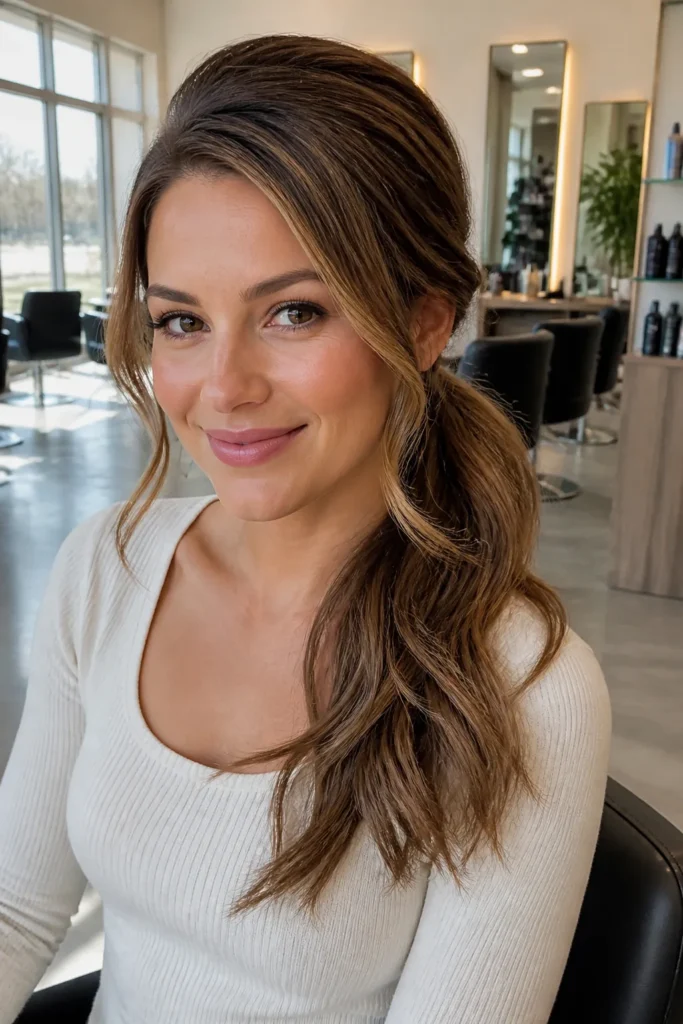
Curly hair takes a side part beautifully, because the part gives the curls direction instead of letting them expand in every direction. Part deeply on your better side, using your fingers rather than a comb so the curl pattern stays intact, and gather the curls into a mid-height ponytail on the opposite side of the part.
Let the curls be uneven. Do not try to smooth the heavier side flat, because the volume on that side is the whole point of the style. Pull a few curls free around the face on the lighter side to balance the look, and let the ponytail keep its full, rounded shape. A light curl cream scrunched through before gathering helps define the curls without stiffness.
This version is the most joyful in the list, and it is the best choice for anyone with natural curls who wants a ponytail with shape rather than just height. It holds well because curls grip each other, and the side part keeps the front from looking like a wall of curls. It looks better as the day goes on, as the curls relax into a softer shape. How you dry the curls matters as much as how you gather them: diffusing on a low heat setting keeps the curl pattern defined, while air drying gives a looser, softer result that suits this version well. If the curls look flat by afternoon, revive them with a light mist of water mixed with a drop of curl cream, scrunched gently through the lengths, rather than re-curling with heat. The refresh takes a minute and restores the shape without adding damage, which is why curly hair suits a ponytail that has to last.
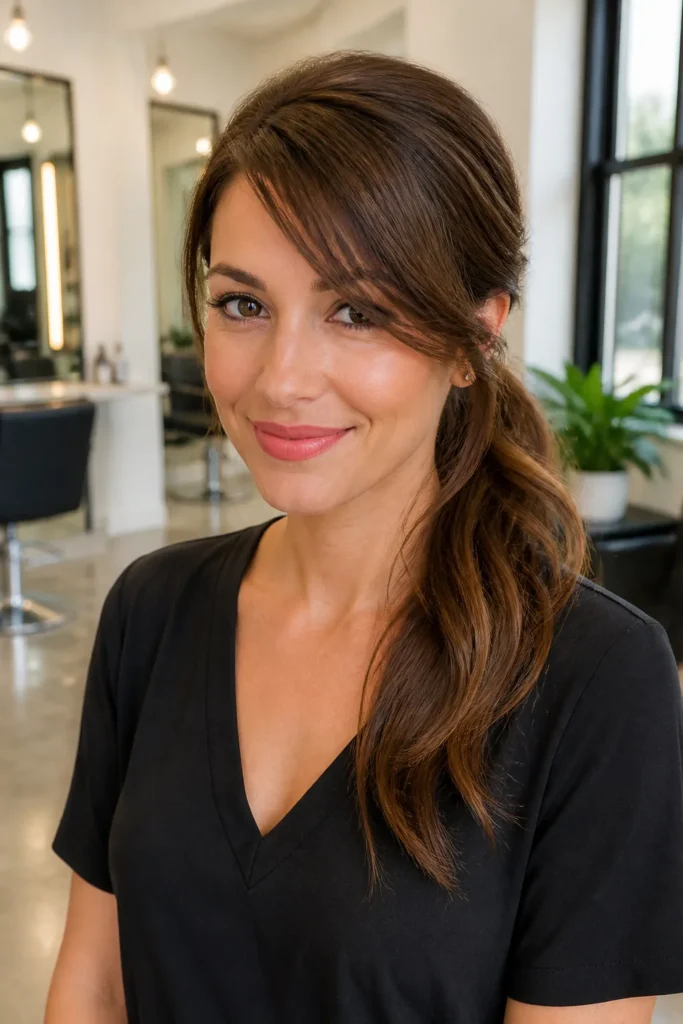
5. The Side Part Ponytail With Swept Bangs
If you have bangs or a long fringe, this version turns them into the feature. Part deeply, sweep the fringe across the forehead to the heavier side, and gather the rest into a mid-height ponytail. The swept fringe creates a soft diagonal across the forehead that flatters nearly every face shape.
The fringe needs to stay in place, so set it with a light mist of spray after sweeping, and pin it discreetly behind the ear on the lighter side if it keeps falling forward. Keep the ponytail itself full and textured, so the style does not become all about the fringe. Balance is the goal: the fringe frames, the ponytail carries. Fringe maintenance makes or breaks this version, since a fringe that is too long falls into the eyes and a fringe that is too short looks like a separate style. Trim the fringe every three to four weeks, or have it trimmed between full haircuts, so it stays at the length that sweeps cleanly across the forehead. Style the fringe with a small round brush, sweeping it across the forehead away from the part, and set it with a light mist before gathering the ponytail, so the sweep holds its shape through the day.
This version of side part ponytail hairstyles for women in 30s is the best choice for women growing out bangs, because it gives the fringe a job instead of letting it hang awkwardly. It also suits round faces particularly well, since the diagonal sweep breaks up the roundness of the face.
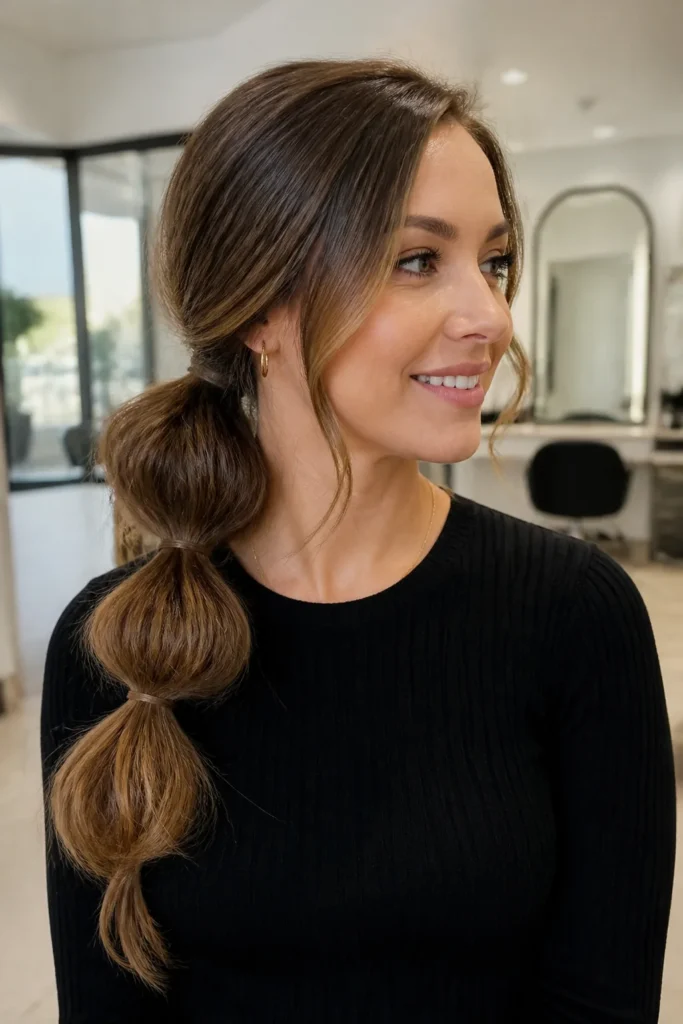
6. The Side Part Bubble Ponytail
The bubble ponytail with a side part looks more intricate than either style alone, and it still takes only a few minutes. Part deeply, gather into a high ponytail, then add small elastics down the length, spacing them a few inches apart. After each elastic, pull the section between elastics outward to puff it into a bubble.
Pull evenly on both sides so each bubble is round, and keep the bubbles similar in size. The side part adds an asymmetry at the front that makes the bubbles look less uniform and more styled. Use clear or hair-colored elastics for a softer look, and finish with flexible hold spray so the shape lasts.
This version works best on medium to long hair, since you need enough length for at least three bubbles. On shorter hair, two bubbles still read clearly. It is a great choice for events and evenings, when you want something that looks deliberate and a little playful at the same time. Spacing the bubbles evenly is what makes this version look polished rather than random, and the easiest measure is your own fingers: space each elastic about three finger-widths apart down the ponytail. Elastic color matters too, since bright elastics break the bubble shape visually, while clear or hair-colored ones disappear and let the bubbles read as pure shape. If a bubble comes out lopsided, do not redo the whole ponytail: just pull the flat side out gently until it matches the other side.
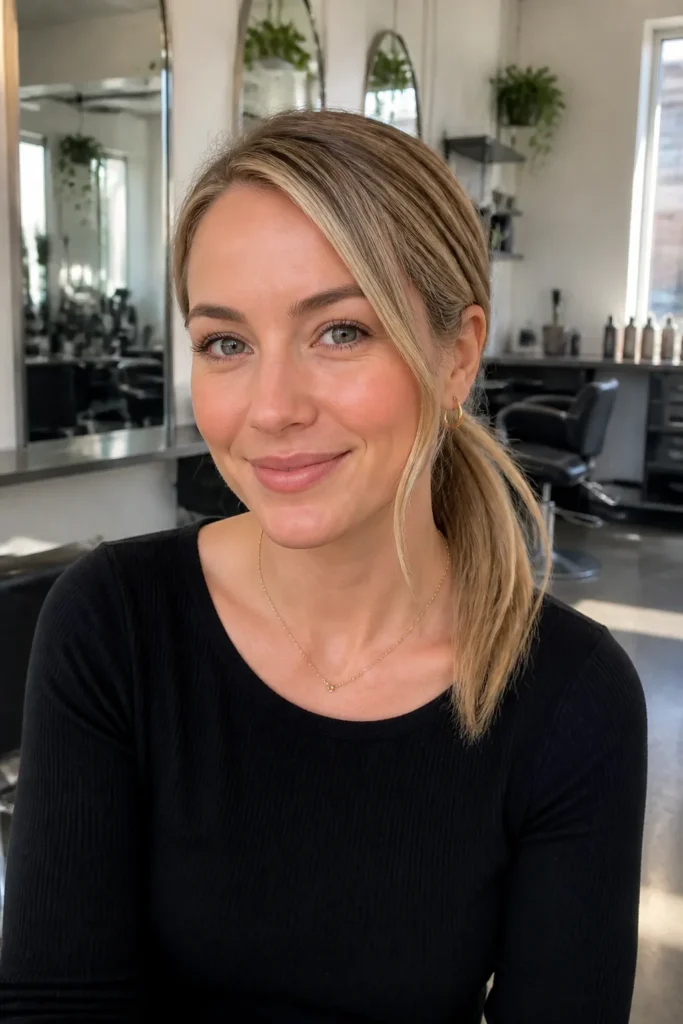
7. The Side Part Ponytail for Fine Hair
Fine hair and side parts are natural allies, because the part itself creates the illusion of more hair on the heavier side. Part deeply, backcomb the roots on the heavier side in small sections, and gather into a mid-height ponytail, keeping the crown height you just built. Do not smooth the crown down as you gather.
Make the ponytail itself look fuller by backcombing the underside lightly before securing, and by wrapping a strand around the elastic to hide it. The strand wrap matters more on fine hair, because a visible elastic emphasizes how little hair there is. A wrapped base makes the ponytail look thicker at a glance.
This version of side part ponytail hairstyles for women in 30s is the one that makes the biggest difference for fine hair, because the deep part and the backcombing work together to create lift that a center part cannot give. Avoid heavy products, which weigh fine hair down and undo the volume you just built. A light texturizing spray at the roots is enough, and a volumizing powder dusted sparingly at the crown adds lift without weight for fine hair that needs extra help. Apply the powder only at the roots on the heavier side of the part, work it in with your fingertips, and the lift lasts through the day without the stiffness a spray can leave behind.
8. The Side Part Ponytail for Evenings
The evening version takes the deep side part and adds polish without adding stiffness. Part deeply with a comb for a clean line, smooth the heavier side back with a little serum for shine, and gather into a high ponytail. Curl the lengths loosely with a wand, then brush through with your fingers so the curls fall as soft waves.
The shine is what separates this version from the daytime ones. A small amount of serum on the heavier side catches the light and makes the part look deliberate, while the soft waves keep the whole style from looking severe. Keep the front pieces minimal here: one thin piece on the lighter side is enough, since the evening version is about the sweep, not the softness.
This is the best choice for dinners, dates, and events where photographs are likely, because the deep part and the waves photograph beautifully from the front. It takes a few minutes longer than the daytime versions, mostly because of the curling, but the extra effort shows. The shine product deserves a careful choice here: a light serum gives the heavier side a polished glow, while a heavy oil flattens fine hair and makes the part look greasy by evening. Use a pea-sized amount, warmed between your palms, applied only to the heavier side and the lengths, never at the roots. On fine hair, skip the serum entirely and rely on the curling and the part for polish, since shine products are the fastest way to undo volume you just built.
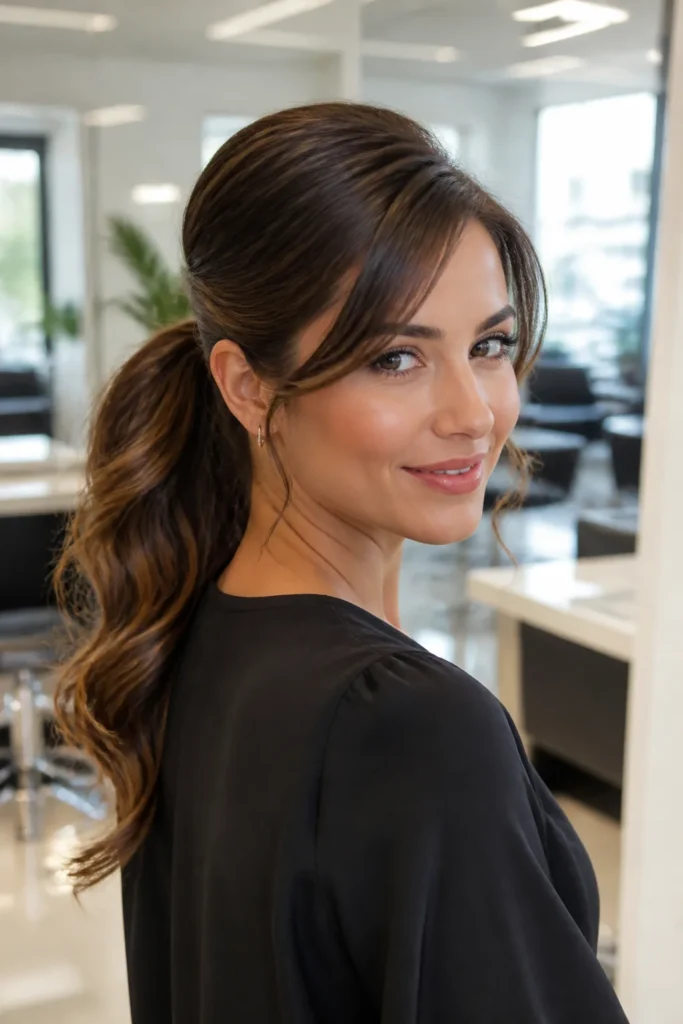
Which One Should You Pick?
Pick by your day first. For a normal work day, the soft low version or the crown volume version are the safest bets: polished, secure, and appropriate anywhere. For evenings, the evening version or the bubble version add polish and a little drama without needing new skills. For a casual day, the curly version is unbeatable if you have natural curls, because it works with the hair instead of against it.
Pick by your hair too. Thick hair suits the deep high version and the bubble version, which need weight and length. Medium hair is the most flexible and can wear nearly all eight. Fine hair should start with the fine-hair version, which builds lift in on purpose rather than hoping for it. And if you have bangs, the swept bangs version is the obvious home for them.
The one rule across all eight side part ponytail hairstyles for women in 30s: place the part deliberately, then keep everything else soft. A clean part with a soft ponytail reads as styled. A casual part with a tight ponytail reads as an accident. Get the part right first, and the rest of the style follows.
FAQ
How deep should a side part be?
Deep enough to be obvious, roughly in line with the arch of your eyebrow. A shallow part that sits just off center looks accidental, while a deep part reads as a deliberate choice. If a deep part feels too dramatic for you, start a little shallower and move it deeper over a few days as your eye adjusts.
How do I stop my side part from sliding back to the middle?
Set the part before you gather the hair. Mist it lightly with spray right after parting, and avoid brushing across the part line as you gather. If your hair has a strong natural part, work with it rather than against it: a side part that follows your hair’s natural fall holds far longer than one forced against the grain.
Can a side part ponytail look professional?
Yes, and the low version is the most office-friendly of the set. Keep the part clean, the front soft, and the ponytail full but not exaggerated, and the style reads as polished. Save the bubble version and the evening version for after work, when a little more drama is welcome.
What if my hair is very fine and the part shows scalp?
Backcomb the roots on the heavier side of the part in small sections before gathering, which creates coverage as well as lift. A light dusting of dry shampoo at the part line also reduces the contrast between hair and scalp. These side part ponytail hairstyles for women in 30s are built to work with fine hair, not against it, so the part should add fullness, not expose thinness.
Which side should I part on?
Your better side, which is usually the side you already favor without thinking about it. Stand in front of a mirror and part on each side in turn: the right side will give you more natural volume and a softer fall. That is the side to use, because a part that works with your hair’s natural direction holds longer and looks more natural.
The Bottom Line
A side part is a small change with an outsized effect, and that is what makes it worth doing properly. Place the part deliberately, keep everything else soft, and the ponytail stops looking like an accident and starts looking like a decision. That is the whole trick, and once you find your side, it becomes the fastest upgrade in your routine. These side part ponytail hairstyles for women in 30s work because they use the part as a tool, not as an afterthought, and the result is a ponytail with shape, direction, and intention.