
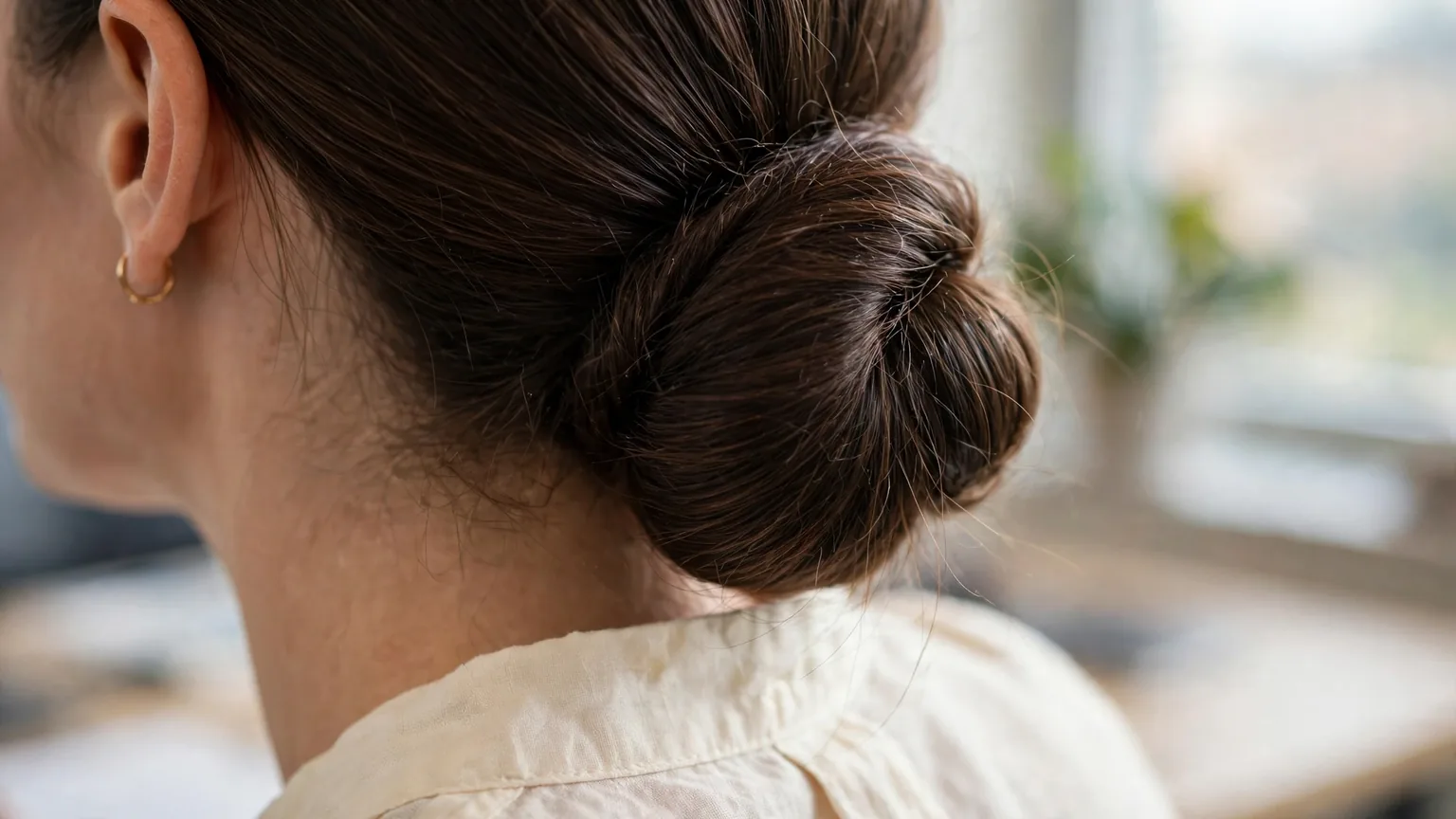
The secret to low bun hairstyles for women in 30s is a loose front with a firm base: keep the hair around your face soft, anchor the knot at the nape properly, and the low bun reads as elegant, not severe. Get that balance right and one style covers the office and a wedding.
The low bun is the hardest working hairstyle in this whole batch, and it does not get enough credit for it. It is appropriate at the office, at a wedding, at dinner, and on a day when you simply need your hair out of the way. Yet many women avoid it because their low buns look either severe or sloppy, with nothing in between. The difference between those two outcomes is small, and it is entirely in your control.
The low bun hairstyles for women in 30s below all follow one rule: soft in front, secure at the back. The hair around your face stays loose and touchable, while the knot itself is anchored firmly at the nape. That combination is what makes a low bun look elegant rather than scraped back or undone.
One practical note before we start: low buns live or die by the elastic. A thick, fabric-covered elastic grips at the nape without sliding, while a thin elastic migrates downward all day and drags the bun with it. Start with the right elastic and half the battle is already won. You do not need much kit beyond that: a comb for parting, a handful of bobby pins matched to your hair color, a light texturizing spray for grip, and a flexible hold spray for finishing. That small kit covers every version below, and it is worth assembling before you start, since hunting for pins with half-gathered hair is how a good style goes wrong. Keep the pins in a small dish by the mirror and the sprays within reach, and each style gets faster the second time you do it.
1. The Classic Low Chignon
This is the foundation version, and the one every other low bun builds on. Part your hair softly in the middle or slightly off center, gather it low at the nape, and twist it into a compact knot. Tuck the ends under and pin from underneath so the pins stay hidden.
Do not pull the front tight. Let the hair around your face stay soft, and leave the nape a little loose rather than cinched. A tight chignon can look severe, while a slightly loose one looks relaxed and expensive. Two pins at the sides of the knot and one underneath are usually enough to hold it all day.
This version suits nearly every occasion and every face shape, which is why low bun hairstyles for women in 30s built on a classic chignon never compete with your outfit. It is the best choice when you are unsure what a day requires, since it is appropriate everywhere. If your chignon keeps loosening, the twist was too loose, not the pins, so twist a little tighter next time and keep the front soft.
2. The Low Bun With a Center Part
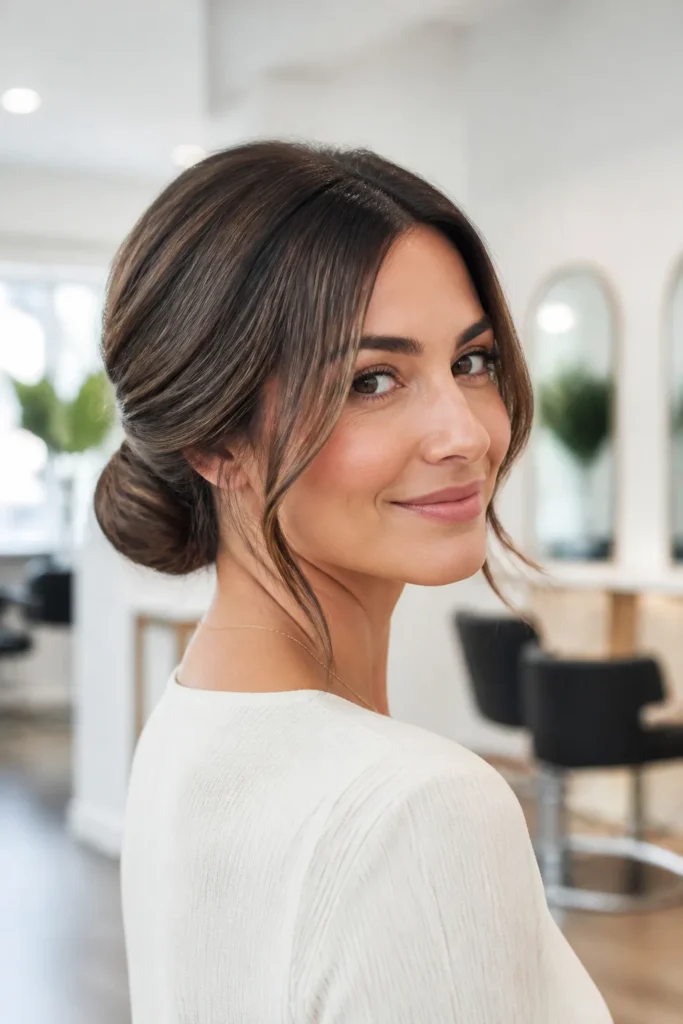
A center part gives a low bun a clean, symmetrical frame that looks especially polished. Part the hair down the middle with a comb for a straight line, smooth both sides back gently without flattening them completely, and gather into a low knot at the nape.
The symmetry is the point here, so keep both sides even. Pull out one thin piece on each side at the temples, equal on both sides, to soften the symmetry so it does not look rigid. The pieces should end around the cheekbone, not hang to the shoulders, or the balance tips from polished to undone.
This version is the best choice for formal occasions and for photographs, because symmetry photographs well and reads as intentional. It suits oval and heart-shaped faces particularly well. If a center part feels harsh on you, shift it just a fraction off center: even a centimeter softens the whole effect while keeping the clean frame. Drawing a straight part is a skill worth practicing, since a crooked center part undermines the symmetry the whole version depends on. Use the end of a tail comb, draw slowly from the hairline back, and check the line in the mirror from the front, not just from above, since a part that looks straight from above can still wander. If the part will not stay straight, mist it lightly before drawing, which gives the comb something to grip and the part something to set into.
3. The Low Twisted Bun
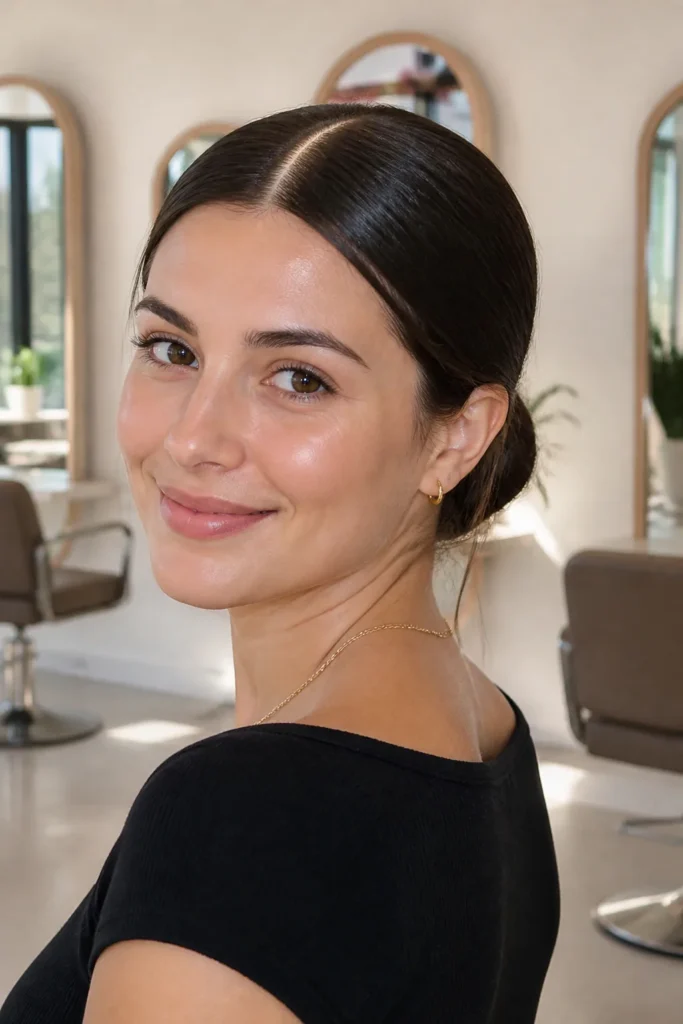
The twisted bun adds texture without adding difficulty, and it is the best version for hair that will not hold a smooth knot. Divide the low ponytail into two sections, twist each section in the same direction, then wrap the two twists around each other in the opposite direction. Coil the result into a bun at the nape and pin.
The opposing twists lock against each other, which is why this version holds better than a plain knot on silky or layered hair. Twist direction is the detail that makes this work: twist both sections in the same direction first, then wrap them around each other in the opposite direction, and the twists lock instead of unraveling. If the bun keeps loosening, you are almost certainly twisting inconsistently, which fights the lock rather than supporting it. Finish the ends by tucking them into the coil and pinning from underneath, so no stray ends poke out at the nape, which is the angle everyone behind you sees. It also creates a beautiful rope texture that looks far more intricate than it is. Let a few short layers escape near the nape rather than fighting them, since they add to the softness.
This version of low bun hairstyles for women in 30s is the one to choose on humid days or long days, when other buns loosen. The twist structure resists sagging, and the texture hides any frizz that develops. It takes about two minutes longer than a plain chignon, and the extra hold is worth every second.
4. The Low Bun With a Braid Detail
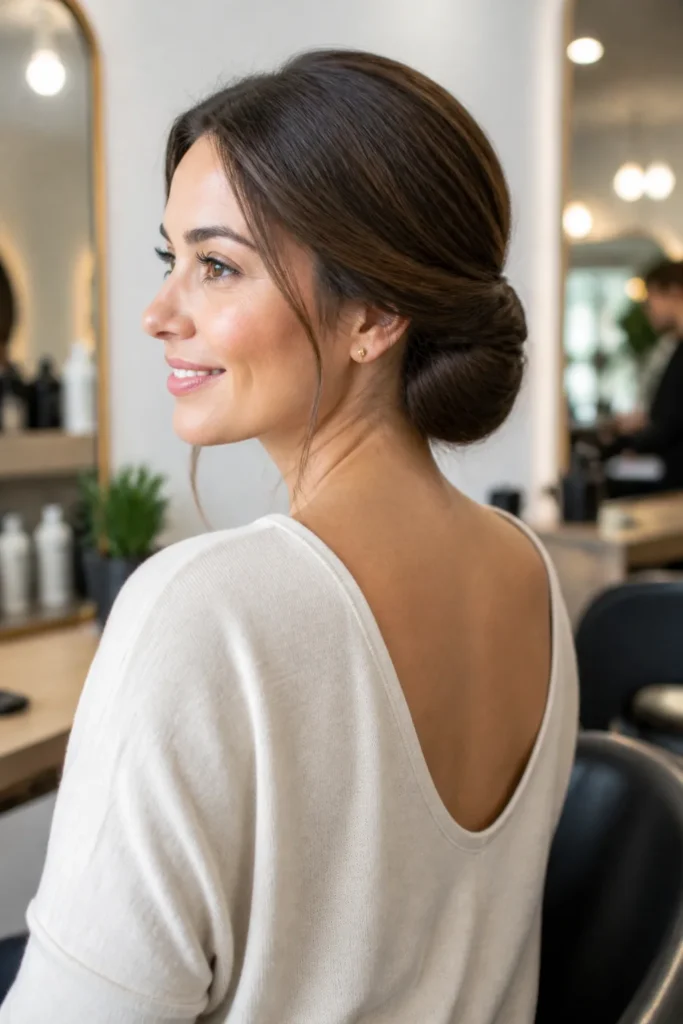
A braid detail turns a plain low bun into something that looks styled, without adding more than two minutes. Braid a small section from one temple, or from the front hairline, and wrap that braid around the base of the low bun before pinning. The braid hides the elastic completely and acts like a built-in accessory.
The braid should be loose and a little relaxed, or it will clash with the softness of the rest of the style. Pull the braid apart gently after braiding to widen it, then wrap and pin the end underneath the bun. If your hair is layered, braid from the front where the hair is longest, and let the shorter layers join the bun normally.
This version bridges casual and dressed up beautifully. It looks like you tried, which matters at work events and family gatherings, but it still takes minutes and survives the day. It also photographs well, because the braid gives the eye a detail to catch at the base of the bun. Braid tightness deserves attention here: a braid that is too tight looks like a separate, rigid piece against a soft bun, while a braid that is pancaked, gently pulled apart after braiding, blends into the bun’s softness. Secure the braid end with a tiny clear elastic before wrapping, so the braid does not unravel as you wind it around the base. If the braid keeps slipping off the bun, pin it at three points, the start, the middle, and the end, rather than relying on a single pin at the end.
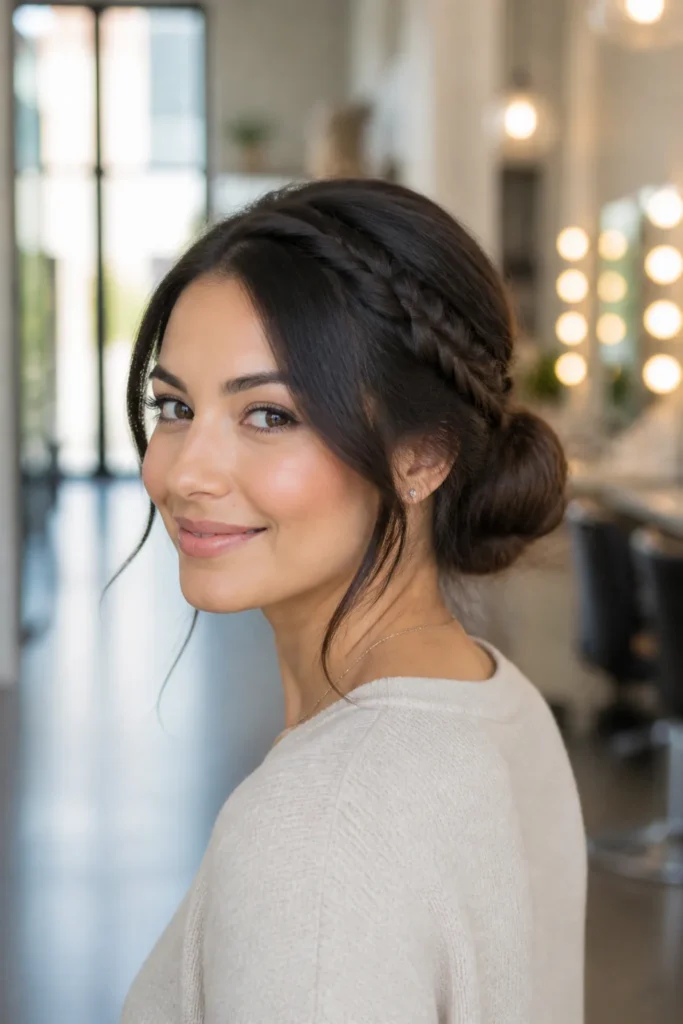
5. The Textured Low Bun
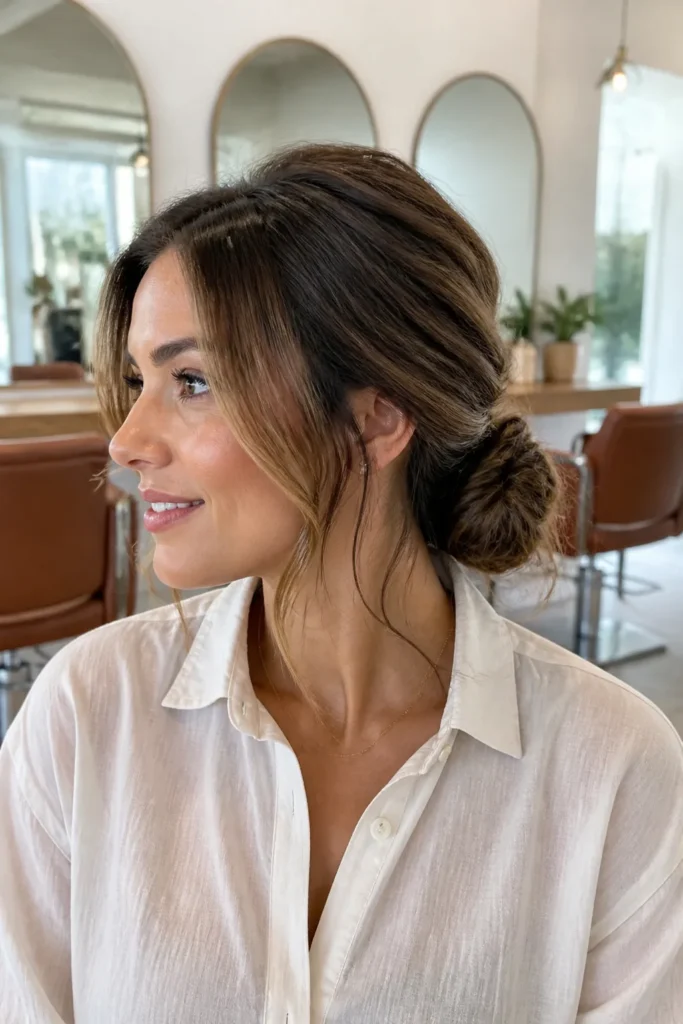
The textured low bun is the best version for hair that will not hold a smooth knot, because it stops trying. Work texturizing spray through the lengths, gather loosely at the nape without brushing smooth, twist loosely, and pin where the hair lands. Let short layers escape and let the surface stay uneven.
The unevenness is the point. A smooth low bun shows every flaw, while a textured one hides them in its own irregularity. Pull the bun slightly wider after pinning, and pull two soft pieces free at the temples. The result looks soft and touchable rather than scraped back.
This version of low bun hairstyles for women in 30s is the one to choose on humid days, on second-day hair, or on any day when smooth styling feels like a losing battle. Humidity deserves a specific plan, since it is the force most likely to undo a textured bun: finish with an anti-humidity spray applied lightly over the finished style, and keep the bun slightly looser than you would on a dry day, so the hair has room to expand without pulling pins out. If frizz appears by afternoon, smooth it with a tiny amount of serum on your palms rather than re-spraying, since added spray on top of humidity tends to stiffen the style without actually controlling the frizz. It takes about three minutes, it holds well because the texture grips, and it looks better as the day goes on, as the style relaxes into itself.
6. The Low Bun for Thick Hair
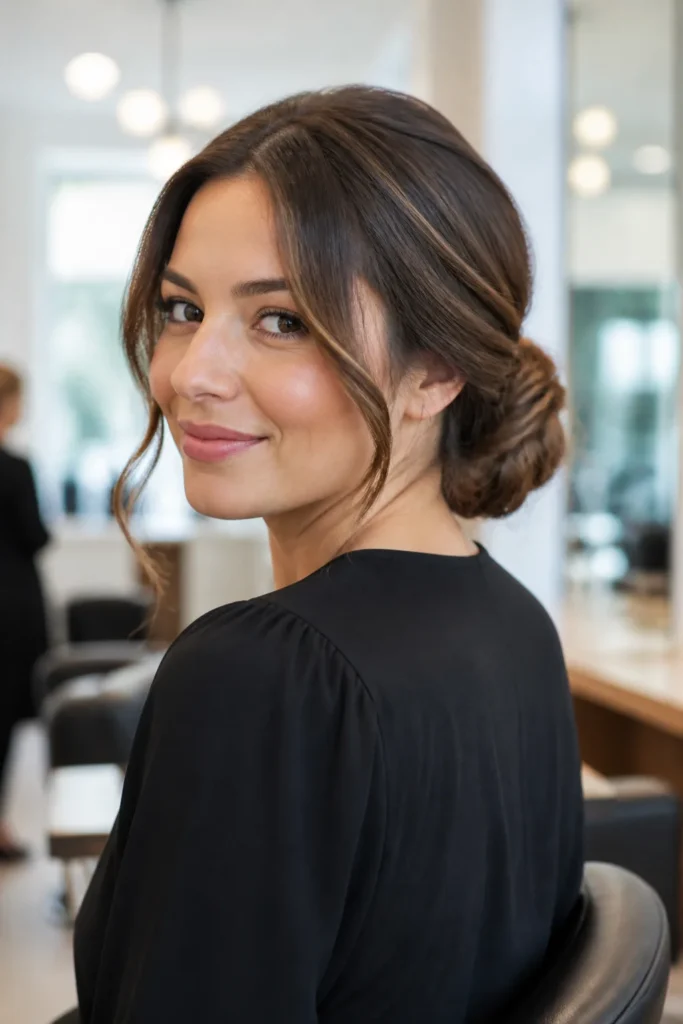
Thick hair makes a beautiful low bun, but it also makes a heavy one, and weight is the enemy of a low bun that has to last. The fix is to split the work: divide the hair into two sections, twist each one separately, then wrap them around each other into a single bun at the nape. Two twists hold better than one thick knot, and the bun sits flatter against the head.
Pin generously here, and pin from underneath so the pins stay hidden. Thick hair can hide a surprising number of pins, so do not be shy: four or five pins placed well beat two pins placed hopefully. Check the bun by shaking your head gently before you leave, and add a pin wherever you feel movement.
This version suits long, heavy hair best, and it is the most reliable low bun for a full day, because the split twists distribute the weight. It also looks more refined than a single bulky knot, since the twists create a neat, rope-like texture at the nape. Pin choice matters more for thick hair than for any other type: U-shaped hair pins grip a thick bun better than standard bobby pins, because they hold a larger section of hair without bending open. Use bobby pins for the edges and U-pins for the core of the bun, and place them from underneath so they disappear. Thick hair can hide a surprising number of pins, so do not ration them: a bun held by six well-placed pins outlasts one held by two hopeful ones.
7. The Low Bun for Fine Hair
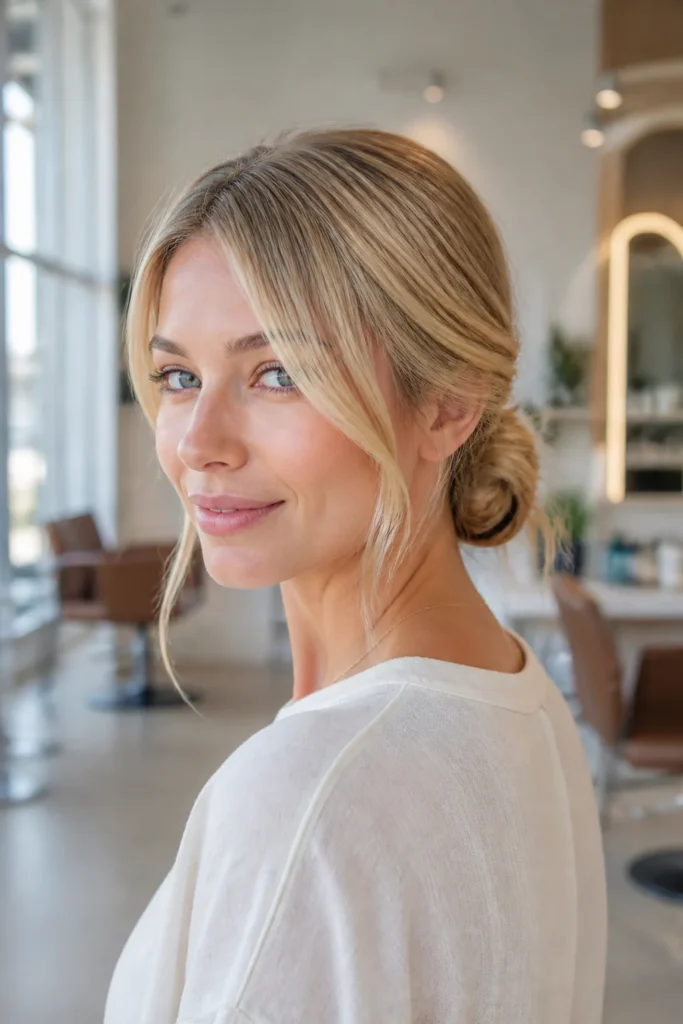
Fine hair and low buns have a difficult relationship, because the style needs fullness that fine hair does not naturally give. This version fixes that with preparation, not with more pins. Start by blow drying with a volumizing mousse, or by backcombing the ponytail gently before twisting. Both give the bun something to hold onto.
Make the bun smaller than you think it should be. A big, airy bun on fine hair collapses by midday, while a compact bun with pulled-out edges looks full and stays put. Teasing the ponytail is the single most useful step here: it doubles the apparent thickness of the bun and gives pins something to grip.
Avoid heavy products, which weigh fine hair down and undo the volume you just built. A root powder or dry shampoo applied at the roots before twisting is the most useful product for fine hair here, since it creates grip and lift exactly where the bun needs support. Apply it to the roots only, not through the lengths, and work it in with your fingers before gathering, so the lift is distributed evenly rather than sitting in one spot. On fine hair, the right product at the roots matters more than the number of pins, because pins cannot hold hair that has nothing to grip. A light texturizing spray at the roots and a flexible hold spray at the end are enough. This version of low bun hairstyles for women in 30s proves that fine hair holds a low bun just as well as thick hair, it just needs a smaller shape and a firmer base.
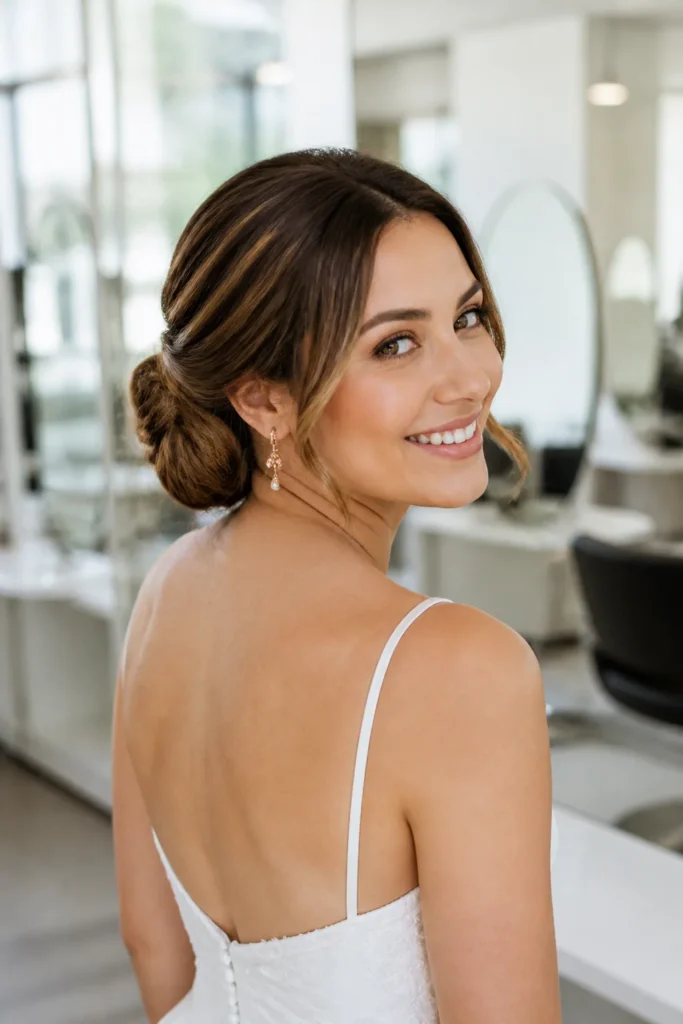
8. The Low Bun for Weddings
The wedding version takes the classic low chignon and adds just enough polish for a formal day, without turning it into a salon production. Start with the classic low bun, then add one special detail: a braid wrap, a few soft curls in the front pieces, or a simple hairpin at the side. One detail is enough, and two details start to compete.
This version is written for wedding guests and bridesmaids doing their own hair, not for brides, whose styling deserves a professional. For a guest, the goal is to look polished in photographs without upstaging anyone, and a low bun does that better than almost any other style. Keep the front soft, the bun secure, and the accessories minimal.
Set the style with flexible hold spray, and carry two spare pins in your bag. A low bun that has survived the ceremony will survive the reception too, but a spare pin fixes the one piece that always escapes during dancing. Setting spray choice matters for a wedding: a flexible hold spray lets you re-pin during the evening without the style cracking, while a stiff spray locks the style but flakes when you touch it. Do a trial run of this version a week before the wedding, in similar weather if possible, so you learn how your hair behaves in the style before the day itself. A trial run is the single most useful preparation for any wedding hairstyle, and it costs nothing but an evening. That small preparation is the difference between a style that lasts the night and one that slowly unravels.
Which One Should You Pick?
Pick by your day first. For a normal work day, the classic chignon or the textured low bun are the safest bets: fast, secure, and appropriate anywhere. For weddings and formal events, the wedding version or the braid detail version add just enough polish without needing a new skill. For a difficult hair day, the textured version is unbeatable, because it works with frizz and second-day texture instead of against them.
Pick by your hair too. Thick hair suits the thick-hair version, which splits the weight so the bun lasts. Medium hair is the most flexible and can wear nearly all eight. Fine hair should start with the fine-hair version, which builds fullness in on purpose. And if your hair is layered, the twisted bun is your friend, because the twist structure holds layers that a smooth knot lets escape.
The one rule across all eight low bun hairstyles for women in 30s: soft in front, secure at the back. Keep the face-framing hair loose and touchable, and anchor the knot firmly at the nape with pins placed upward into the base. Get that balance right and the low bun is the most reliable elegant style you own.
FAQ
How do I stop my low bun from sliding down during the day?
The elastic is usually the problem, not the bun. Use a thick, fabric-covered elastic and wrap it at least three times, and pin the bun upward into the base rather than downward, which only loosens it. If your hair is silky, add dry shampoo or texturizing spray at the roots first, because smooth hair slips no matter how many pins you use.
Can a low bun look professional?
Yes, and it is one of the most office-appropriate styles there is. The classic chignon and the center part version read as polished and intentional, especially with soft front pieces and no flyaways at the crown. Save the textured version for casual days, when a little softness is welcome.
How do I keep a low bun from looking severe?
Keep the front soft. Pull out thin pieces at the temples, leave the nape a little loose rather than cinched, and avoid pulling the hair flat against the scalp. Severity comes from tension, not from the bun itself, so loosen the front and the whole style relaxes.
Does wearing a low bun every day damage hair?
Worn in the same tight spot every day, yes, it can cause breakage at the elastic line. Vary the placement slightly, keep the base firm but not strangling, and use fabric-covered elastics instead of thin rubber bands. Give your hair a break a few days a week with a loose style or wearing it down.
What if my hair is too short for a low bun?
Shoulder-length hair works for most of these versions, and the textured low bun needs the least length, since it does not require a smooth wrap. Below shoulder length, a small low knot with pins holding the shorter layers at the nape can still work. These low bun hairstyles for women in 30s are designed to be forgiving, so a few pinned layers are part of the style, not a flaw in it.
The Bottom Line
A low bun is not a boring hairstyle, it is a reliable one, and reliability is underrated. Keep the front soft, anchor the knot firmly at the nape, and pick the version that matches your day and your hair, and the low bun stops looking like a last resort and starts looking like a signature. That is the whole trick, and once it clicks, it is the style you reach for whenever the day matters. These low bun hairstyles for women in 30s work because they balance softness and security, and that balance is what makes a simple knot look elegant.