
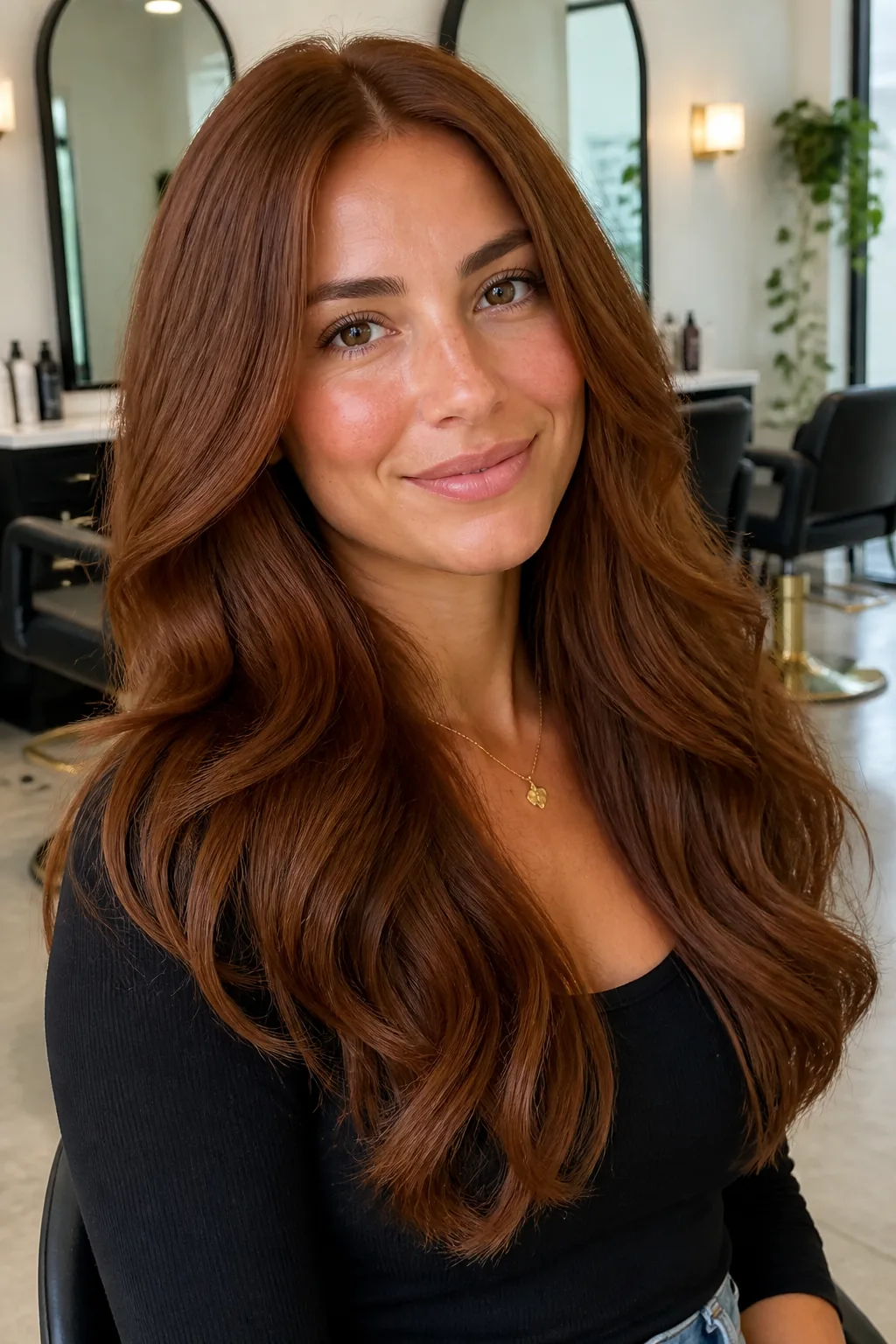
These 15 dark copper brown ideas warm up autumn without turning you fully red, because the shade sits between brown and auburn and stays deep enough for work, with options for low upkeep, grey blending and a no-commitment gloss to try first.
I spent years being scared of red hair. Not “I don’t like it” scared, more “what if I look like I lost a fight with a box dye” scared. My hair is naturally dark brown, and every time I thought about warming it up, I pictured that brassy, orangey result you get when someone goes too light, too fast, with no plan. So I stayed safe. Dark brown, same as always, reliable and a little bit boring.
Here’s the thing: dark copper brown hair for women in 30s is not that red. It’s the shade I wish someone had shown me five years ago. It’s still brown, still deep enough to look polished at work, but it catches the light in a way plain brown never does. In autumn light, in a low bun at dinner, under a kitchen light at 7 a.m., there’s this warm glow that makes your whole face look healthier. I tried it last October, and three separate people asked if I’d done something different with my makeup. I hadn’t. It was just the hair.
Dark copper brown sits right between brown and auburn. It’s darker than copper, softer than auburn, and warmer than chocolate brown. That middle ground is exactly why dark copper brown hair for women in 30s works so well in your 30s: it’s a change people notice, but it’s not a change you have to explain. You can wear it to the office, to a school run, to a wedding, and it never looks like a costume. The fifteen ideas below cover the shade itself, the ways to wear it, and how to keep it looking expensive instead of faded. Pick the one that matches your hair, your skin, and how much upkeep you honestly want.
1. The Classic All-Over Dark Copper Brown
This is the starting point, and honestly, it’s the one most women end up loving. One even shade from roots to ends, a deep brown with a clear copper warmth running through it. No highlights, no lowlights, no complicated technique. Just one rich colour, done well.
Who it suits: if your natural hair is dark brown or medium brown, this is your easiest win, because your colourist is warming up what you already have rather than fighting it. It suits warm and neutral skin tones beautifully, and it flatters olive skin in a way ashier browns never do. If your skin is very cool toned, with pink undertones, ask your colourist to keep the copper muted rather than bright, so the warmth flatters you instead of competing with you.
Ask your stylist for: a level 5 or 6 brown base with a copper reflect, not a red reflect. That distinction matters. Copper gives you warmth and light. Red gives you a burgundy or cherry cast that fades faster and looks harsher against your skin. Bring a photo in daylight, not salon lighting, because salon lights make everything look warmer than it really is.
Maintenance: for dark copper brown hair for women in 30s, this is the most honest shade on the list about fading, because one even colour shows fade everywhere at once. A colour-safe shampoo, lukewarm water, and a gloss refresh every six to eight weeks keep it rich. If you wash your hair daily, expect the copper to soften by week four, which is normal, not a disaster.

2. Dark Copper Brown Balayage
If full colour feels like a commitment, balayage is the gentler way in. Your colourist paints the copper brown through the mid-lengths and ends by hand, leaving your natural root colour alone. The result is dimension: darker at the top, warmer and lighter toward the ends, with no harsh line anywhere.
Who it suits: this is the best option if you hate visible regrowth, because there is no regrowth line to hate. It’s also kind to longer hair, where the gradient has room to show. If your hair is fine, keep the balayage soft and blended rather than high contrast, or the ends can look thinner than they are.
Ask your stylist for: a dark copper balayage with a soft, diffused blend, starting no higher than ear level. Tell her you want dimension, not stripes. The painted pieces should melt into your base colour, not sit on top of it like highlights from a foil packet.
Maintenance: balayage is the lowest maintenance colour on this list, and I mean that. Most women stretch it to twelve or even sixteen weeks between appointments, with just a gloss or toner in between to keep the copper warm. It’s the colour for the woman who books her next appointment three months out and means it.
3. Dark Copper Brown Ombré
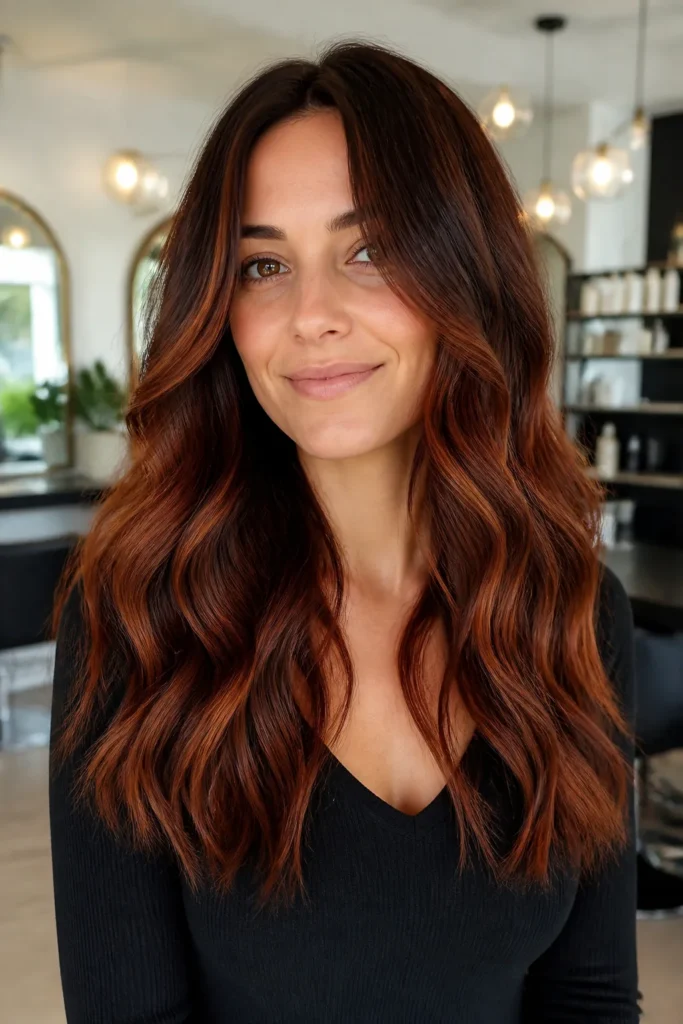
Ombré is the gradient version of copper brown, and it is different from balayage in one important way. Balayage paints dimension through your hair in soft pieces. Ombré creates a deliberate journey from dark to light: your roots stay deep brown, and the colour melts gradually into copper through the ends. Unlike balayage, the change from dark to copper is visible and intentional.
Who it suits: this is a beautiful choice if you love a visible colour story and you wear your hair long enough for the gradient to show. It needs length past your shoulders, or the journey from dark to copper happens too fast and looks abrupt.
Ask your stylist for: a dark brown root blended into dark copper brown ends, with the transition zone wide and soft, starting no higher than chin level. If you can spot a line where the dark stops and the copper starts, the blend is too sharp.
Maintenance: your ends carry the lightest copper, so they fade first. A gloss every six to eight weeks and trims every ten weeks keep the gradient looking deliberate rather than grown out.
4. The Deep Auburn End of Copper
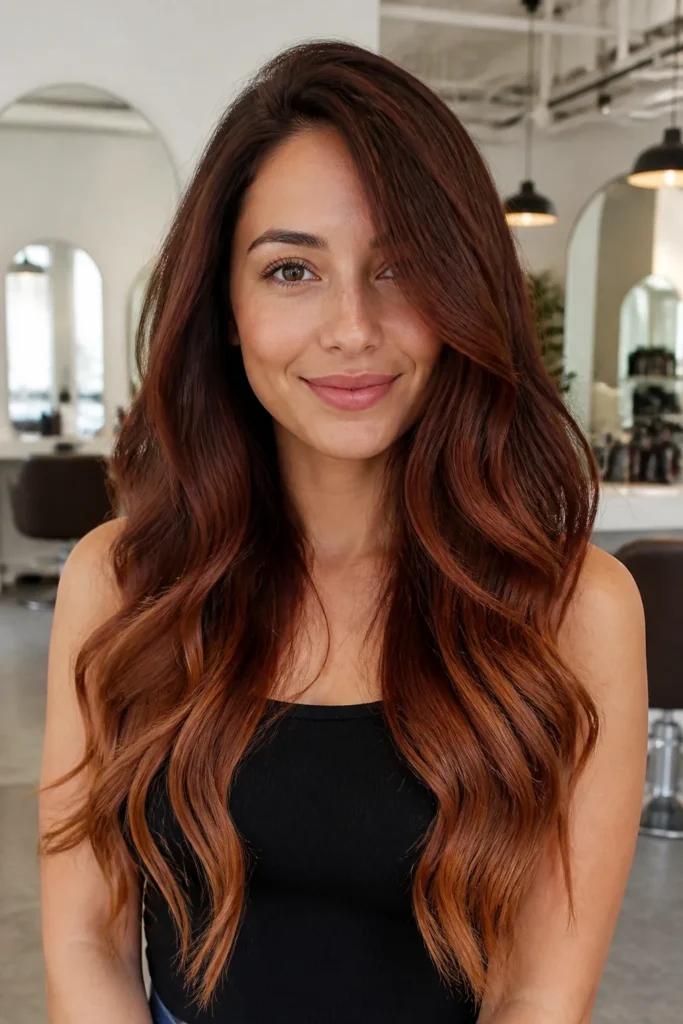
This is the darkest, richest version of the family. Think dark copper brown pushed one step toward auburn: deeper, moodier, with a wine-like richness in low light and a copper glow in sunlight. It’s the shade that looks incredible with a camel coat and a burgundy lip, which is basically my entire November wardrobe.
Who it suits: if your natural hair is dark brown or black-brown, this shade is very achievable without heavy lightening, which means less damage. It suits medium to deep skin tones gorgeously, and it looks stunning on olive skin. On very fair skin it can be dramatic in the best way, but ask your colourist to keep some brown depth at the roots so it doesn’t wash you out.
Ask your stylist for: a deep auburn copper, level 4 or 5, with the copper kept warm but not bright. If she hears “auburn” and reaches for something cherry red, stop her. You want copper warmth, not red pigment. A photo helps more here than anywhere else on this list, because “auburn” means ten different things to ten different colourists.
Maintenance: deeper shades hold their colour longer than lighter coppers, which is a genuine perk. You’ll still want a gloss every eight weeks or so, but the fade is slower and softer, more of a gentle mellowing than a visible washout.

5. Copper Brown with a Root Melt
A root melt is a technique, not a shade, and it’s the secret behind most of the “how does her hair always look so good” colour you see. Your colourist melts your natural root colour down into the copper brown, so there’s no line where your regrowth starts. Your hair looks like it just grows that way.
Who it suits: anyone who colours their hair but hates the salon treadmill. It’s especially good if you have a lot of grey coming through at the temples or parting, because the melt disguises regrowth far better than a solid colour does. It’s also the kindest option for hair health, since your roots are never fully coloured.
Ask your stylist for: a root melt in your natural brown, blended into dark copper brown through the lengths. The melt zone should be soft and wide, not a sharp two-inch band. If you can see where the melt ends, it’s too abrupt.
Maintenance: this is balayage-level low maintenance. Most women go ten to twelve weeks between appointments, and the grow-out looks intentional the whole time. A gloss refresh halfway through keeps the copper from going dull, but you can genuinely forget about your roots for months.

6. Dark Copper with Caramel Ribbons
This one adds thin, warm caramel ribbons through the copper brown, mostly around the face and through the top layers. The effect is like sunlight catching your hair: the copper stays the main story, but the caramel pieces give it movement and light, especially when your hair moves.
Who it suits: if your copper brown feels a little flat or one-dimensional, this fixes it without changing your base colour. It suits medium and thick hair best, because the ribbons need enough hair to show up. On fine hair, keep the ribbons few and fine, or they can look stripey. It’s also lovely if you wear your hair down most days, since the face-framing pieces are the ones everyone actually sees.
Ask your stylist for: fine caramel ribbons, two shades lighter than your copper base, focused around the face and through the top layer. Not chunky highlights, not a full head of foils. You want ribbons, not stripes, and the difference is all in how fine the pieces are.
Maintenance: the ribbons will lighten and warm up over time, which usually looks fine rather than bad. A toner every eight weeks keeps them caramel rather than brassy. If you use heat tools daily, a heat protectant matters more here than on solid colour, because lightened pieces dry out faster.
7. Copper Brown Babylights
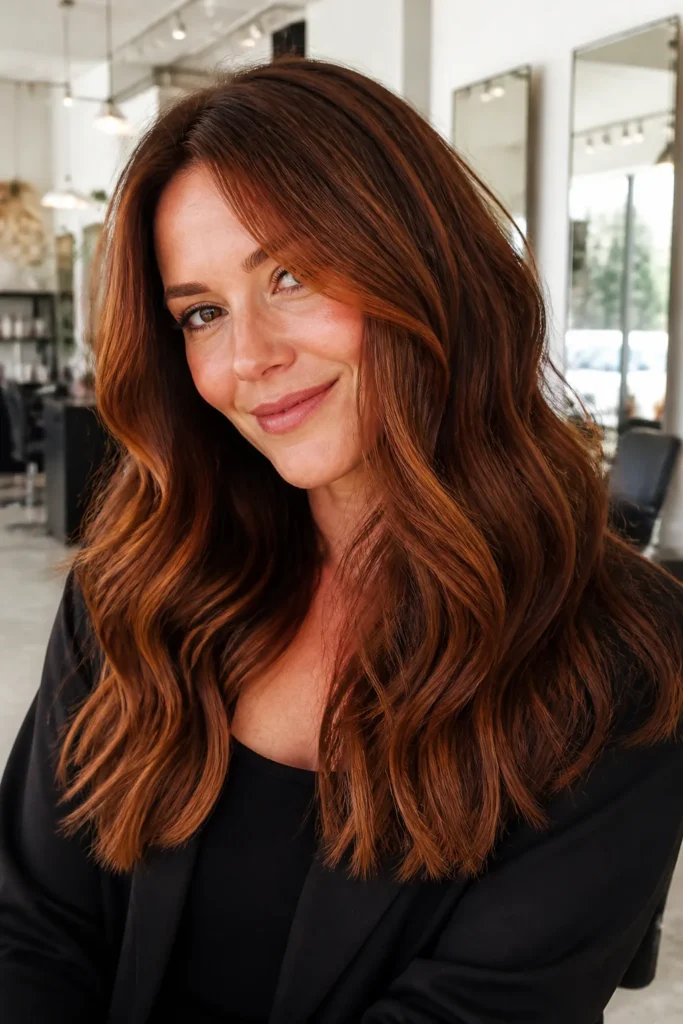
Babylights are the finest highlights your colourist can paint, and on a copper brown base they create a sunlit effect that looks like your hair just catches light well. Unlike the caramel ribbons earlier in this list, which are fewer and face-focused, babylights are tiny and numerous, woven through the top layers and around your parting, so the lightness feels all over rather than placed.
Who it suits: if you want dimension but you hate the look of visible highlights, this is your technique. It suits medium and fine hair well, because the fine pieces add light without removing fullness. On very thick hair, ask for slightly more of them, or they will not show.
Ask your stylist for: ultra-fine babylights in a copper gold tone, woven through the top layer and around the face, with no chunky pieces anywhere. From a normal distance, no one should be able to pick out a single highlight. They should just see light.
Maintenance: because the pieces are so fine, they warm up gently rather than going brassy. A toner every eight weeks keeps them copper gold rather than yellow.
8. The Gloss-Only Copper Refresh
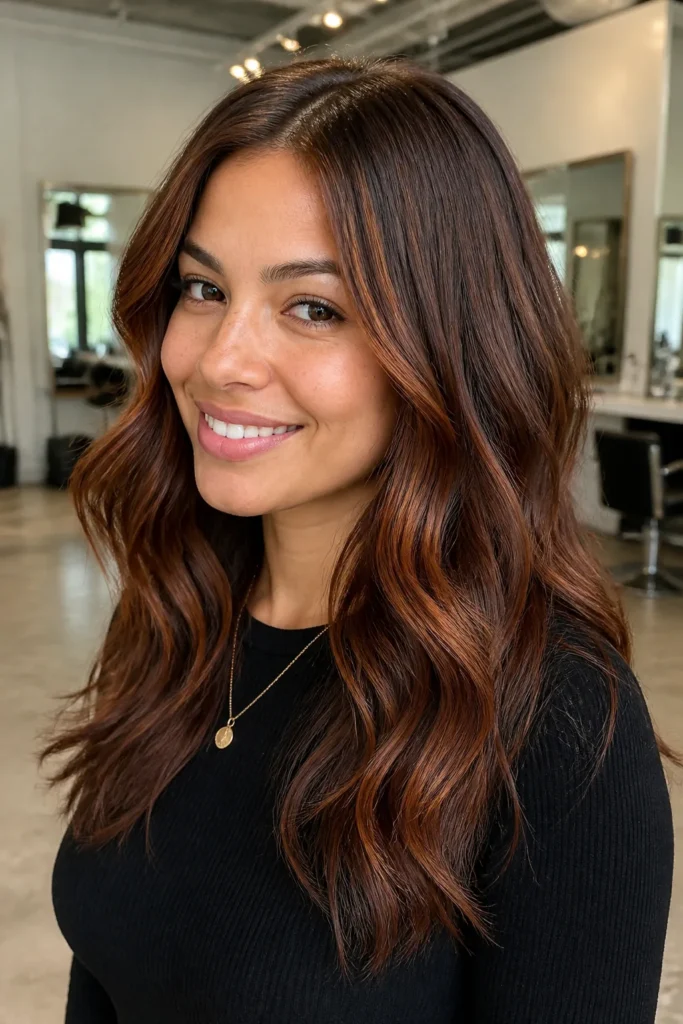
This is the no-commitment option, and I wish more women knew about it. A copper gloss (sometimes called a toner or a glaze) deposits a sheer wash of copper warmth over your existing brown hair without permanently changing it. It fades gradually over four to six weeks, and your natural colour is still underneath when it goes.
Who it suits: if you’re curious about copper but not ready to commit, start here. It’s also perfect if your hair is already dark brown and you just want warmth and shine for autumn, without a full colour appointment. And it’s the safest option for damaged or very fine hair, because a gloss is gentler than permanent colour.
Ask your stylist for: a demi-permanent copper gloss over your natural brown, in a dark copper tone. Tell her you want warmth and shine, not a visible colour change. If she suggests permanent colour instead, that’s a different service with a different commitment, so be clear about which one you want.
Maintenance: there barely is any, which is the point. The gloss fades on its own, softly, over a month or so. You can repeat it as often as you like, or let it fade and go back to your natural colour with no awkward grow-out. It’s the only option on this list with a true exit plan built in.
9. Dark Copper on Curly and Wavy Hair
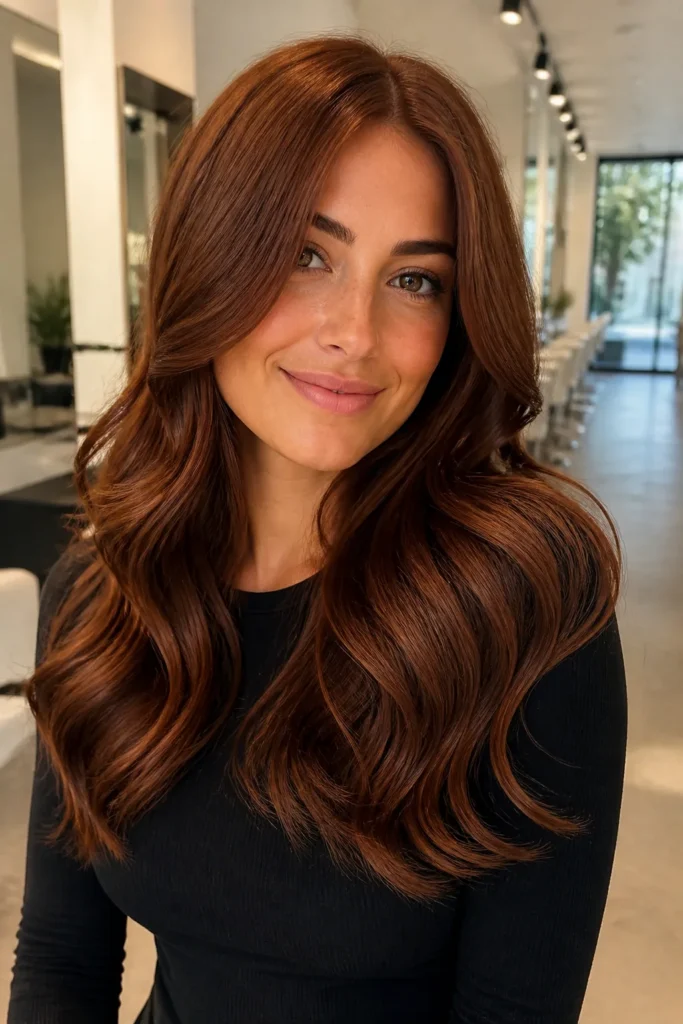
Copper brown behaves differently on textured hair, and it deserves its own mention, because the rules change. On curls and waves, colour shows up in ribbons and spirals rather than flat sheets, so the copper reads as dimension even in a solid application. The same shade that looks even on straight hair looks multi-tonal on curly hair, which is a free upgrade.
Who it suits: if your hair is naturally curly or wavy, dark copper brown hair for women in 30s is one of the most flattering colours you can choose, because the texture does half the work. It suits all curl patterns, but the maintenance conversation is different, so read that part twice.
Ask your stylist for: dark copper brown applied with your curl pattern in mind, ideally on dry or lightly damp hair so she can see how your curls actually fall. Colour applied to wet, stretched-out curls can look uneven once it dries and springs up. If your stylist only colours hair wet and straight, that’s worth a conversation before she starts.
Maintenance: curly hair is naturally drier, and colour can dry it further, so moisture is the whole game. A deep conditioning mask once a week, a leave-in conditioner, and as little shampoo as you can get away with will keep the copper rich and the curls defined. Wash less often, condition more, and your colour will last noticeably longer.
10. Dark Copper Brown for Fine Hair
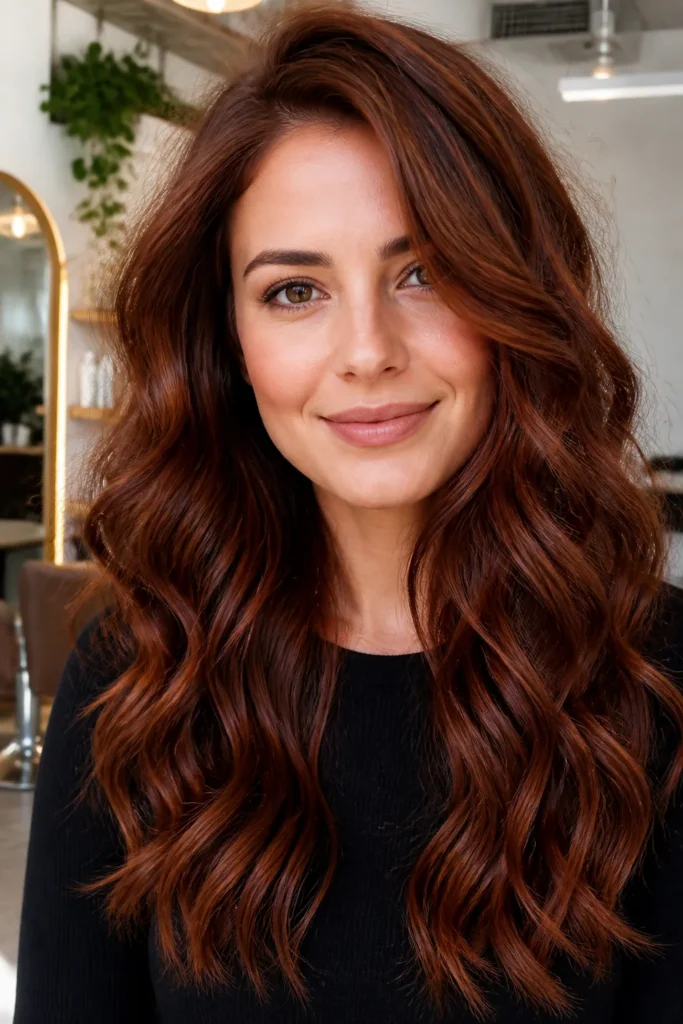
Colour can make fine hair look thicker, but only if it is placed the right way. An all-over flat copper can make fine hair look thinner, because there is no shadow or depth to read as fullness. The trick is keeping depth at the roots and weaving dimension through the lengths, so your hair looks like it has layers of colour even when the cut is simple.
Who it suits: if your hair is fine and colour tends to look one-dimensional on you, this section is the fix. It also suits you if you worry copper will show your scalp or make your ends look sparse, because the root depth solves both problems at once.
Ask your stylist for: a darker copper brown root, about one shade deeper than your lengths, with fine dimension woven through the mid-lengths and ends. Tell her you want the ends kept as full as possible. Full ends read as thick hair, and wispy ends undo the whole effect.
Maintenance: keep heavy oils and rich masks off your roots, and use them on the ends only. A colour-safe volumizing shampoo and a gloss every eight weeks will keep the dimension visible without weighing anything down.

11. Copper Brown for Grey Blending
This one is for the woman who has greys coming in and doesn’t want the binary choice between “dye it all dark” and “grow it all out.” Grey blending with dark copper brown means weaving copper and brown tones through your hair so the greys read as highlights rather than regrowth. The result is softer, warmer, and far less maintenance than full coverage.
Who it suits: if you’re somewhere between twenty and fifty percent grey, this is the sweet spot. Below that, full colour is simpler. Above that, you’re closer to a full colour conversation. It’s also kind to your hair, because blending uses less permanent colour than full coverage, and it grows out without a line.
Ask your stylist for: grey blending with dark copper brown and a soft brown base, using fine weaves rather than solid coverage. Tell her you want the greys to look intentional, like a feature, not like something being hidden. That framing changes how she places the colour.
Maintenance: this is deliberately low maintenance. Most women go eight to twelve weeks between appointments, and the grow-out is the point, not a problem. A gloss refresh keeps the copper warm, but the greys themselves are doing part of the work now, and that’s a good thing.
12. Dark Copper with Warm Lowlights
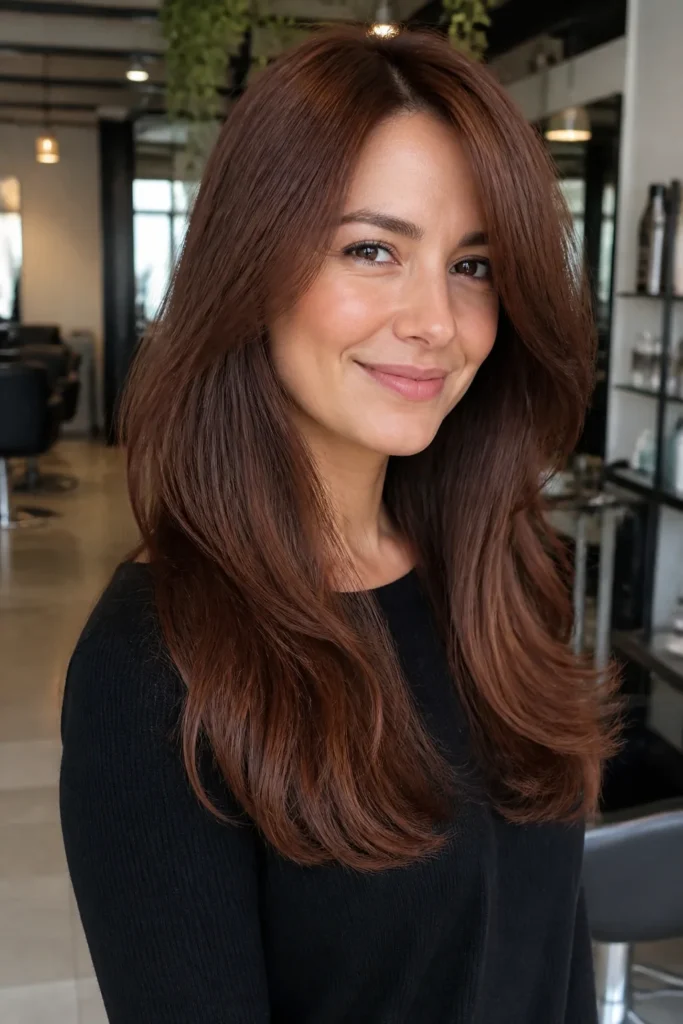
Lowlights are the opposite of highlights: darker, warmer pieces woven through your hair to add depth. On a copper brown base, warm lowlights in a deeper chocolate or soft mahogany create shadow and richness, so the copper looks dimensional instead of flat. It’s a subtle technique with an outsized effect.
Who it suits: if your hair is fine or flat and colour tends to look one-dimensional on you, lowlights are the fix. They create the illusion of thickness and depth, which fine hair desperately needs. They also suit you if you love dark copper brown hair for women in 30s but feel it’s gone a bit bright or brassy, because the deeper pieces calm it down and make it look more expensive.
Ask your stylist for: warm lowlights in a deep chocolate brown, woven finely through the copper base, with more depth underneath and through the back. The lowlights should be visible as shadow, not as stripes. If you can pick out individual dark pieces, they’re too chunky.
Maintenance: lowlights fade more slowly than highlights, because darker pigment holds better. You’ll still want a gloss every eight to ten weeks to keep the copper warm, but the lowlights themselves are very low fuss. This is a good option if you want dimension without signing up for frequent highlight appointments.

13. From Box Black to Copper Brown: The Realistic Path
If your hair is currently box black, or has years of dark permanent colour built up, copper brown is still possible, but it is a journey, not a single appointment. Dark permanent colour has to be lifted before copper can show, and lifting takes sessions. Any colourist who promises copper in one sitting from box black is guessing.
What to expect: the first appointment is usually a colour remover or a gentle lift, and your hair will go through warm, brassy stages before it reaches copper. That is normal chemistry, not a mistake. The second appointment, sometimes a third, is where the copper brown is built and refined. Budget for the sessions and the recovery time between them.
Ask your stylist for: an honest consultation first, with a strand test, and your full colour history on the table, including box dyes from years ago. Tell her your target is dark copper brown, and ask how many sessions she expects. If she will not do a strand test, find a colourist who will.
Maintenance: between sessions, bond care and weekly masks are what keep your hair intact. After you reach copper, gloss appointments keep it rich, and avoid overlapping permanent colour onto already lifted ends.
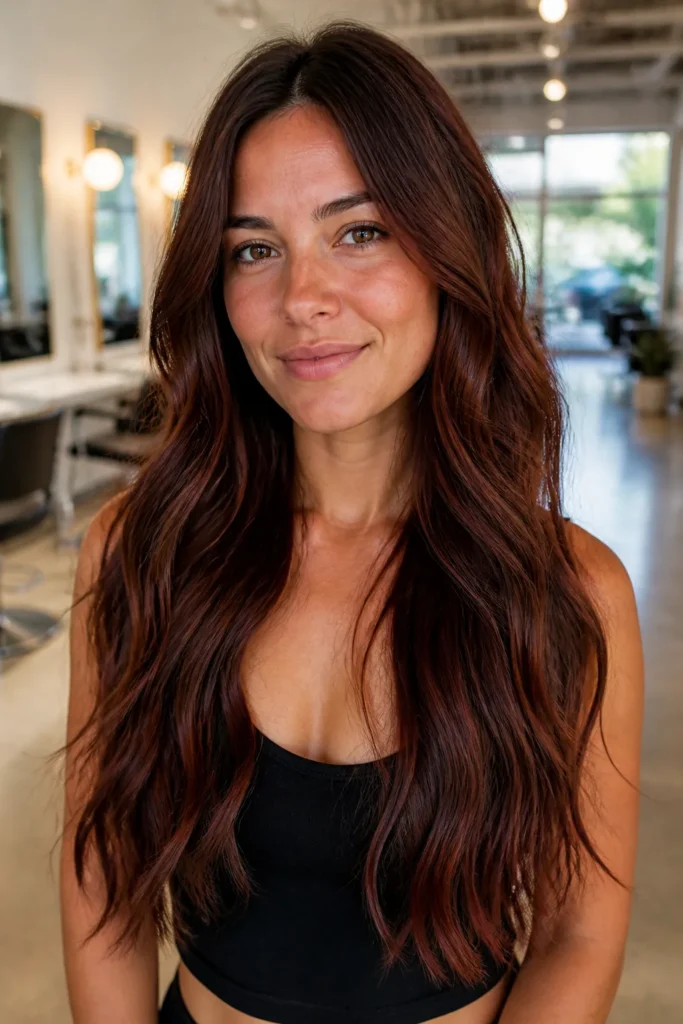
14. The Copper Maintenance Kit
Whatever shade you choose from this list, copper fades faster than brown, and the routine below is what keeps it rich. Think of it as the kit that protects the money you spent at the salon.
Wash less, and wash cooler. Two or three lukewarm washes a week will keep your copper noticeably longer than daily hot washes. Use a colour-safe shampoo, and skip clarifying shampoos, because they strip warm pigment fast. Once a week, use a deep conditioning mask on the mid-lengths and ends, where copper fades first.
Heat and sun are the other two fade culprits. A heat protectant before hot tools is non-negotiable, and a hat or UV spray in strong sun stops copper bleaching out over summer. After swimming, rinse straight away, because chlorine and salt water both dull warm tones.
Finally, book the gloss. A copper gloss every six to eight weeks is the single highest value appointment in copper maintenance: quick, gentle, and it restores the warmth that daily life removes. Treat it as part of the colour, not an extra.
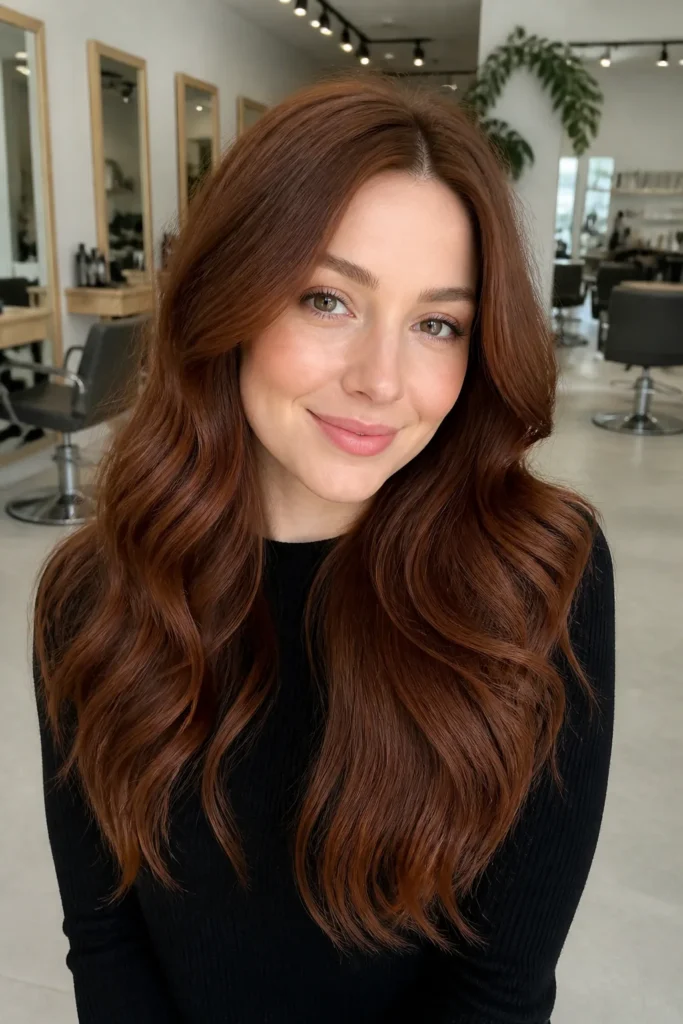
15. The Autumn Pairing: Copper Brown with Fall and Winter Styling
This last one isn’t a shade, it’s the reason the shade works so well right now. dark copper brown hair for women in 30s is an autumn colour in the truest sense: it pairs with everything you already wear in fall and winter. Camel coats, cream knits, burgundy dresses, olive jackets, black boots. The warmth in your hair pulls those colours together in a way ash brown never does.
Who it suits: anyone whose autumn wardrobe leans warm, which is most of us by November. If you live in camel, rust, cream, and burgundy from October through February, copper brown will make every outfit look more intentional. It’s also the shade that photographs beautifully in autumn light, which matters if you have family photos, a wedding, or a holiday party coming up.
How to style it: you don’t need a new wardrobe, and you don’t need new makeup. The copper does the work. If you want to lean into it, a warm lip (a soft terracotta or a muted berry) and gold jewellery rather than silver will echo the hair beautifully. But honestly, the easiest pairing is the one you already own: a cream sweater, dark jeans, and your copper hair doing the talking.
Maintenance: this is a styling note, not a colour note, so there’s no extra upkeep. Just know that your hair colour is now part of your outfit in a way it wasn’t before, and that’s a feature. When your hair and your coat are in the same warm family, you look put together with less effort, which is the whole point of a good autumn colour.
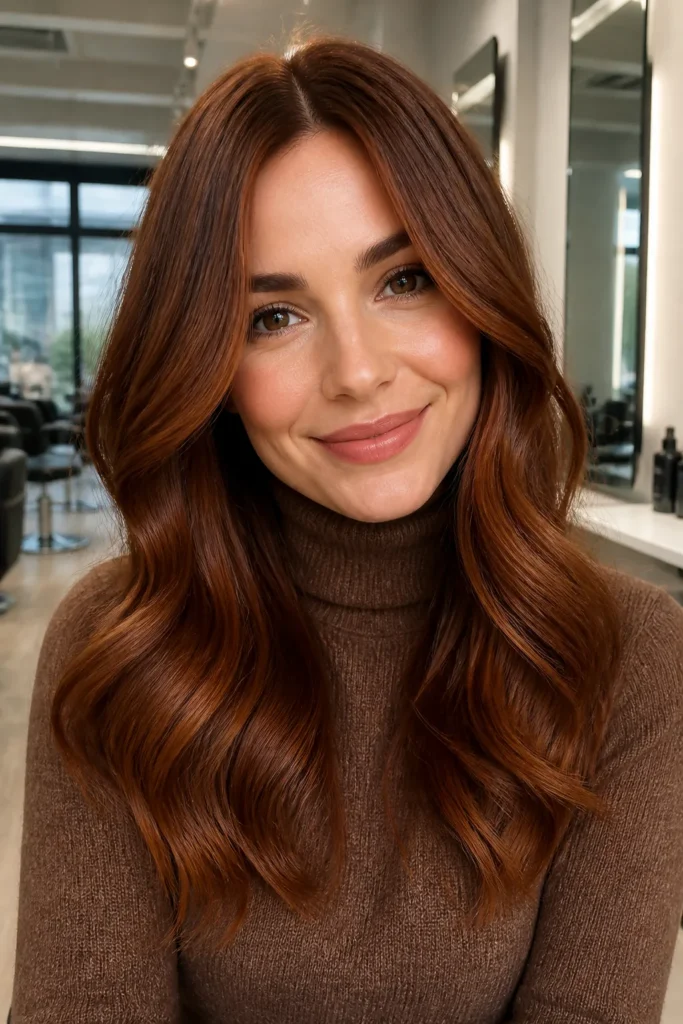
Which One Should You Pick?
Start with your natural colour and your patience, and let those two answers choose for you.
If your hair is naturally dark brown and you want the simplest change, go for the classic all-over shade or the gloss-only refresh. The gloss is the trial run, the all-over shade is the commitment, and both are honest about what they are. If you hate regrowth lines and salon appointments, balayage or a root melt will give you months of peace, and the grow-out will look intentional the whole time. If your hair is fine, the fine hair colour section shows how root depth and dimension fake fullness. If you are coming from box black or very dark colour, read the realistic path section before booking, because that journey takes sessions, not one appointment. And whatever you choose, the maintenance kit section is the routine that keeps it rich.
Now the skin tone question, because it matters more than most colourists admit. Warm and olive skin tones can wear almost every shade on this list, including the brighter coppers. Cool skin tones should lean toward the deeper, muted end: the deep auburn, the root melt, the lowlights version, where the brown depth balances the warmth. Very fair skin can absolutely wear dark copper brown hair for women in 30s, but keep the roots soft and the copper muted, or the colour can overpower your face.
One last honest note: you don’t have to pick the boldest version. Dark copper brown is forgiving precisely because it lives in the middle. Start with the gloss or the balayage if you’re nervous, and go deeper next time if you love it. Colour is not a tattoo. The worst case is a few weeks of a shade that’s slightly warmer than you expected, and the best case is the autumn your hair finally matches your favourite coat.
Frequently Asked Questions
Will dark copper brown suit me if I have cool skin?
Yes, dark copper brown hair for women in 30s can suit cool skin, with one adjustment. Ask your colourist to keep the copper muted and the brown depth strong, leaning toward the deep auburn or root melt versions on this list. The warmth will still flatter you, but it won’t compete with pink undertones in your skin. What you want to avoid is a bright, orangey copper with no brown depth, which can clash with cool skin.
How long does dark copper brown last before it fades?
Copper is one of the faster fading colour families, because the warm pigment molecules are larger and wash out more easily. Expect the richness to soften after four to six weeks if you wash daily, and longer if you wash two or three times a week. A gloss refresh every six to eight weeks is the standard fix, and it’s a quick appointment, not a full colour service.
Can I get dark copper brown without bleaching my hair?
If your natural hair is medium brown or darker, usually yes, or with only a gentle lift. Dark copper brown is not a light shade, so it doesn’t need heavy lightening the way blonde or bright red does. If your hair is very dark or previously coloured black, your colourist may need a colour remover or a gentle lift first, so bring your full colour history to the consultation, including box dyes from years ago.
Will copper brown damage my hair?
Any permanent colour changes your hair to some degree, but dark copper brown is on the gentler end, because it doesn’t require the heavy lightening that blonde does. A gloss or balayage is gentler still. What protects your hair most is not the shade you choose but the aftercare: less heat, a weekly mask, and not overlapping permanent colour onto already coloured ends at every appointment.
How do I stop copper brown going brassy?
Brassiness usually means the brown depth has faded and left the warm pigment exposed. The fix is a gloss or toner in a darker, cooler brown-copper tone, not a purple shampoo, which is for blonde, not copper. Washing in lukewarm water, using colour-safe shampoo, and keeping heat styling moderate will slow the fade that causes brassiness in the first place.
For the full picture, see our hairstyles and haircuts guide.
The Bottom Line
dark copper brown hair for women in 30s is the autumn colour for women who want a real change without a dramatic one. It’s still brown, still polished, still office appropriate, but it warms up your face, your wardrobe, and your photos in a way plain brown never will. Start with the version that matches your patience: a gloss if you’re curious, a balayage or root melt if you hate appointments, the classic all-over shade if you want the full effect.
And if you’re still deciding, here’s my honest advice: try the gloss first. It’s low risk, it fades on its own, and it will tell you within a month whether copper is your colour. If you love it, and most women do, you can go deeper next time with confidence.
If you want more hair ideas that pair with a new colour, the fine hair volume guide and the hair growth routine on this site go beautifully with copper brown, because healthy, full looking hair is what makes any colour look expensive.