
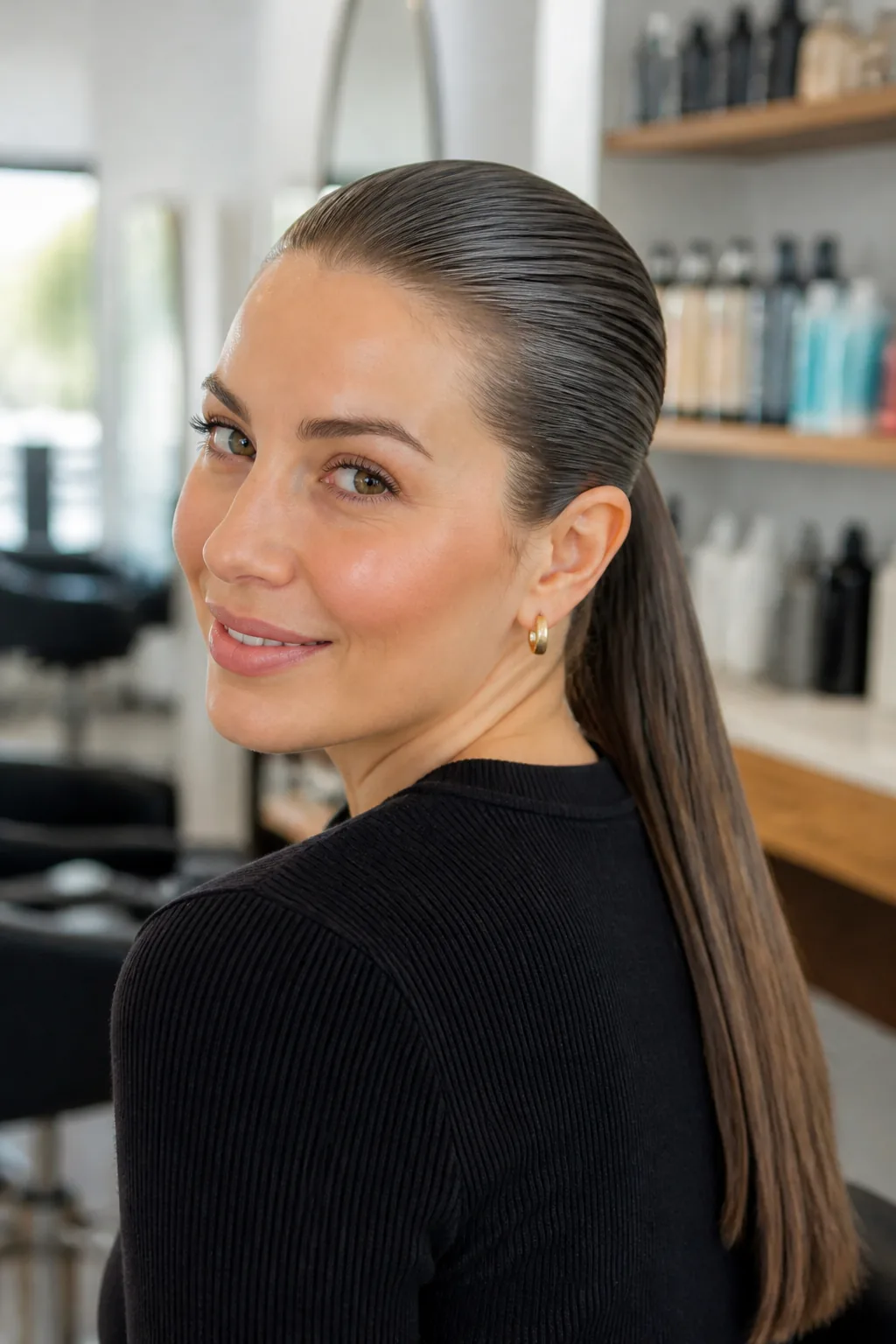
These 12 slick back styles give you sleek roots and a clean silhouette with hair that still moves, no crunch, no flakes and no stiffness, from the classic low bun you learn first to softer options for fine hair.
The first time I tried slick back hairstyles for women in 30s, I got it wrong in every way that matters. I was running late for a work dinner, I grabbed the strongest gel in my bathroom, and I scraped my hair back until my forehead hurt. By the time I sat down at the table, my hair was crunchy, my scalp was itchy, and there were little white flakes along my hairline that I only noticed in the restaurant mirror. I spent the whole evening pretending I was not thinking about my hair. I was thinking about nothing else.
Here’s the thing: slick back hairstyles for women in 30s are supposed to make your life easier, not give you one more thing to worry about. Done right, it’s the fastest polished look I know. Five minutes, one mirror, and you walk out looking like you meant it. Done wrong, it’s a helmet. The difference is almost never the style itself. It’s the product, the amount, and the order you do things in.
I spent a few months figuring this out the hard way, through trial and error on school-run mornings and desk-to-dinner days. The twelve slick back hairstyles for women in 30s below are the ones that survived. They all share the same promise: sleek roots, a clean silhouette, and hair that still moves a little when you do. No crunch, no flakes, no stiffness. Just polish that holds from your 7 a.m. start to your evening out.
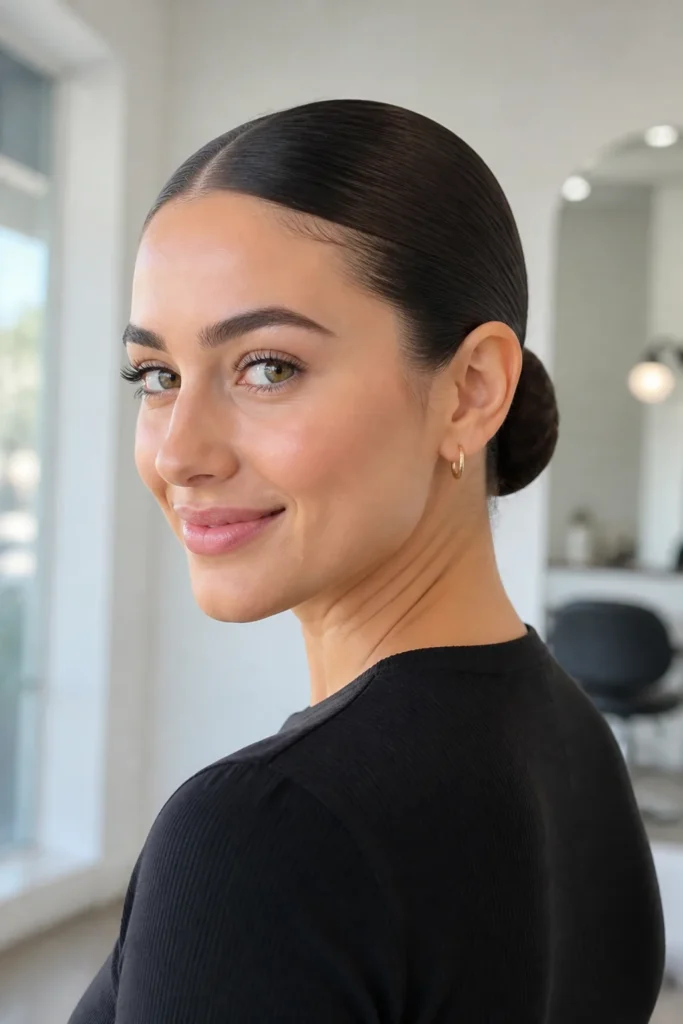
1. The Classic Slick Low Bun
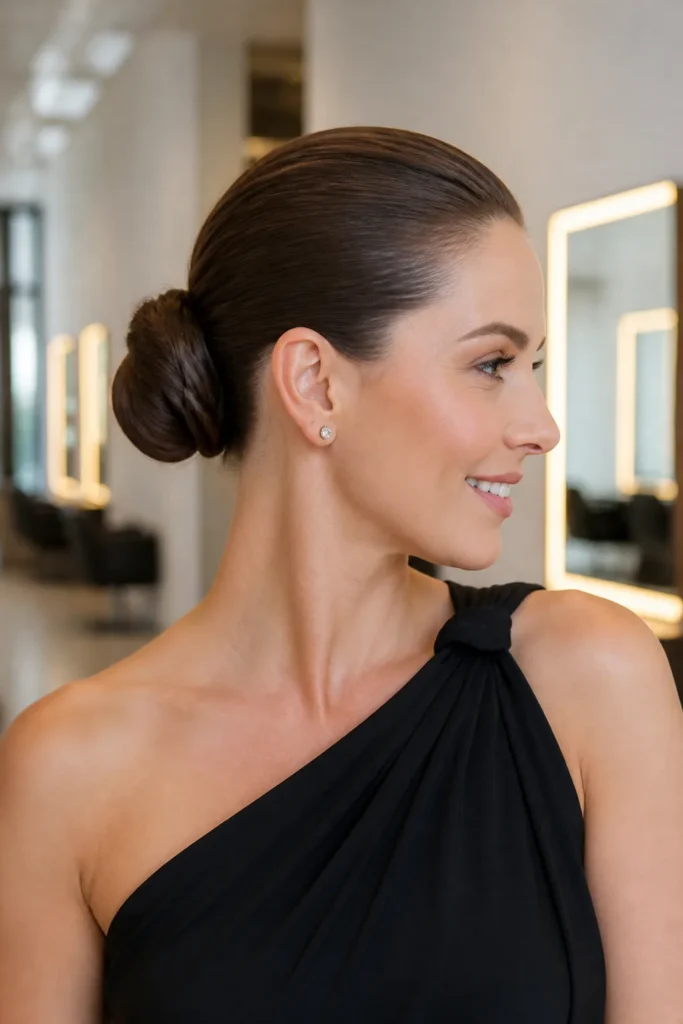
This is the one to learn first, because everything else on this list is a variation of it. Hair brushed back smooth, gathered at the nape of your neck, twisted into a low bun. It works for the office, for dinners, for days when your hair is not cooperating and you need it to look like it is.
Who it suits: honestly, everyone, but it’s a gift if your hair is thick or wavy and tends to escape every other style by lunchtime. The low position keeps the weight close to your neck, so the style holds without pulling. If your hair is fine, don’t skip this one. A low bun makes fine hair look denser, because all of it is gathered in one place instead of spread thin.
How to do it: start with damp or lightly misted hair, because slick styles set best on hair that isn’t bone dry. Work a small amount of gel or styling cream through the top and sides only, not the lengths. Brush everything back with a bristle brush, gather at the nape, twist, and coil into a bun. Pin it in four places, not two, so the weight is shared.
Styling tip: the amount of product is the whole game here. Start with less than you think you need. You can always add a little more. You cannot take it out without starting over, and too much product is what causes crunch and flakes.
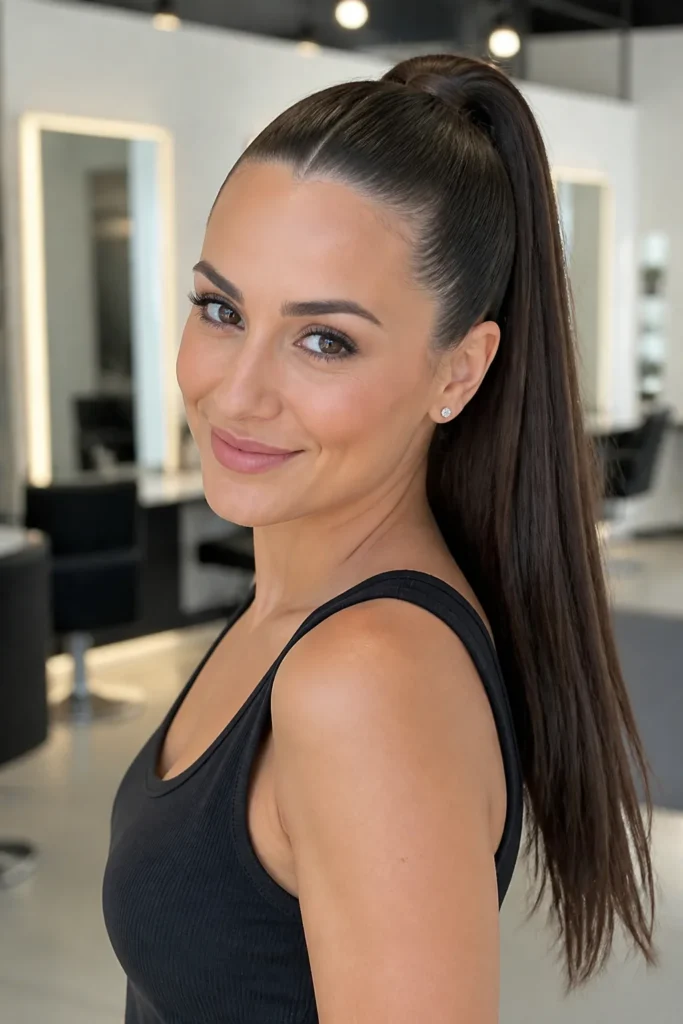
2. The Slick High Ponytail
This is the low bun’s louder cousin. Same sleek roots, but the ponytail sits high on the crown, which gives you lift and a longer-looking neck. It’s my pick for evenings out and for days when I want to look awake even if I’m not.
Who it suits: this one loves medium and thick hair, because a high ponytail needs enough hair to look full rather than stringy. If your hair is fine, you can still wear it, but wrap a small section of the ponytail around the base to hide the elastic and add a little bulk. It also suits you if you have a round or full face, because the height on top draws the eye upward.
How to do it: flip your head upside down and brush everything up and back, which gets the roots smooth without a fight. Gather at the crown, secure with a snag-free elastic, then wrap a thin section around the base and pin it underneath. Smooth any flyaways with the leftover product on your hands, not a fresh blob of gel.
Why it works: the upside-down gather is the trick most of us skip. Brushing upward while you’re upright means you’re fighting gravity the whole time. Flip, gather, stand up, and the style is already halfway done.
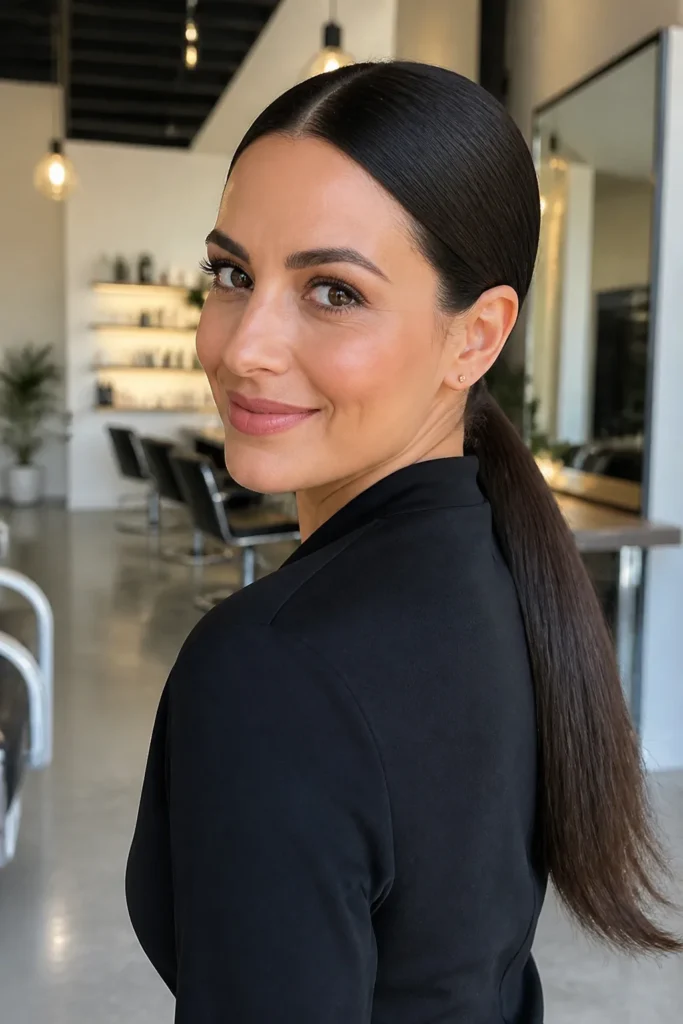
3. The Slick Low Ponytail
If the high ponytail feels too much for a workday, this is its quieter version. Sleek roots, ponytail at the nape, ends left loose. It reads polished without reading dressed up, which makes it the most wearable style on this list.
Who it suits: straight and slightly wavy hair takes to this one most easily, but curly hair can wear it beautifully too if you smooth just the top section and let the ponytail keep its texture. It’s also the best slick style if you’re new to this look, because there’s nowhere for it to go wrong. If the roots are smooth and the ponytail is secure, you’re done.
How to do it: part your hair however you like, or don’t part it at all, then brush it back and down. The key detail is smoothing in sections: brush the top, then each side, then the back, instead of trying to drag one brushstroke over everything. Secure at the nape with an elastic that matches your hair color, then run a flat iron over the ponytail itself if you want it extra sleek.
Styling tip: a low ponytail shows your part line if you have one, so take ten seconds to make it straight with the tail of a comb. A wobbly part is the only thing that makes this simple style look accidental.
4. Slicked-Down Lengths
This one surprises people, because there’s no bun and no ponytail. You slick the roots and the top section back, and then you just wear the rest of your hair loose. The result is sleek on top and free underneath, which is a lovely combination for evenings when you want polish without giving up your length.
Who it suits: long hair, first of all, because you need enough length for the contrast to show. It’s also kind to wavy and curly hair, since the lengths keep their natural texture while the top stays controlled. If your hair is very short, this one doesn’t quite work, because there’s not enough loose hair to balance the slicked top.
How to do it: work product through the top section only, from your hairline back to about ear level. Brush it straight back, then use two flat clips, one behind each ear, to hold the top section in place while it sets. Leave the clips in for ten minutes while you do your makeup, then take them out. The top stays smooth, and the lengths fall free.
Why it works: the clips do the job that a whole handful of gel would do, which means less product and less crunch. It’s the lowest-product style on this list, and honestly one of the prettiest.
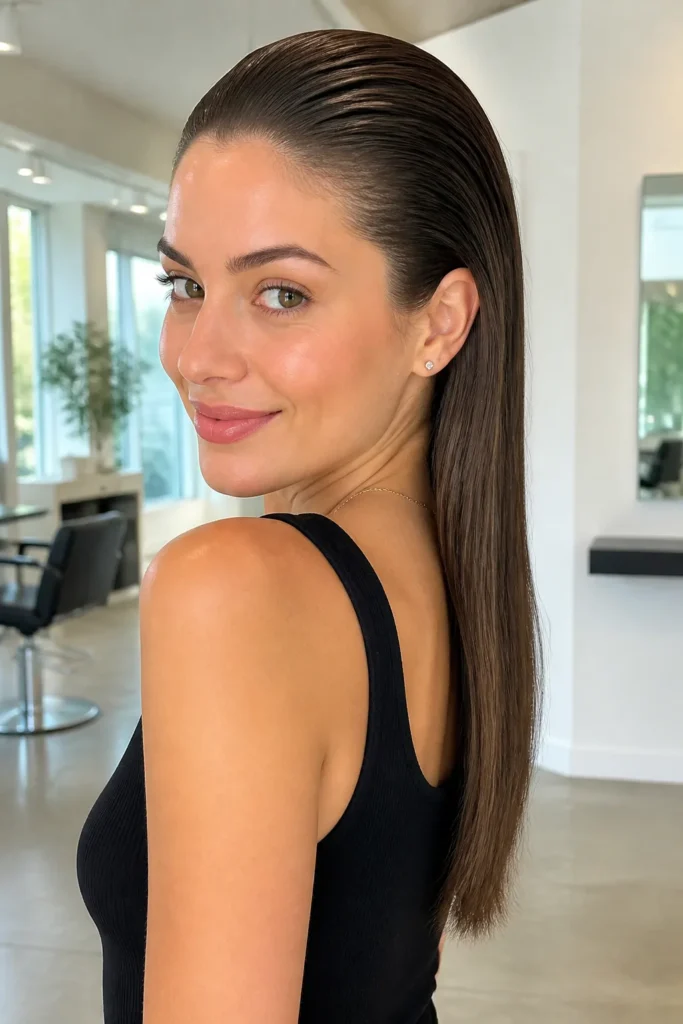
5. The Deep Side Slick
This is the slick-back style for people who don’t love the scraped-back look. You part your hair deep on one side, slick the heavier side down and back, and let the sweep across your forehead soften everything. It’s polished, but it’s warmer than a straight-back slick.
Who it suits: this is a gift for fine hair, because the deep part creates the illusion of volume at the roots even while everything is smoothed down. It also suits you if a center part feels too severe on your face, or if you have a high forehead you like to soften. And it’s a brilliant second-day style, because day-old hair has the grip to hold the sweep.
How to do it: part your hair about two inches off center while it’s still damp. Apply product to the heavier side first, brush it back and over, then smooth the lighter side flat behind your ear. A couple of bobby pins hidden underneath on the lighter side keep the whole thing from sliding back by lunchtime.
Styling tip: the sweep is the whole look, so don’t flatten it completely. You want the hair to curve across your forehead, not lie plastered against it. Think smooth, not stuck.
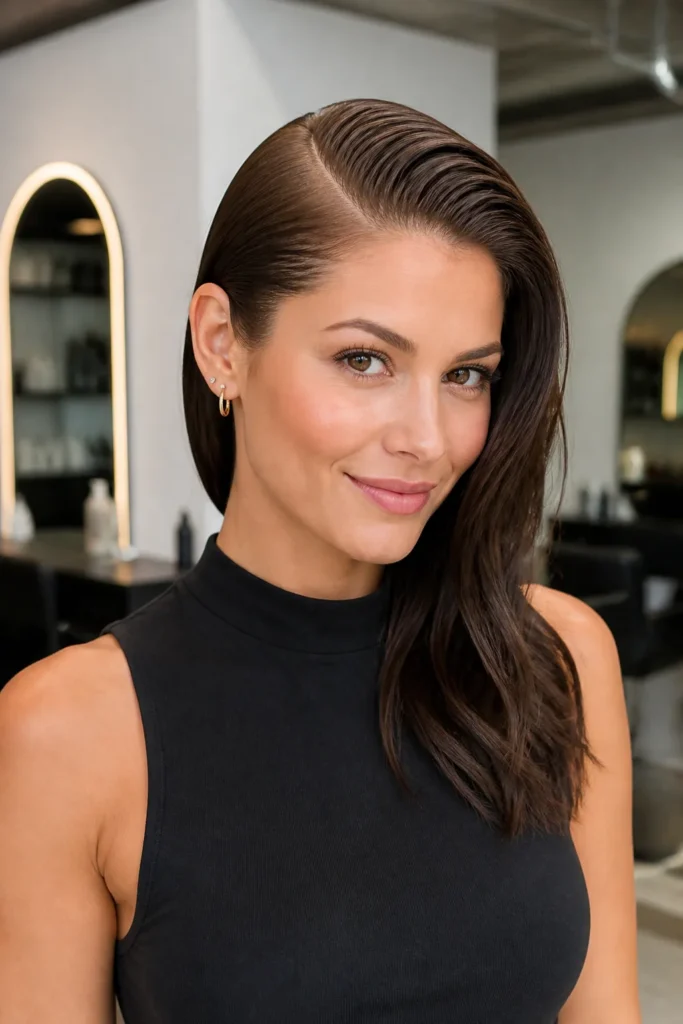
6. The Slick Braided Ponytail
This is the one for days when a plain ponytail feels too plain. You slick the crown back like a regular ponytail, then braid the ponytail itself, all the way down. It looks intricate. It takes about three extra minutes. Nobody at your dinner table will believe that.
Who it suits: medium and long hair, because you need enough length for the braid to show. It’s a wonderful option for thick hair, which can make a plain ponytail feel heavy, since the braid distributes the weight and keeps everything contained. It also suits hot days and active days, because once it’s braided, it does not move.
How to do it: slick the top back and secure a ponytail at whatever height you like, high for evenings, mid-height for workdays. Then divide the ponytail into three sections and braid to the ends. Secure with a small clear elastic, then gently tug at the edges of the braid to loosen it just a little, so it looks soft instead of severe.
Why it works: the braid gives you texture and interest without any extra product, which means the style stays flexible instead of stiff. It’s proof that slick back hairstyles for women in 30s don’t have to mean flat hair.
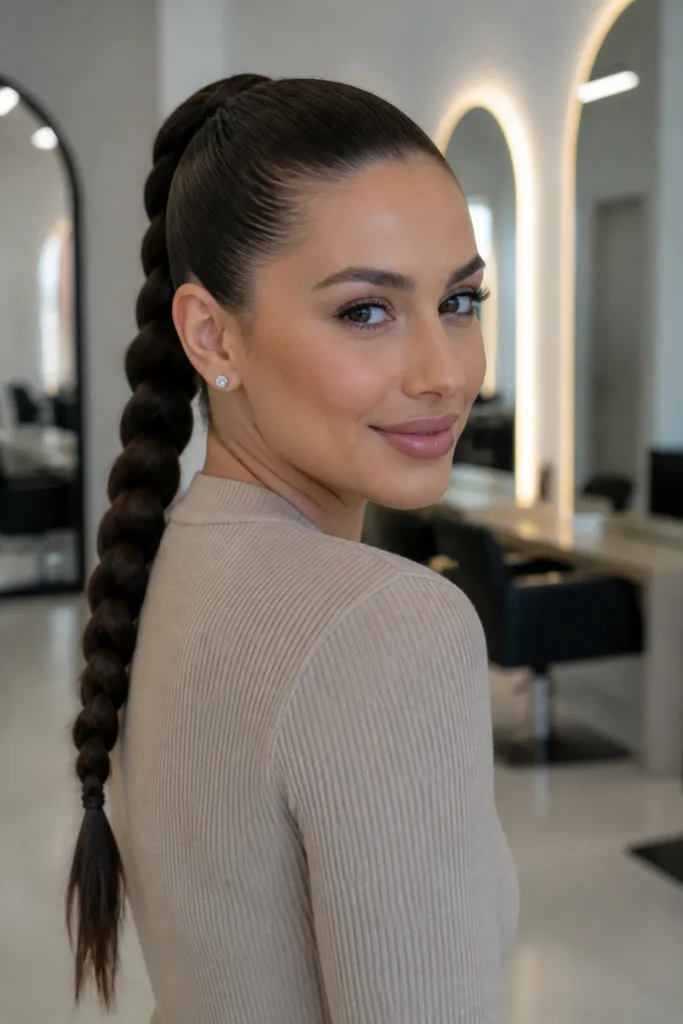
7. The Slick Rope Twist Ponytail
This is the one for days when a braid feels like too much effort but a plain ponytail feels too plain. You slick the crown back like a regular ponytail, then twist the ponytail itself into a rope. It looks far more complicated than it is, and it holds its shape for hours without a single bobby pin in the length.
Who it suits: medium and long hair, because you need enough length for the twist to show. It’s a wonderful option for thick hair, which can make a plain ponytail feel heavy, since the twist compacts the length and keeps it contained. It also suits active days and warm days, because once the twist is set, it does not unravel or frizz out the way a loose ponytail can.
How to do it: slick the top back and secure a ponytail at mid-height or high, whichever you prefer. Divide the ponytail into two equal sections. Twist each section in the same direction, clockwise, until both feel tight. Then wrap the two sections around each other in the opposite direction, counterclockwise, and secure the ends with a small elastic. The opposite directions are what lock the rope in place, so don’t skip that detail.
Why it works: a rope twist has a smooth, sculpted surface that a braid doesn’t, which keeps the whole style reading sleek rather than textured. And because the twist locks itself, you use less product on the length, which means the ponytail still moves a little instead of drying stiff.
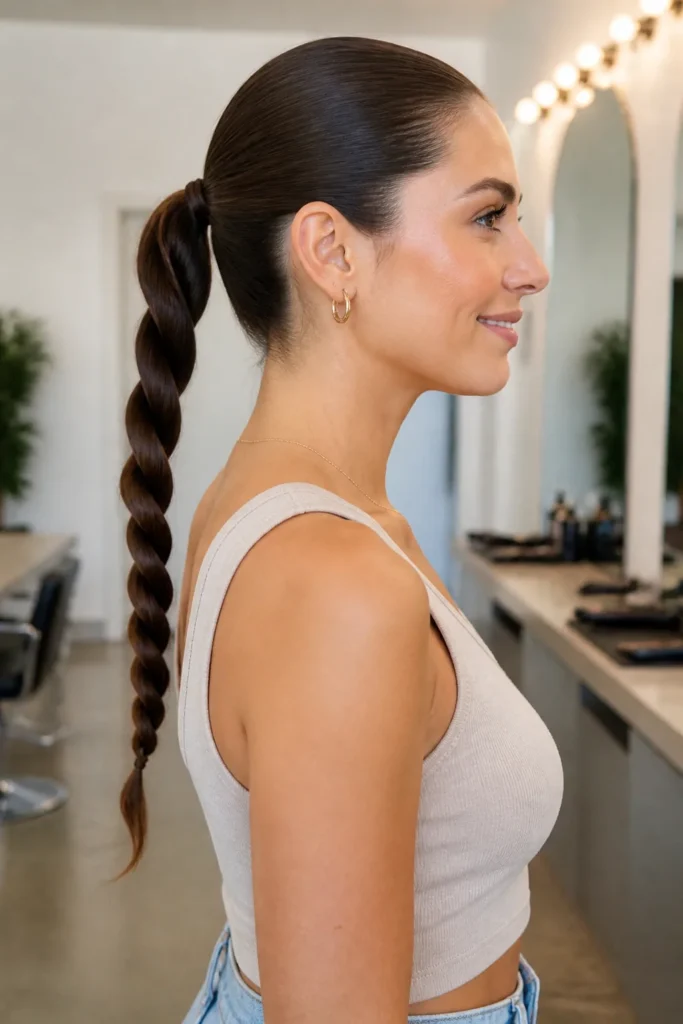
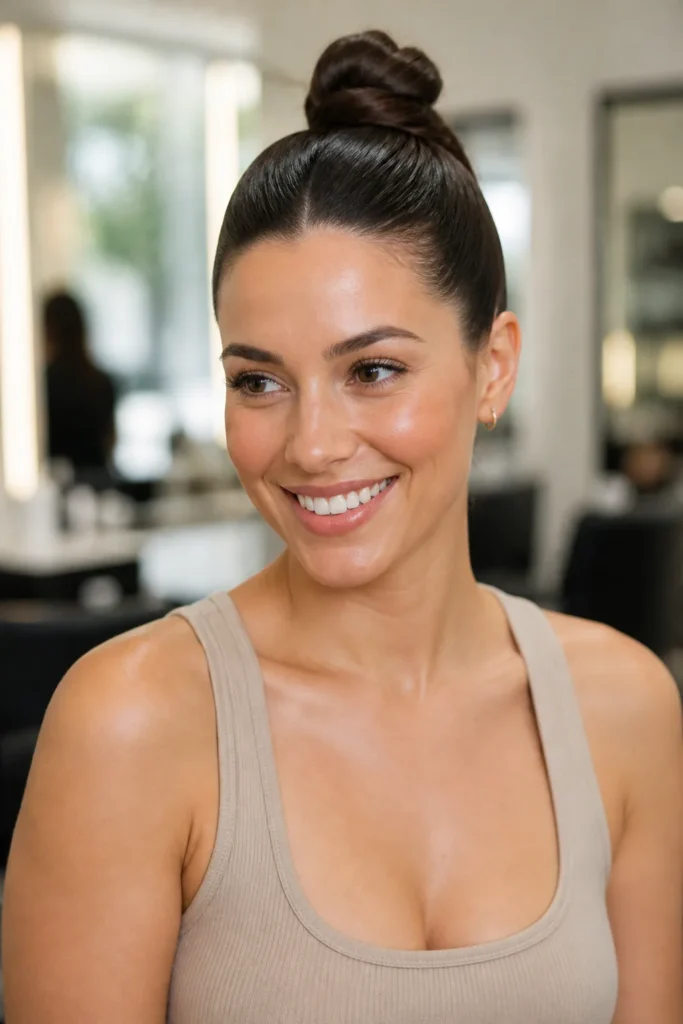
8. The Slick Top Knot
The top knot is the bun that sits high on the crown instead of low at the nape, and the slick version is its grown-up form. No messy strands, no lopsided lump, just a clean knot that looks intentional. I wear this one on days when I need my hair completely out of the way but still want to look like I tried.
Who it suits: this one works best on medium to long hair with enough length to wrap into a knot. It’s flattering on most face shapes because the height lengthens your whole silhouette. If your hair is very fine, keep the knot small and neat rather than trying to build a big one, because a small, clean knot looks far more polished than a thin, oversized one.
How to do it: gather everything high on the crown using the upside-down trick from the high ponytail, then twist the ponytail around its own base and pin it as you go. The trick is pinning while you wrap, not after, so the knot holds its shape instead of slowly unraveling. Finish by smoothing the hairline with a toothbrush or a small brush and a tiny bit of product.
Styling tip: if the knot feels too severe, pull out one or two tiny pieces at your temples after it’s secure. Just one or two. More than that and you’re back to a messy bun, which is a different style entirely.
9. The Wet-Look Slick Back
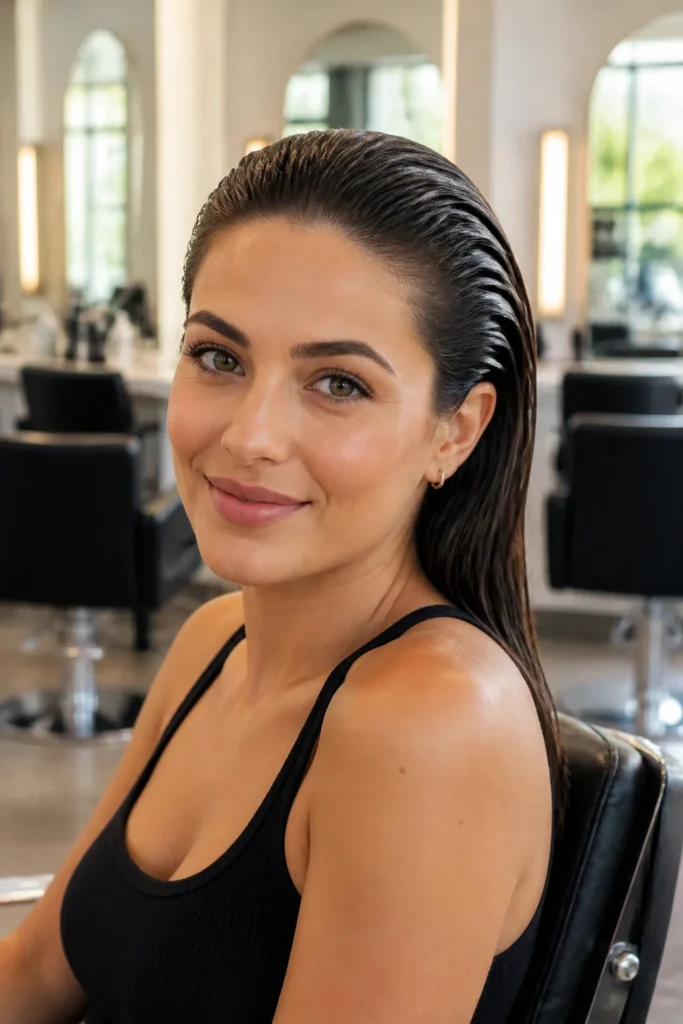
This is the evening version, and it’s the only style on this list where you deliberately use more product, not less. The wet look means glossy, sculpted hair that looks like you just stepped out of the water, and it is made for dinners out, parties, and nights when you want to look a little dramatic.
Who it suits: straight and wavy hair takes to the wet look most easily, because the gloss shows best on a smooth surface. Curly hair can wear it too, and it looks stunning, but you’ll need a gel with a stronger hold to keep the curl pattern defined instead of frizzy. Short and medium lengths actually do this look beautifully, sometimes better than very long hair, because there’s less hair to weigh the gloss down.
How to do it: start with damp hair and work a generous amount of high-shine gel through the top and sides, combing it straight back with a fine-tooth comb so the part lines are clean. Don’t touch it after that. Seriously. The wet look sets as it dries, and every time you run your fingers through it, you break the finish and invite frizz.
Why it works: the comb is what makes it look expensive instead of just wet. Finger-combed gel looks accidental. A fine-tooth comb gives you those clean, deliberate lines that make the whole style read as intentional.
10. The Soft Slick
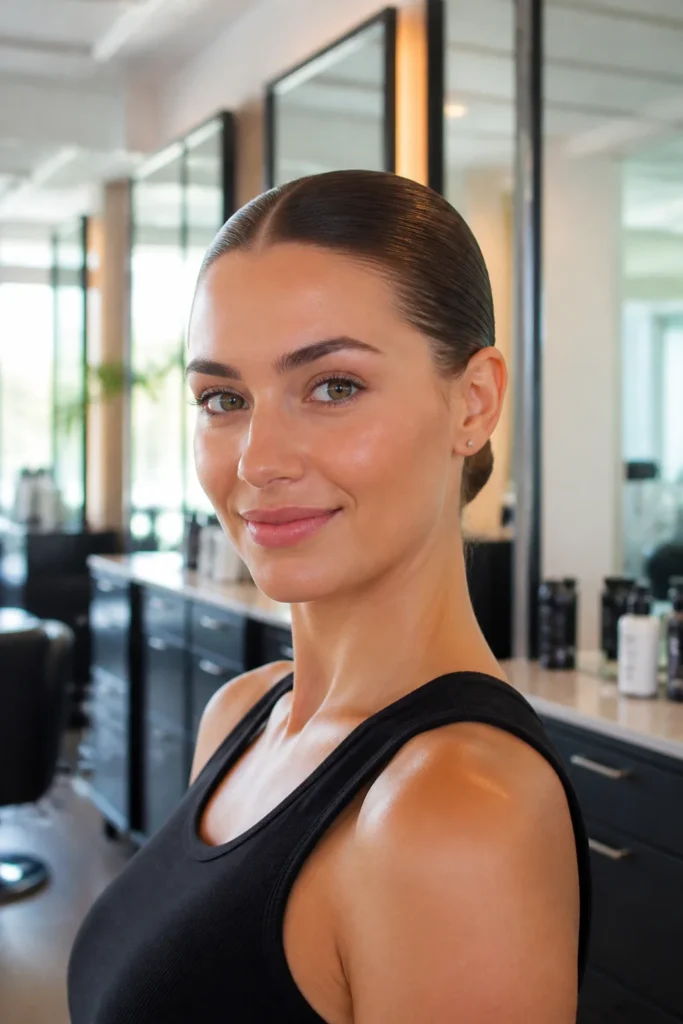
If every one of these slick back hairstyles for women in 30s so far sounds too severe for you, this is the one to try first. The soft slick means you slick the crown and the sides back, but you leave two thin pieces loose at the front, one on each side of your face. Those pieces soften the whole look, and they make the style forgiving on days when your hairline isn’t perfectly smooth.
Who it suits: this is the most forgiving slick style on this list, and the best starting point if you’ve never worn your hair slicked back. It suits rounder and fuller faces beautifully, because the loose pieces break up the outline. It also suits you if you love the idea of a slick style but worry it will look too harsh, because those two pieces change the whole feeling of it.
How to do it: section out two thin pieces at the front before you start, one near each temple, and clip them out of the way. Slick the rest of your hair back into a bun or ponytail, then unclip the front pieces and let them fall. If they need a little shape, curl them very lightly away from your face, just one pass with an iron, and leave them alone after that.
Styling tip: keep the loose pieces thin. Thick pieces look like you forgot to slick them back. Thin pieces look like a choice.
11. The Slick Side Chignon
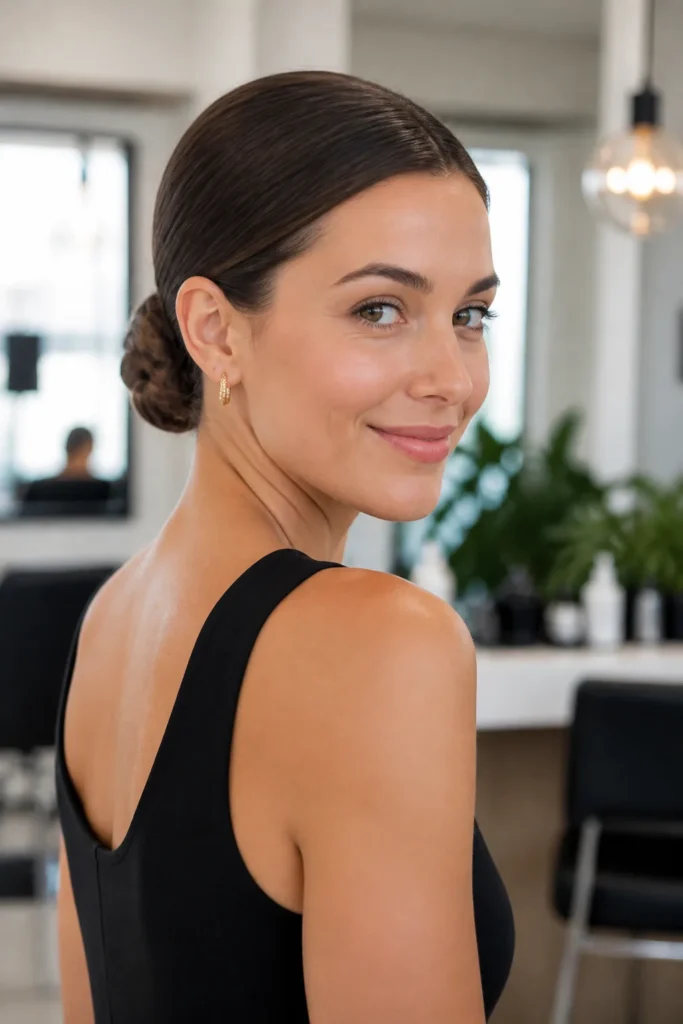
This is the evening bun for people who find a center bun a little flat. Instead of sitting at the middle of your nape, the chignon sits to one side, just behind one ear. That single change makes the whole style look softer and more deliberate, and it pairs beautifully with a one-shoulder dress or a neckline you actually want to show off.
Who it suits: medium and long hair, because you need enough length to coil to the side without it pulling. It’s lovely for formal days and dinners out, and it suits you if a regular bun feels a bit severe on you, because the asymmetry breaks up the outline. It also suits you if you wear statement earrings, since the side placement leaves one ear free and the other framed.
How to do it: slick your hair back and gather it low, then guide the ponytail to one side, just behind the ear on that side. Coil it into a flat, neat bun, pinning as you go so the shape stays low and close to the head rather than puffing outward. Smooth the hairline last with whatever product is left on your hands, and check the back in a second mirror, because a side bun is easy to place slightly too high without noticing.
Styling tip: keep the bun low and slightly behind the ear, not perched on top of your shoulder. Too far forward and it looks like an accident. Just behind the ear, it looks like a choice.
12. The Slick Twisted Chignon
This is the evening chignon, the one you wear when a bun feels too casual but an updo feels like too much work. You slick the hair back, divide it into two sections, twist them around each other, and coil the twist into a low chignon. It looks like it took forty minutes. It takes ten.
Who it suits: medium and long hair, because you need enough length to twist. It’s lovely for formal days, dinners out, and any occasion where you want to look dressed up without booking a salon appointment. It also suits you if a regular bun feels a little flat on you, because the twist adds texture and shape that a plain coil doesn’t have.
How to do it: slick your hair back and gather it low, then divide the ponytail into two equal sections. Twist each section in the same direction, then twist the two sections around each other in the opposite direction, which locks the twist in place. Coil the whole thing into a low chignon at the nape and pin it in four places. Smooth the hairline last, with whatever product is left on your hands.
Why it works: twisting in opposite directions is the secret that keeps the chignon from unraveling. Twist both sections one way, then wrap them the other way, and the tension holds itself. It’s the kind of small technique that makes the difference between a style that lasts all evening and one that falls apart before dessert.
Which One Should You Pick?
If you’re standing in front of the mirror right now trying to decide, here’s the shortcut. Start with your day, then your hair type, and let those two answers choose for you.
Busy morning, ten minutes or less: the classic slick low bun, the slick low ponytail, or the soft slick. All three are fast, forgiving, and they hold through a full day without a midday fix. Evening out, and you want to look like you tried: the slick high ponytail, the wet-look slick back, the slick side chignon, or the slick twisted chignon. Those three have a little more drama, and they’re worth the extra few minutes.
Now your hair type. Fine hair: go for the deep side slick, the soft slick, or the low ponytail, and use the lightest product you can find, because heavy gel is what makes fine hair look stringy. Thick hair: the slick braided ponytail, the slick rope twist ponytail, the top knot, and the classic low bun will contain all of it without a fight. Wavy or curly hair: slicked-down lengths and the deep side slick let you keep your texture where it shows while the top stays controlled.
One last honest note: you don’t have to master all twelve. Most of us end up with two or three slick styles we rotate through, one for rushed mornings, one for workdays, one for evenings. Learn the low bun first, because it’s the foundation of everything else here, and then add one more that fits your life. That’s enough. slick back hairstyles for women in 30s should make your mornings easier, not give you a new skill to stress about.
Frequently Asked Questions
Will gel make my hair crunchy?
Only if you use too much of it, or if you use a gel that dries very hard. The crunch comes from product overload, not from gel itself. Start with a pea-sized amount for the whole top section, add more only if you need it, and look for gels labeled flexible hold or medium hold rather than maximum hold. If your hair does dry crunchy, a tiny drop of hair oil smoothed over the top after it dries will soften it right up.
How do I avoid white flakes?
Flakes usually mean one of two things: too much product, or product applied to dry hair that then dries unevenly. Apply product to damp hair, use less than you think you need, and don’t layer three different products on top of each other. One product, applied evenly, almost never flakes. If you do see flakes, a damp cloth wiped gently along the hairline takes care of it without disturbing the style.
Do slick back hairstyles for women in 30s work on fine hair?
Yes, and it can actually make fine hair look fuller, because gathering everything back shows the full density of your hair in one place. The trick is product choice: use a lightweight cream or a light-hold gel, not a heavy wax or a strong gel, and keep the product on the top section only. Heavy product is what makes fine hair look flat and stringy, not the style itself.
How do I take a slick style out without a fight?
Don’t try to brush it out dry, because that’s when you get breakage and frizz. Wet your hair thoroughly first, work conditioner through the lengths, and then comb gently from the ends upward. The product dissolves in water, so a normal wash takes care of it. If you used a lot of gel for a wet-look style, wash twice: once to break the product down, once to actually clean your hair.
Will wearing my hair slicked back every day cause problems?
Wearing any tight style every single day, with the same tension in the same place, is hard on your hair and your hairline. The fix is simple: vary your styles through the week, don’t pull the elastic as tight as it will go, and give your hair a loose day in between slick days. slick back hairstyles for women in 30s should feel comfortable, not tight. If your scalp hurts, the style is too tight, full stop.
For the full picture, see our hairstyles and haircuts guide.
The Bottom Line
slick back hairstyles for women in 30s are not about having perfect hair. It’s about having a reliable, polished option for the mornings when you have ten minutes and the evenings when you want to look like you tried. Pick the style that fits your day, use less product than you think you need, apply it to damp hair, and let the style do the work. No crunch, no flakes, no helmet hair.
If you’re trying this look for the first time, start with the classic slick low bun. It’s the foundation of everything on this list, and once you can do it in five minutes, every other style here gets easier. And if you want more quick hair ideas for busy mornings, the 5-minute hairstyles guide on this site pairs beautifully with these slick styles, because both are built for real mornings, not magazine mornings.
If you want to keep your hair healthy underneath all this styling, the hair growth routine guide is worth a read too, because gentle handling and regular trims are what let you wear sleek styles week after week without paying for it later.