

These 14 beanie styles pass two tests: they sit flat under the hat with no bumps, and they still look good when the hat comes off, with low, loose styles that expect the hat instead of fighting it.
Every winter I have the same moment. I walk into the office, peel off my beanie, and catch my reflection in the elevator mirror. Flat hair. A line pressed across my forehead. The top of my head looks like it gave up somewhere around the parking lot. Sound familiar?
For years I blamed the beanie. Then I finally figured out that the beanie was never the problem. The hairstyle underneath it was. I was putting my hair up high, or leaving it loose and smooth, and then acting surprised when a snug knit hat flattened everything and stamped a dent into it. Once I started choosing styles that sit low, stay loose, and expect the hat, the whole thing changed. Now I take the beanie off and my hair still looks like I did something on purpose. That approach is the heart of beanie hairstyles for women in 30s.
Here is the thing: a beanie-friendly hairstyle has to pass two tests, not one. It has to sit flat under the hat with no bumps or lumps, and it has to look good when the hat comes off. The fourteen styles below pass both. Every one of them keeps your hair contained in the cold, avoids the worst of the flat hair, hat lines, and static, and gives you something worth showing when you get inside. That is why these beanie hairstyles for women in 30s are worth trying.
1. The Low Loose Braid
This is my default winter hairstyle, and if you only steal one idea from this list, make it this one. A low, loose three-strand braid starts at the nape, which means the beanie sits flat over the top of your head with nothing bunching underneath it. No bump at the crown, no lump at the back, just smooth knit over smooth hair.
Who it suits: long and medium hair, especially thick hair that gets heavy and unmanageable in winter. If your hair is fine, braid even more loosely and tug gently at the edges after you secure it, so the braid looks soft and full instead of thin.
How to do it: gather your hair low at the nape, not up high, and braid it loosely all the way down. Secure it with a snag-free elastic, then pull at the edges of the braid just a little to loosen it up. Slide the beanie on so the band sits above where the braid starts.
Why it works under a beanie: the braid keeps every strand contained, so wind and static cannot get at it, and when the hat comes off you have two options. Leave the braid in and it looks intentional, or undo it and you get soft, even waves for free. It is a classic among beanie hairstyles for women in 30s.
2. The Side Braid
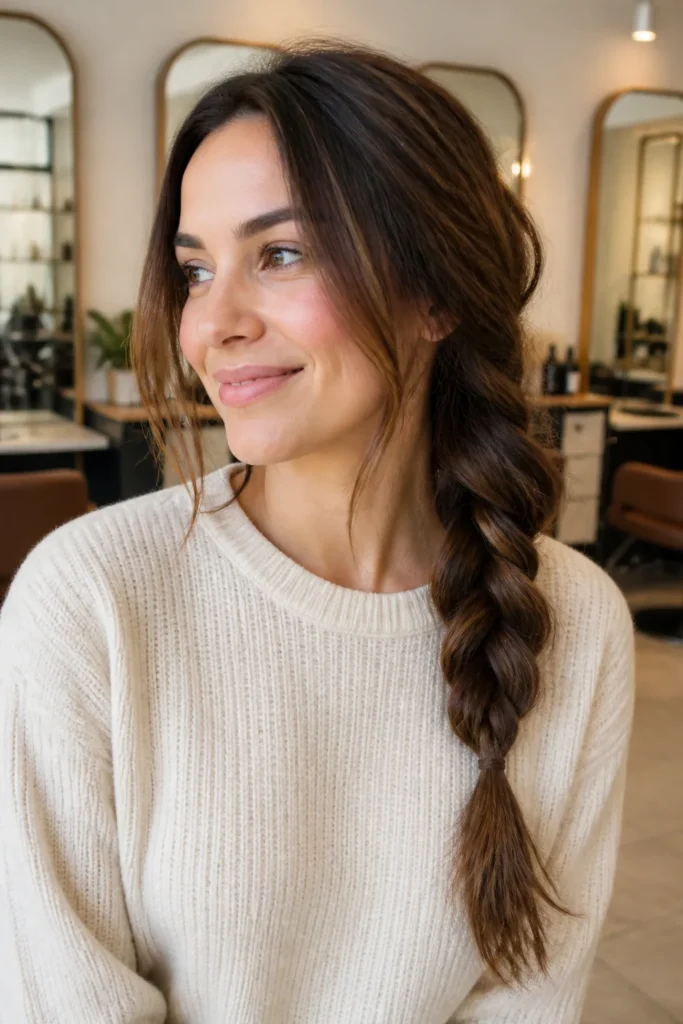
If a braid down your back bugs you under a coat collar, move it to the side. A side braid drapes over one shoulder, which means there is nothing at all bunched up under the beanie at the back of your head. The hat sits perfectly smooth, and your hair stays where you can see it.
Who it suits: medium and long hair, and anyone who spends the day commuting or running errands and does not want hair trapped between a coat and a hat. It also suits you if you have layers, because the shorter front pieces fall naturally into the braid instead of poking out around your face.
How to do it: sweep all your hair to one side, starting the braid just behind the ear on the opposite side so it crosses the nape diagonally. Braid loosely, secure it low, and let a few soft pieces fall free around your face. The beanie goes on like normal, with nothing underneath it to fight.
Beanie tip: this is the best style for days when you will take the hat on and off a lot, because a side braid never gets mussed by the band. It looks the same at 4 p.m. as it did at 8 a.m.

3. The Twin Low Braids
If one braid feels a bit plain, or a single heavy braid pulls at your neck, split the job in two. Twin low braids start behind each ear, run down over each shoulder, and sit completely flat under a beanie, because there is nothing bunched at the back of your head at all.
Who it suits: thick and long hair most of all, because two braids share the weight that one braid has to carry alone. It also suits you if your hair slips out of a single braid, since two smaller braids hold better than one big one.
How to do it: part your hair down the middle, then braid each side loosely from just behind the ear down to the ends. Secure each braid low with a small snag-free elastic, and tug gently at the edges to soften them. Wear the braids in front of your shoulders, so the beanie band has nothing to press against at the back.
Why it works under a beanie: the weight sits evenly on both sides, so the hat stays level instead of tipping, and there is no lump for the band to dent. When the hat comes off, undo one braid or both and you get even, soft waves, or leave them in for a weekend look that still feels finished.

4. The Nape Bun, Messy
A low, messy bun at the nape is the beanie’s best friend, because it sits below the band instead of under it. The beanie holds the top of your hair smooth, the bun peeks out underneath, and the whole thing reads cozy and effortless.
Who it suits: anyone with enough length to gather into a bun, which is most of us by winter. It is especially good on second-day hair, because day-old texture gives the bun grip and keeps it from sliding around under the hat.
How to do it: gather your hair low at the nape, twist it loosely, and wrap it into a soft bun. Pin it in place with a few bobby pins, then pull a couple of small pieces loose around your face. Keep it soft, not tight. A tight bun under a beanie presses a dent into your hair and gives you a headache by lunch.
Why it works when the hat comes off: undo the pins and you have loose, bendy hair with natural texture. Leave it up and it still looks like a real hairstyle, not a “I gave up” bun. That versatility makes it a favourite among beanie hairstyles for women in 30s.

5. The Sleek Low Chignon
Some days you need to look polished, beanie or not. The sleek low chignon is the work-day version of the nape bun: smooth on top, twisted neatly at the nape, pinned so it stays put. When the hat comes off in the office, you look like you meant every bit of it.
Who it suits: straight and slightly wavy hair takes to this style most easily, and it is my pick for office days, dinners out, and any day when a messy bun would feel too casual. If your hair is very curly, you can still wear it, but smooth the top with a brush first so the chignon reads sleek rather than puffy.
How to do it: brush your hair back smoothly, gather it low, and twist it into a compact knot at the nape. Pin it securely, then smooth the top with a tiny amount of smoothing cream on the lengths, never the roots. The beanie band sits above the knot, so nothing gets squashed.
Styling tip: the part matters here. A clean middle or side part before you gather the hair makes the whole style look deliberate, even after hours under a hat.
6. The Low Loop Ponytail
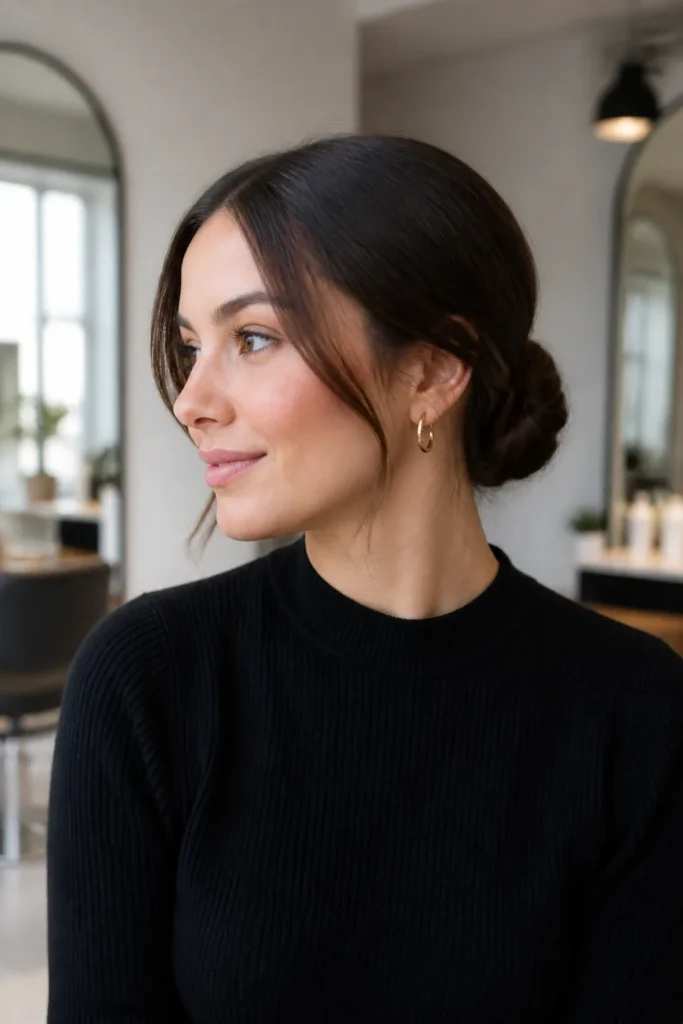
This is the ponytail for days when a bun feels like too much and a plain pony feels like too little. You gather your hair low at the nape, pull it halfway through the elastic on the last pass, and leave a soft loop with the ends tucked underneath. It reads like a bun from the side, but it takes about thirty seconds.
Who it suits: medium and long hair, and fine hair most of all, because the loop creates the illusion of fullness without any teasing. It also suits you if buns tend to slide out of your hair, since the elastic holds the loop in place far better than pins do.
How to do it: gather your hair low at the nape and secure it with a soft elastic. On the final pass, pull the ponytail only halfway through, so a loop forms and the ends stay tucked at the bottom. Fan the loop out gently with your fingers, pin the ends underneath if they poke out, and slide the beanie on over the top.
Why it works under a beanie: the loop is low and flat, so the band sits above it with no bump, and the ends are already tucked away from wind and static. When the hat comes off, the loop still looks neat, and you can pull a few pieces loose around your face to soften it. It is one of the simplest beanie hairstyles for women in 30s to master.
7. The Low Ponytail, Wrapped
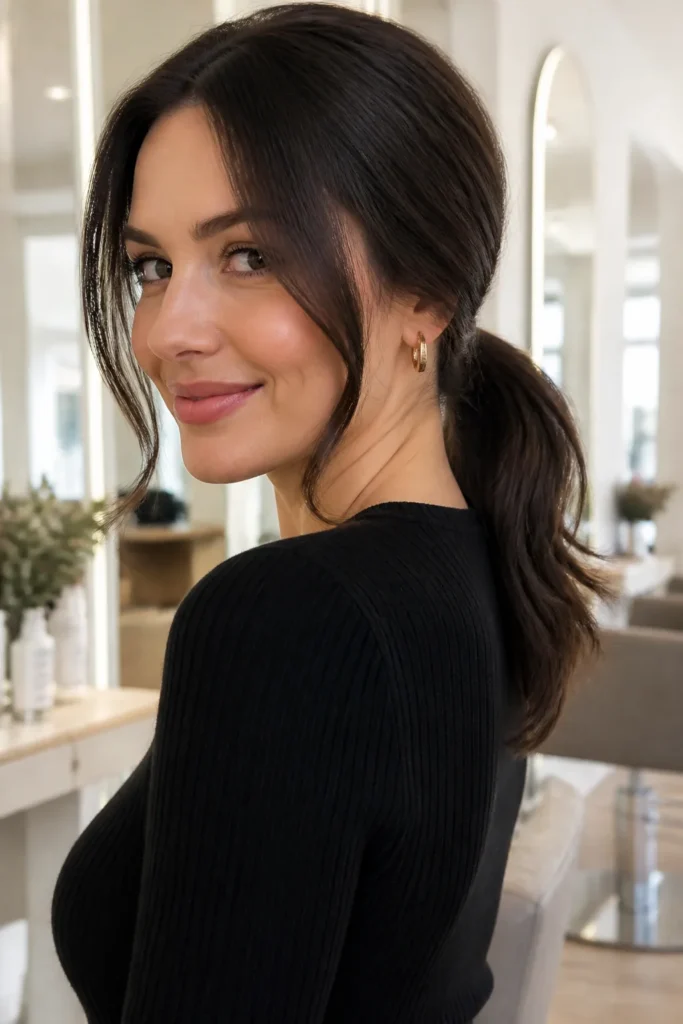
A plain low ponytail under a beanie can look a bit gym-bound when the hat comes off. Wrap it, and suddenly it looks finished. You take a small section of hair from the ponytail, wind it around the elastic, and pin it underneath. That one move turns a basic pony into a hairstyle.
Who it suits: medium and long hair, and fine hair most of all, because the wrapped elastic adds a little polish without asking your hair to hold volume it does not have. It is also a great option if you are growing your hair out and the ends are at that awkward uneven stage.
How to do it: gather your hair low at the nape and secure it with an elastic. Before you put the beanie on, mist the ponytail lightly with texture spray so it does not go limp inside the hat. Then wrap a thin section of hair around the elastic, pin it underneath, and slide the beanie on.
Why it works: the ponytail lies completely flat under the hat, so there is no bump, and when the hat comes off, the wrapped elastic makes it look like you tried. Texture spray is the secret here. Without it, a low pony under a beanie goes flat and sad by midday.
8. The Low Rope Twist Ponytail
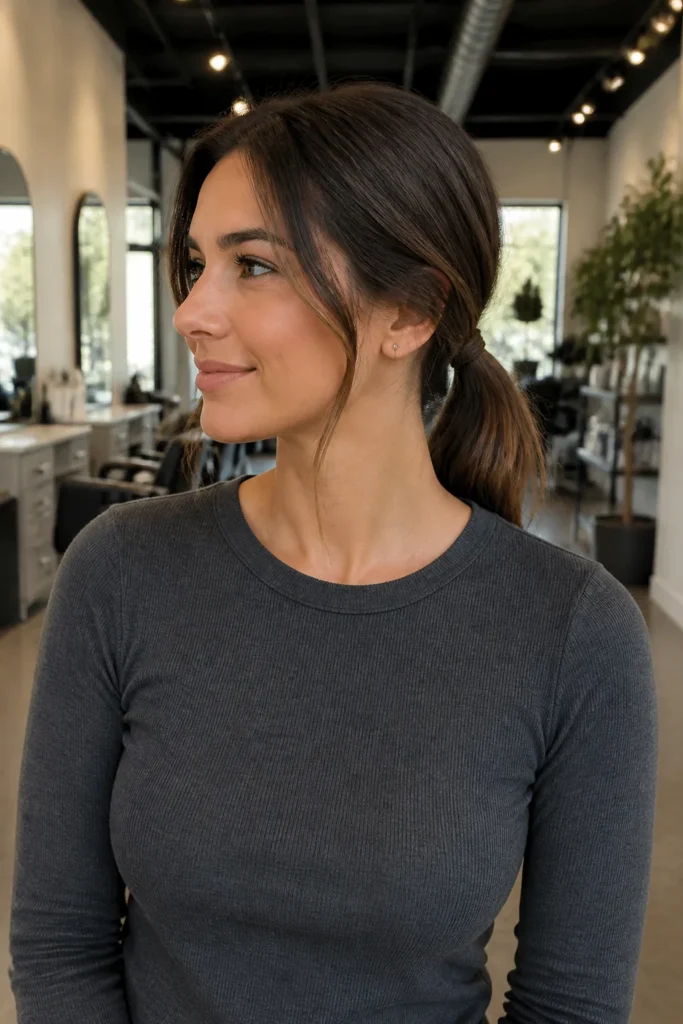
If braiding feels fiddly, try a rope twist instead. You divide a low ponytail into two sections, twist each one in the same direction, then twist them around each other in the opposite direction. The result looks like a braid, holds like a braid, and takes half the skill.
Who it suits: medium and long hair, and anyone whose braids unravel by lunchtime. A rope twist grips itself, so it stays put through a commute, a coat collar, and a beanie going on and off. It also suits straight and slightly wavy hair, which can be too slippery for a loose braid.
How to do it: gather your hair into a low ponytail at the nape and secure it lightly. Split the ponytail into two equal sections, twist each section clockwise, then wind them around each other counterclockwise and secure the end. Work a tiny amount of smoothing cream through the lengths first if your hair is prone to flyaways, since the twist shows every stray strand.
Why it works under a beanie: the twist lies flat against the nape, so the hat sits smooth, and the twisted shape is far less likely to dent than loose hair. When the hat comes off, undo the twist for soft, even waves, or leave it in for a polished look that took three minutes.
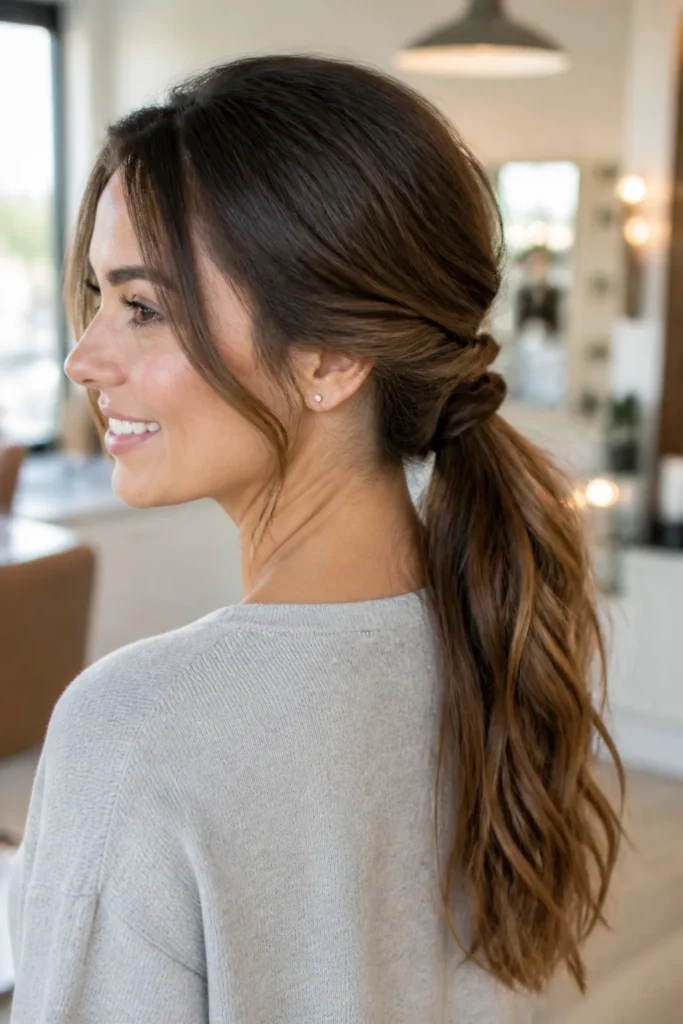
9. The Tucked Ends
This one is for shoulder-length hair and lobs, and it is criminally underrated. You tuck the ends of your hair up and under at the nape, pin them loosely, and let the beanie sit over the top. Your ends stay warm, they do not flip out in the wind, and when the hat comes off you get a soft tucked-under shape that looks like a salon blowout.
Who it suits: bobs, lobs, and anyone growing out a shorter cut. It also suits you if your ends tend to go frizzy in winter air, because tucking them away protects them from the worst of the wind and the static.
How to do it: start with a little texture spray through the lengths so the tuck has something to grip. Then fold the ends up and under at the nape, pin them loosely with a few bobby pins, and put the beanie on over the top. Do not pin it tightly. The tuck should feel soft and a little loose, like a French twist that gave up halfway, in the best way.
Beanie tip: this style and a coat collar are a perfect team. The collar hides the pins, the beanie holds the top smooth, and nothing about it looks like you are trying to hide bedhead. That combination is why it belongs among beanie hairstyles for women in 30s.

10. The Pre-Waved Texture
Here is a trick that took me too long to learn: set your waves before the hat, not after it. If you put a beanie on over straight, freshly washed hair, you get flat hair with a dent. If you put it on over waves that have already cooled and set, the hat presses those waves into a softer, lived-in shape, and when it comes off you actually have something to work with.
Who it suits: medium and thick hair holds this wave best, but fine hair can wear it too with a good texture spray. It is the best choice for days when you want your hair down but you know you will be outside in the cold for a while.
How to do it: in the morning, create loose waves with a wide iron or a loose overnight braid, and let them cool completely. This part matters. Never put a beanie on over hot, just-styled hair, or the wave pattern sets in a weird, flattened shape. Once the waves are cool, put the beanie on, and when you take it off later, shake the waves out with your fingers and add a light mist of texture spray.
Why it works: you are using the beanie as a setting tool instead of fighting it. The pressure that ruins straight hair actually improves waves, softening them into something that looks natural. That trick is central to beanie hairstyles for women in 30s.
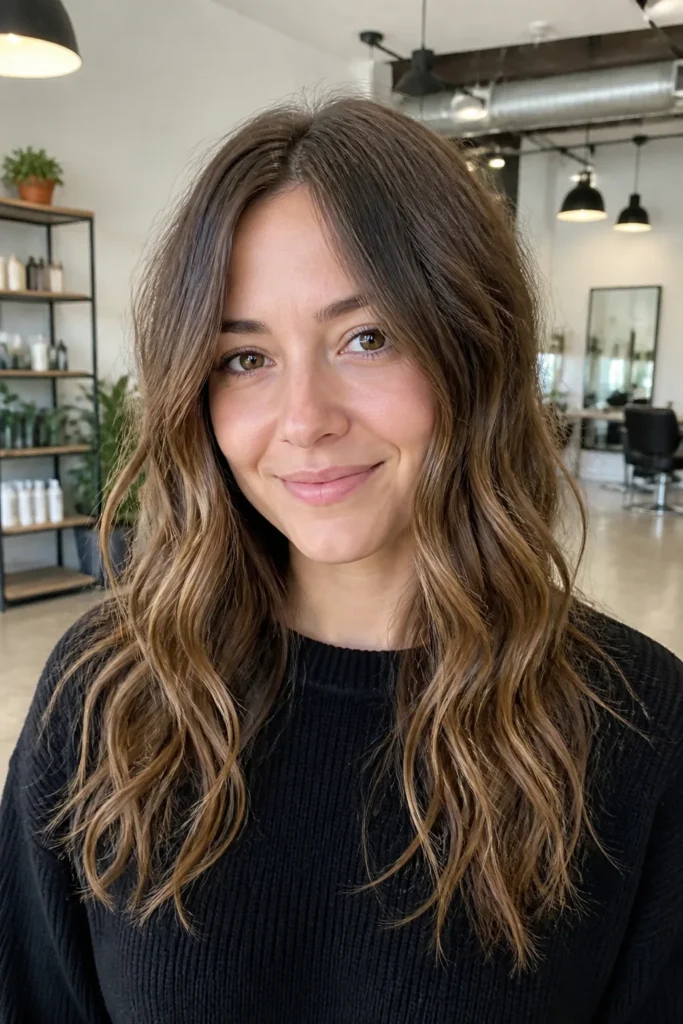
11. The Low Curly Ponytail
Curly hair and beanies have a complicated relationship, because a hat can either smooth your frizz or crush your curl pattern flat. The low curly ponytail threads the needle. You gather the hair low and loose at the nape with a soft scrunchie, and let the curls hang free below. The beanie smooths the crown, which is where frizz lives, while the curls underneath stay defined because nothing is pressing on them.
Who it suits: naturally curly and coily hair of any length that can gather at the nape. If your curls are short, gather what you can and let the rest frame your face under the band.
How to do it: while your hair is still slightly damp, work a little curl cream through the ends, then gather everything low and loose. Use a silk or satin scrunchie, not a tight elastic, because a tight band dents curls and snaps fragile ends. Slide the beanie on gently, lifting it over your head rather than dragging it down over your curls.
Beanie tip: never brush your curls out before putting the hat on. Brushed-out curls under a beanie turn into one big frizz cloud by the time you get inside.

12. The Double Low Twists
Two flat twists, one from each temple, pinned low at the nape. Everything about this style lies flat, which means the beanie sits perfectly smooth over it, and when the hat comes off you have a pretty twisted detail instead of a dent across your forehead.
Who it suits: medium and long hair, and it is brilliant on second-day hair, because slightly lived-in texture holds a twist much better than freshly washed, slippery hair. It also suits you if you want something a little prettier than a braid without spending more than five minutes on it.
How to do it: part your hair down the middle, then take a section from each temple and twist it back along your head, adding a little more hair as you go, the way you would with a French braid but with two strands instead of three. Pin both twists low at the nape, and let the rest of your hair hang free or gather it into a low pony.
Why it works: the twists act like a headband built out of your own hair, holding the front smooth under the beanie band, which is exactly where hat lines usually form.

13. The Low Half-Up Knot
Some days you want your hair down, but you do not want it in your face, in your scarf, or flying around in the wind. The low half-up knot is the compromise. You gather just the top half of your hair, twist it into a small knot low at the nape, and leave the rest hanging free underneath.
Who it suits: medium and long hair, straight or wavy, and anyone who loves wearing her hair down but hates how it behaves in winter. It is also a good pick if a full updo feels too formal for the day, but loose hair feels unfinished.
How to do it: take the top half of your hair, from temple to temple, and gather it low at the nape, not up at the crown. Twist it loosely into a small knot and pin it in place, then let the bottom half fall free. Leave two soft pieces out around your face. The beanie goes on over the smooth top, with the band sitting above the knot, so nothing gets squashed.
Why it works under a beanie: the top layer is controlled, so the hat cannot press it into a dent, while the loose lengths underneath stay warm under your coat. When the hat comes off, undo the knot and you have gentle bends through the top, or leave it in for a style that looks considered without trying hard.
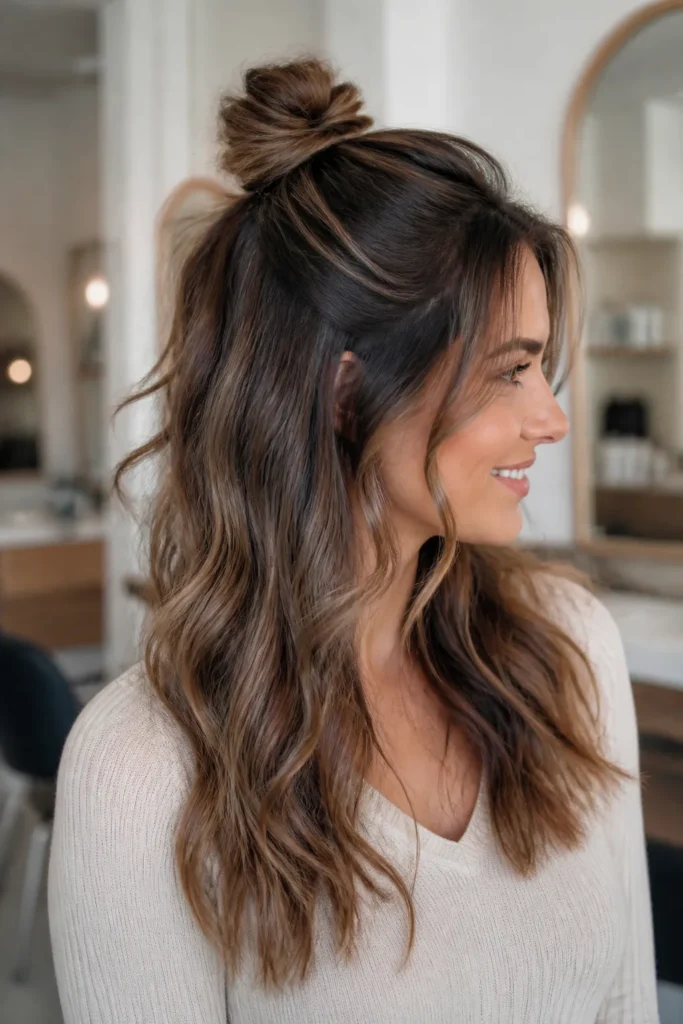
14. The Low Bubble Ponytail
This is the fun one. A low bubble ponytail takes a regular low pony and divides it into two or three sections with small elastics, then gently pulls each section out so it puffs up like a bubble. Under a beanie it stays completely contained, and when the hat comes off, the bubbles give you shape and volume that flat winter hair never has on its own.
Who it suits: long hair, playful days, weekends, and anyone who is bored of the same low pony every single day. It also suits you if your hair is fine, because the pulled-out sections create the illusion of fullness without any teasing or backcombing.
How to do it: gather your hair into a low ponytail at the nape. Add a second elastic a few inches down, and a third if your hair is long enough. Then gently tug at the sides of each section to puff it out. Keep the bubbles low and soft, not high and tight, or the beanie will bump over them. Slide the hat on and forget about it.
Styling tip: use small clear elastics, and keep the bubbles uneven on purpose. Perfectly even bubbles look like a costume. Slightly uneven ones look like a hairstyle.
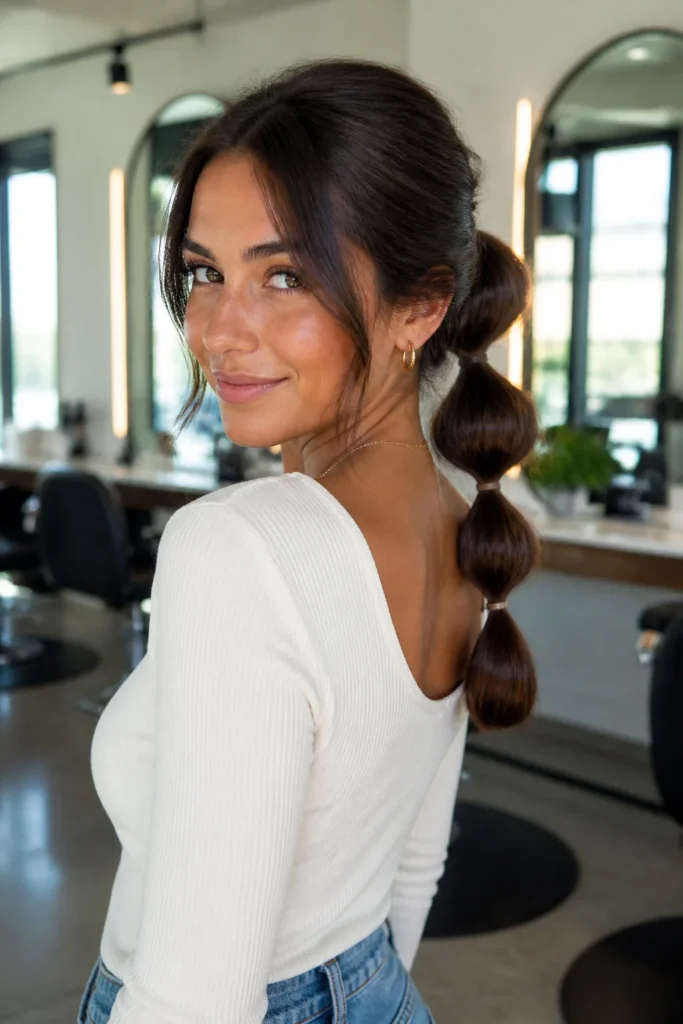
Which One Should You Pick?
Start with your hair type, then your day, and let those two answers choose for you.
Fine hair: go for the wrapped low ponytail, the tucked ends, the low loop ponytail, or the side braid. All three add polish without asking your hair to hold volume it doesn’t have. Thick hair: the low loose braid, the twin low braids, the messy nape bun, and the pre-waved texture will contain the weight without a fight. Curly hair: the low curly ponytail and the double low twists protect your curl pattern while the beanie handles the frizz on top. Short or medium hair: the tucked ends and the double twists work beautifully at lengths that can’t quite manage a full braid.
Now the day question. Work days and polished days want the sleek low chignon, the wrapped low ponytail, or the low rope twist ponytail on rushed mornings. Weekends and casual days are made for the bubble ponytail, the low half-up knot, and the messy nape bun. Second-day hair loves the double twists, the side braid, and the low loose braid, because lived-in texture holds all three better than freshly washed hair does.
One more thing that helps every style on this list: put your beanie on over dry, cool hair, never wet or hot hair, and lift it off gently instead of dragging it backward. That one habit alone cuts the worst of the flatness and the static, whatever style you choose. It helps every one of these beanie hairstyles for women in 30s.
Frequently Asked Questions
How do I stop the line across my forehead?
The line comes from a tight band sitting in the same place for hours. Wear a beanie with a slightly looser knit, and fold the band up once so it sits a little higher on your forehead. When you take it off, flip your part to the other side for a minute and finger-comb your roots upward. That breaks the line faster than any product will.
Can I wear a beanie over wet hair?
Please don’t, if you can help it. Hair that dries under a hat dries flat, and it dries frizzy at the same time, which is the worst of both worlds. If you are short on time, dry your hair until it is about eighty percent dry, then braid it loosely before the beanie goes on. You will get soft waves instead of a flat, fuzzy mess.
Does wearing a beanie damage your hair?
A beanie on its own does not ruin your hair, but two habits can cause trouble over a whole winter. A very tight band worn every day can snap fragile ends where it rubs, and dragging a hat off roughly can pull and break hair. Go for a looser fit, use soft scrunchies instead of tight elastics underneath, and lift the hat off gently. If your ends feel rough by February, that is usually dryness and friction, not the hat itself, and a regular trim plus a little oil on the ends fixes it.
How do I fix flat hair after taking my beanie off?
Flip your head upside down, finger-comb your roots, and flip back up. Then mist a little texture spray or dry shampoo at the roots only, never through the lengths, and switch your part to the opposite side for ten minutes. The part switch alone lifts roots that have been pressed flat for hours. If you have two minutes more, a quick blast with the blow dryer on the roots, upside down, resets everything.
What kind of beanie is kindest to hair?
A loosely knitted beanie with a soft lining, like fleece or satin, is the gentlest option, because it creates less friction and less static than a tight ribbed knit. If your favorite beanie is unlined, you can still wear it, just keep the hairstyle underneath low and loose, and avoid wearing it pulled down tight over your forehead all day. And skip the metal clips and tight elastics underneath the hat. Soft scrunchies and loose pins are your friends in winter.
For the full picture, see our hairstyles and haircuts guide.
The Bottom Line
Winter hair is not about fighting your beanie. It is about choosing a style that expects the hat, sits low and loose underneath it, and still looks like something when the hat comes off. Start with the low loose braid if you want one style that never fails, add the sleek chignon for work days and the bubble ponytail for weekends, and keep the part switch and the root spray in your back pocket for the days when flat hair wins anyway. Those three are a strong starting set of beanie hairstyles for women in 30s.
Your beanie should make your life warmer, not your hair flatter. Pick the style that matches your hair and your day, and let the hat do its job while your hair does its own.
If you want more hair ideas for the days you skip the beanie entirely, the curtain bangs guide and the claw clip styles on this site pair beautifully with winter outfits when you want a change without losing the low-maintenance spirit of this list.