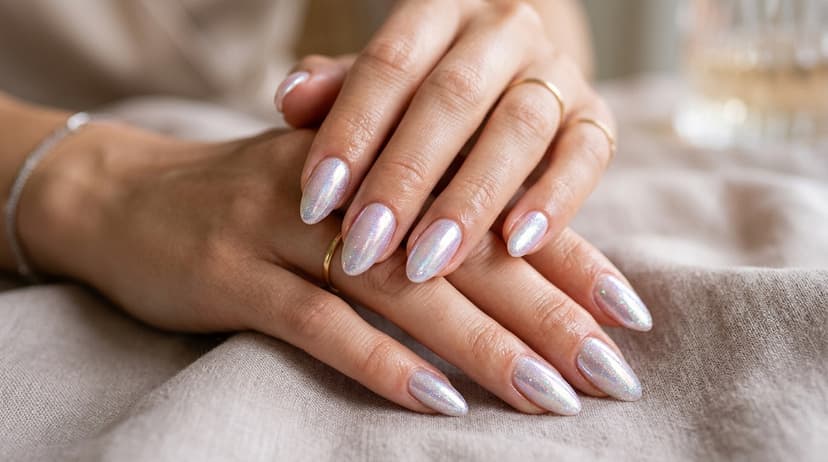
BIAB Nails: Complete Guide to Builder Gel Manicures
BIAB (Builder in a Bottle) is revolutionizing natural nail care. Learn how builder gel strengthens weak nails, how it compares to acrylics, and how to maintain it.
📌 At a Glance (Key Takeaways)
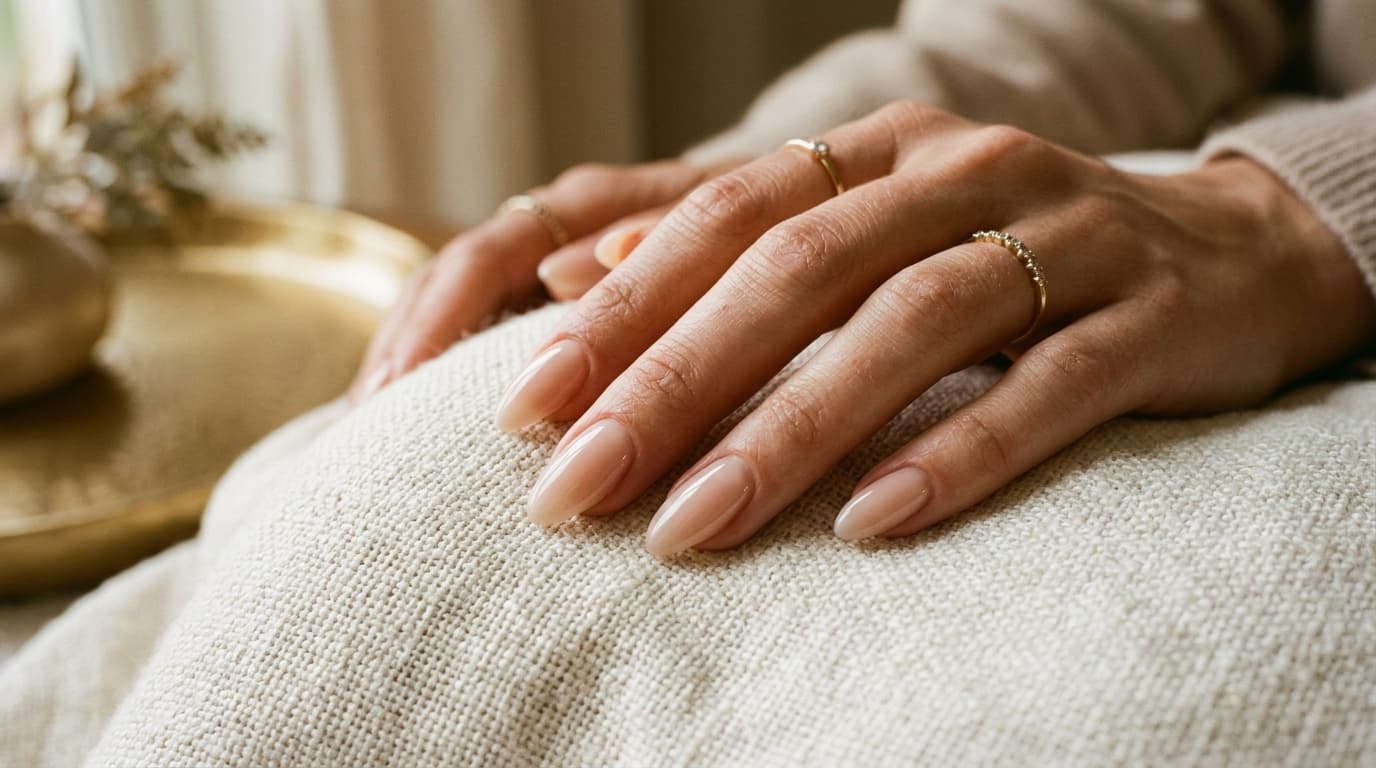
- BIAB (Builder in a Bottle) is a thick, flexible soak-off builder gel that reinforces natural nails without harsh extensions.
- Lasts 3 to 4 weeks between infills, making it far more durable than traditional gel polish while causing significantly less damage than acrylics.
- Formulated with an optimal balance of flexibility and strength that bends slightly with the natural nail rather than snapping.
- Requires professional infills or gentle acetone soaking; peeling or prying builder gel causes severe keratin layer stripping.
Direct Answer: BIAB (Builder in a Bottle) is a specialized, soak-off builder gel formulated to provide extreme structural reinforcement to the natural nail. Unlike thin gel polish, BIAB has a viscous, self-leveling consistency that allows technicians to construct an apex—the highest point of reinforcement on the nail plate—preventing breaks, repairing ridges, and allowing weak or damaged nails to grow to dramatic natural lengths.
The Rise of Builder Gel: Why BIAB Has Changed Natural Nail Care
Over the last few years, the salon landscape has undergone a seismic shift away from heavy, rigid acrylic extensions toward natural nail rehabilitation. At the forefront of this movement is BIAB—an acronym coined by The GelBottle Inc that has become the ubiquitous term for bottled builder gel. For decades, clients struggling with brittle, peeling, or chronically bitten nails had only two choices: accept chipped polish within days or commit to the damaging cycle of acrylic extensions and aggressive electric e-file filing.
BIAB bridges this divide by delivering the armor-like strength of a hard gel with the flexibility and soak-off removal of a soft gel. Formulated with flexible oligomers, builder gel moves in tandem with your natural nail plate. When you tap your nail against a hard surface or accidentally jam your finger, the gel absorbs the kinetic impact by flexing micro-fractions rather than snapping off your natural nail bed underneath.
Comparing Nail Enhancement Systems: BIAB vs. Gel vs. Acrylics
To understand why builder gel has become the most requested service across modern luxury salons, evaluate how its chemical composition and mechanical properties compare to traditional nail systems:
| Feature | BIAB (Builder Gel) | Standard Gel Polish | Traditional Acrylics | Dip Powder |
|---|---|---|---|---|
| Primary Purpose | Structural strengthening & growth | Color & lightweight protection | Rigid artificial length extension | Hardened colored overlay |
| Flexibility | High (Bends naturally with nail) | High (Very flexible) | Very Low (Rigid & brittle) | Low (Stiff acrylic resin) |
| Typical Wear Time | 3 to 4 Weeks | 10 to 14 Days | 2 to 3 Weeks (Requires fills) | 2 to 3 Weeks |
| Nail Plate Damage | Very Low (Preserves keratin) | Low (When soaked properly) | Moderate to High (Aggressive prep) | Moderate (Heavy acetone soaking) |
| Infill Capability | Yes (No full removal needed) | No (Requires full soak-off) | Yes (Acrylic backfill) | No (Usually soaked off each time) |
| Removal Method | Acetone soak or gentle e-file | Pure acetone soak (10 mins) | Heavy filing + long soak | Acetone soak (20 mins) |
For readers comparing salon finishes, our detailed exploration on The Healthiest Ways to Strengthen Brittle Natural Nails examines how structural overlays interact with underlying keratin health.
Who Benefits Most from Builder in a Bottle?
While builder gel produces a pristine, high-shine aesthetic suitable for any manicure enthusiast, specific nail profiles experience transformative benefits:
1. Chronic Nail Biters & Skin Pickers
Nail biting is largely an unconscious oral fixation triggered by rough edges, hanging cuticles, or stress. BIAB forms a thick, smooth, and impervious barrier over the nail plate with blunt edges that make biting impossible and tactilely unrewarding. Because the product remains intact for up to a month, the delicate underlying hyponychium and nail bed receive the uninterrupted healing time necessary to reattach and elongate.
2. Fine, Bendable, and Papery Nails
Individuals with naturally thin nail plates frequently experience painful peeling, where the free edge splits into horizontal micro-layers. Traditional polish cannot prevent these micro-splits because it lacks structural depth. A single slip-and-bead layer of BIAB introduces an architectural arch that distributes mechanical pressure evenly across the nail plate, preventing vertical splits.
3. Salon Clients Transitioning Away from Acrylics
Removing long-term acrylic extensions often leaves the natural nail plate thinned, sensitive to hot water, and structurally compromised from electric filing. Applying a thin protective overlay of builder gel cushions the exposed nail matrix while the damaged plate grows out completely over four to six months.
The Professional BIAB Application Protocol: Step-by-Step
Achieving four weeks of lift-free adhesion requires meticulous mechanical and chemical preparation. When performed by a certified technician or advanced home artist, the process follows these rigorous steps:
- Dry Cuticle Prep (Russian or European Manicure): The nail technician uses delicate diamond flame bits or a gentle steel pusher to clear all non-living pterygium tissue from the proximal nail fold. Any microscopic skin cell left on the nail surface prevents gel bonding and causes premature lifting.
- Surface De-Shining: Using a gentle 240-grit buffer, the technician removes the natural lipid sheen from the nail plate without removing keratin thickness.
- Dehydration & Non-Acid Primer: A specialized dehydrating solvent strips residual moisture and oil, followed by an ultra-thin wash of non-acid bonding primer to establish molecular cross-linking.
- The Slip Layer (Base Coat): A micro-thin layer of builder gel is painted across the entire surface and left uncured. This wet layer acts as a guiding surface for the subsequent gel bead.
- Constructing the Apex: A generous bead of builder gel is picked up on the brush, placed near the cuticle, and floated gently down the center of the nail plate. The technician inverts the client's hand palm-up for 5 to 10 seconds, allowing gravity to pull the gel into a smooth, natural arch directly over the stress area of the nail.
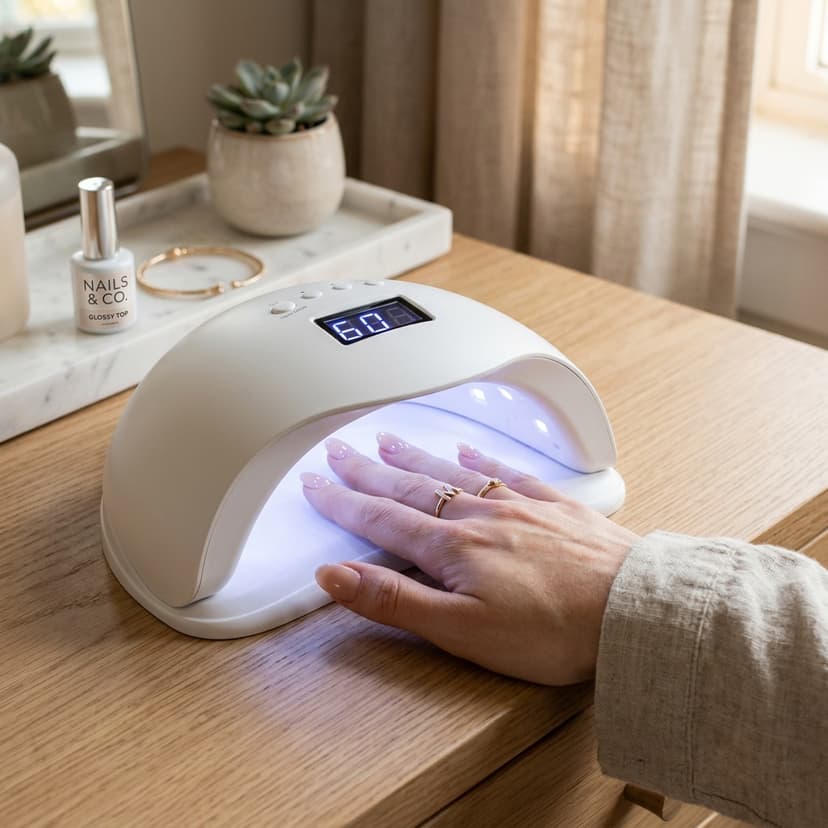
- Precision Flash and Full Curing: The nail is cured under a low-heat LED lamp for 60 to 90 seconds to prevent painful exothermic heat spikes.
- Refining & High-Gloss Top Coat: After wiping the tacky inhibition layer, the perimeter is checked for symmetry, buffed smooth, and sealed with a non-wipe gloss or matte top coat.
The Infill Schedule: Why Timing Dictates Nail Health
One of the greatest economic and health advantages of BIAB is that it does not require soaking off with harsh acetone at every salon visit. Instead, the technician files down the top color coat, checks for lifting, blends the new regrowth area, and applies fresh builder gel to balance the shifted apex.
- Weeks 1 to 2: The apex sits squarely over the stress zone (the center of the nail bed). The manicure feels balanced, sturdy, and light.
- Week 3: Growth reveals 2 to 3 millimeters of natural nail near the cuticle. The apex has migrated slightly forward toward the free edge.
- Week 4 (The Ideal Infill Window): The apex has migrated into the middle-to-front third of the nail plate. Weight distribution is now slightly forward-heavy. Rebalancing is essential to prevent leverage fractures.
- Week 5+ (The Danger Zone): As the heavy bead of builder gel grows past the fingertip, everyday tapping creates extreme upward leverage against the thinning cuticle area. This leads to pocket lifting, water trapping, and potential bacterial colonization (pseudomonas / "greenie").
Daily Maintenance Rules for Long-Lasting Retention
To protect your investment and maintain pristine gloss between salon appointments, integrate these four essential care habits:
- Apply High-Quality Jojoba Cuticle Oil Twice Daily: Jojoba oil possesses a molecular size small enough to penetrate both the cured gel polymer and the natural nail keratin. Regular oiling maintains gel flexibility and prevents the edges from curling inward away from the enhancement.
- Treat Your Nails as Jewels, Not Tools: Never use your reinforced nails to pry open soda cans, peel adhesive labels, or scrape surfaces. Mechanical force concentrates at the lateral sidewalls, fracturing the seal.
- Wear Rubber Gloves for Household Cleaning: Domestic cleaning products contain harsh surfactants and alkaline detergents that break down the plasticizers in builder gel, leading to cloudiness, micro-cracking, and chemical lifting.
- Avoid Prolonged Hot Water Immersion for the First 24 Hours: While gel cures instantly under UV light, cross-linking polymers stabilize fully over the subsequent 24 hours. Prolonged hot baths, saunas, and steam rooms during this initial window can introduce micro-expansion lifting.
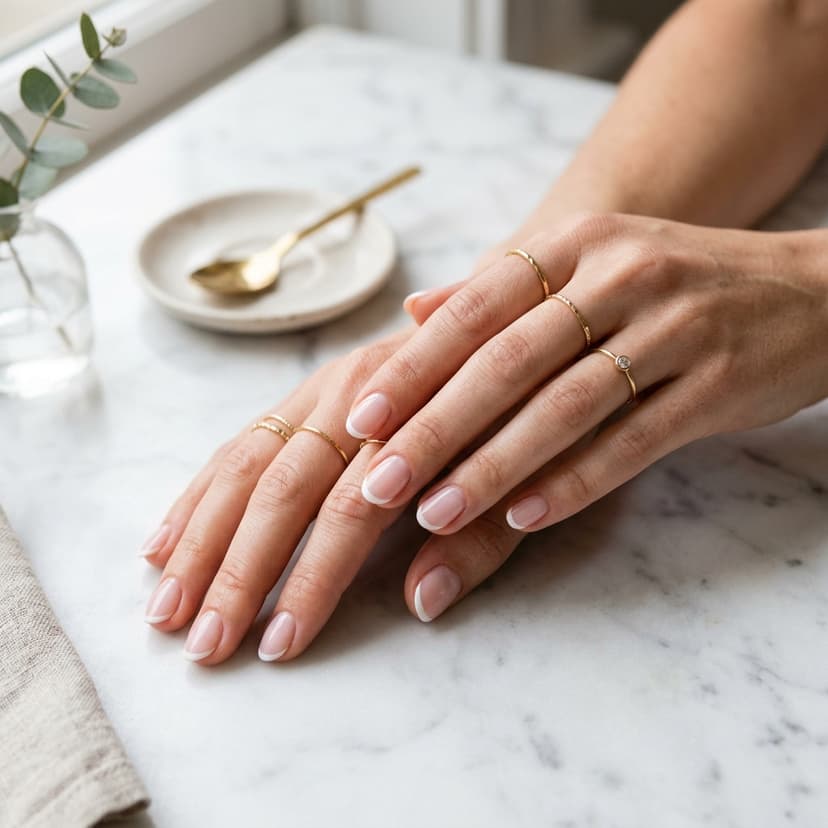
For ideas on styling your reinforced natural nails, explore our gallery of Short Nail Designs: Chic and Minimal Nail Art and browse our visual guide on French Tip Nails: Modern Variations on the Classic.
Safe Removal: Protecting Your Natural Keratin
If you decide to take a break from builder gel or change products, never peel, chip, or bite the enhancement off. Peeling a gel overlay tears away anywhere from 30% to 50% of your dorsal nail plate layers, leaving behind sensitive, raw, paper-thin nails that take six months to regenerate.
To remove safely at home:
- File down 80% of the builder gel bulk using a coarse 100/180 grit nail file, taking extreme care not to touch the natural regrowth area.
- Saturate cotton pads with 100% pure acetone and wrap each fingertip tightly with aluminum foil or silicone soak-off clips.
- Allow the acetone to penetrate undisturbed for 20 to 25 minutes. The builder gel will soften into a crumbly, jelly-like texture.
- Use a rounded wooden orangewood stick to gently nudge the softened gel away from the nail. If product resists, re-wrap for an additional 7 minutes.
- Finish with intensive cuticle oil and a rich ceramide hand balm.
Frequently Asked Questions
Can BIAB help short or severely bitten nails grow out?
Yes, BIAB is considered the gold standard for recovering nail biters and brittle nails. Because builder gel creates a thick, durable protective armor over the nail bed, the underlying natural nail is shielded from physical trauma and biting impulses, allowing uninterrupted growth.
How often do you need an infill with BIAB nails?
Most clients require an infill every 3 to 4 weeks. Waiting longer than four weeks shifts the reinforced apex too far forward toward the free edge, which increases leverage and makes the nail prone to breaking or lifting.
Can you take off BIAB at home safely?
While professional salon removal is recommended, you can remove BIAB at home by gently filing down the top shiny layer and soaking your nails in 100% pure acetone using foil wraps for 20 to 25 minutes. Never force or pry the product off.
What is the key difference between BIAB and standard gel polish?
Standard gel polish provides color and minor shine but lacks structural strength. BIAB is a viscous oligomer gel that can build an apex, correct uneven nail ridges, and withstand heavy daily stress without chipping.