Layered Haircuts for Every Face Shape: A Visual Guide
Why Layers Transform Your Look
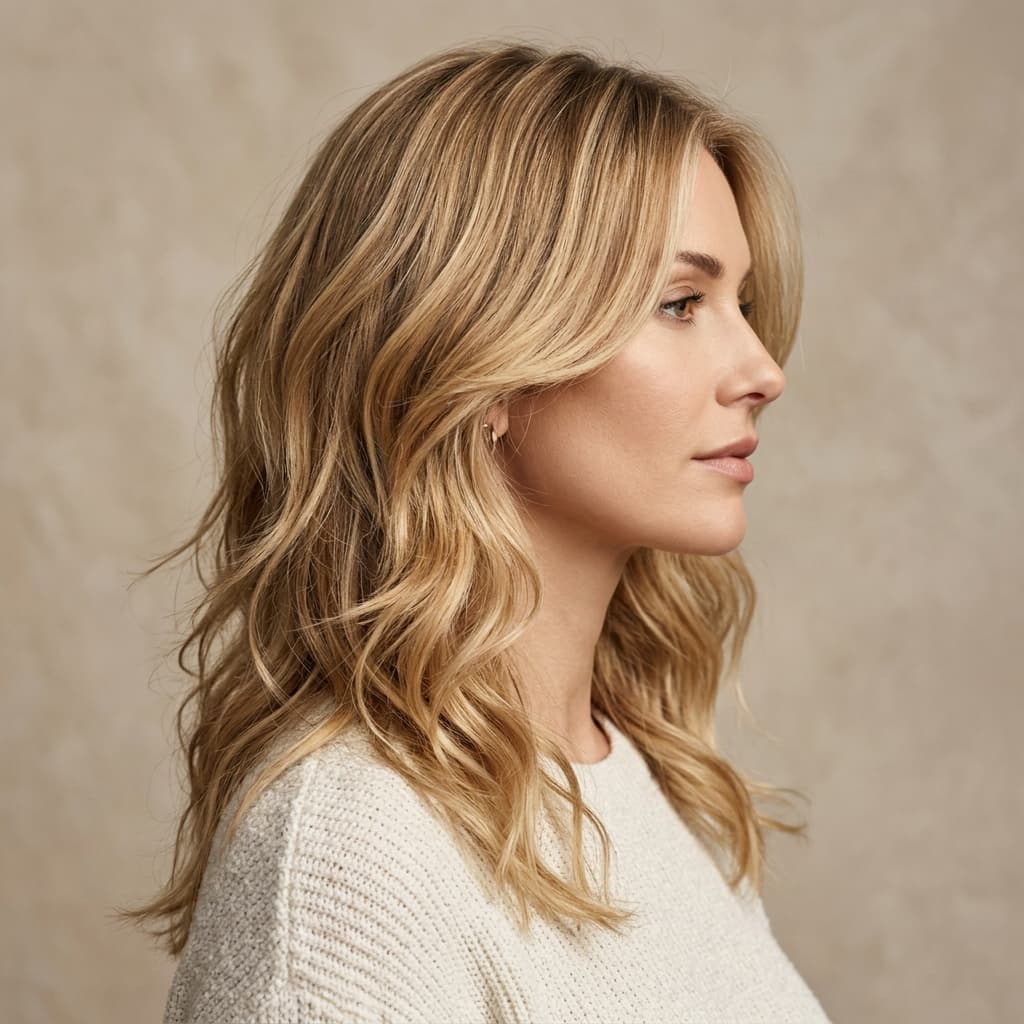
A great layered haircut does more than just remove bulk. It reshapes the entire silhouette of your hair, creating movement where there was flatness and framing your face in a way that highlights your best features. The difference between a mediocre layered cut and an exceptional one comes down to understanding how different layering techniques interact with your face shape and hair texture.
The biggest misconception about layers is that they are all the same. In reality, there are at least five distinct layering techniques, and choosing the wrong one for your face shape can make your hair look thinner, wider, or more unbalanced than before. This guide breaks down exactly which layers work for which faces.
 Illustration showing four face shapes with corresponding ideal layered haircut silhouettes
Matching Layers to Your Face Shape
Round Face
If your face is approximately as wide as it is long with soft, curved edges, your goal is to create the illusion of length and angles. Long layers that start at or below the chin work beautifully because they draw the eye downward. Avoid short, choppy layers around the cheeks, as these add width exactly where you do not want it.
Practical Tip: Ask your stylist for "face-framing layers" that start at the jawline and blend into the rest of the cut. The longest front pieces should hit your collarbone.
Oval Face
An oval face shape is the most versatile for layered cuts. The balanced proportions mean almost any layering technique will look good. This is your opportunity to experiment with curtain bangs, shaggy layers, or the modern "butterfly cut" that features shorter crown layers for volume.
Square Face
Strong jawlines and angular features look stunning with soft, feathered layers that round out the hard lines. Wispy layers around the temples and jawline soften the overall shape, while avoiding blunt cuts at the chin that would emphasize the squareness.
Heart Face
A wider forehead and narrow chin benefit from layers that add volume at the bottom. Chin-length layers and below create balance by adding visual weight to the lower half of the face. Side-swept bangs are especially flattering because they reduce the perceived width of the forehead.
- Long, swept layers for round faces
- Curtain bangs and shag layers for oval faces
- Soft, feathered layers for square faces
- Volume-at-bottom layers for heart faces
 Pinterest-style collage of layered haircut examples organized by face shape
Layering Techniques Explained
| Technique | Description | Best Hair Type |
|---|---|---|
| Slide cutting | Scissors slide down the hair shaft at an angle, creating soft, blended layers | Fine to medium, straight hair |
| Point cutting | Scissors cut into the ends vertically, creating textured, piecey layers | Thick, coarse hair that needs weight removal |
| Razor cutting | A razor blade creates ultra-soft, feathered ends | Medium density, wavy hair |
| Invisible layering | Internal layers that add movement without changing the visible outline | Any type wanting subtle volume |
What to Tell Your Stylist
Communication is everything when getting layers. Bring three to five reference photos on your phone, but also clearly state what you want to avoid. Saying "I want movement but I do not want my hair to look thin at the ends" gives your stylist critical boundaries. Ask them to show you where the shortest layer will fall before they start cutting.
A well-executed layered cut should look beautiful air-dried, not just when it is been styled with a round brush. If your layers only look good when you spend 30 minutes blow-drying, the cut is not working for your natural texture.
The right layers can genuinely transform how you feel about your hair. Take the time to understand your face shape, communicate clearly with your stylist, and invest in a cut that works with your natural texture rather than against it.