
📌 At a Glance (Key Takeaways)
- Natural fibers (100% linen, cotton poplin, silk, modal) allow heat and sweat to evaporate naturally.
- Loose, airy silhouettes circulate air and prevent fabric from clinging to perspiring skin.
- Light reflective colors (white, ecru, butter yellow, sky blue) repel solar heat absorption.
- Minimalist leather slide sandals, woven tote bags, and wide-brim hats complete high-temperature styling.
There’s a particular defeat in getting dressed on a truly hot day. The outfit that looked cute on the hanger turns suffocating the second you step outside. Fabric clings, dark colors soak up the sun, and the layered look you saved last night is a non-starter when it’s 35°C and climbing. The instinct is to give up and wear whatever’s loosest. You don’t have to — you just have to know which fabrics, cuts, and colors actually cope with heat, and build around those.
The physics is simple enough: you want air moving across your skin and fibers that pull moisture away and release it fast. Synthetics like polyester and nylon do the opposite; they’re essentially plastic, and they trap heat and sweat against you like a greenhouse.
The fabrics that cope
Linen is the one to beat. Its loose weave lets air move freely, and it absorbs a good amount of moisture before it ever feels damp, then dries fast. Yes, it wrinkles — that’s the look, so stop fighting it. If the creasing genuinely bothers you, a linen-cotton blend (often around 55/45) keeps most of the breathability with far less wrinkling.
Cotton poplin is crisp and breathable and holds its shape better than linen, which makes it the right call for button-downs and A-line dresses that need to stay structured through the day.
Tencel and lyocell, made from wood pulp, are soft, moisture-wicking, and cooler to the touch than cotton, with good odor resistance — ideal for commuting and travel.
Raw silk deserves a mention too: it’s a natural temperature regulator, cool in heat and featherlight against sensitive skin, which is why it works for warm evenings out.
Outfits that let air move
The maxi dress. A loose, flowy maxi in a light fabric is essentially a stylish tent, and that’s a compliment — the airflow underneath keeps you cool, and one piece means zero planning.
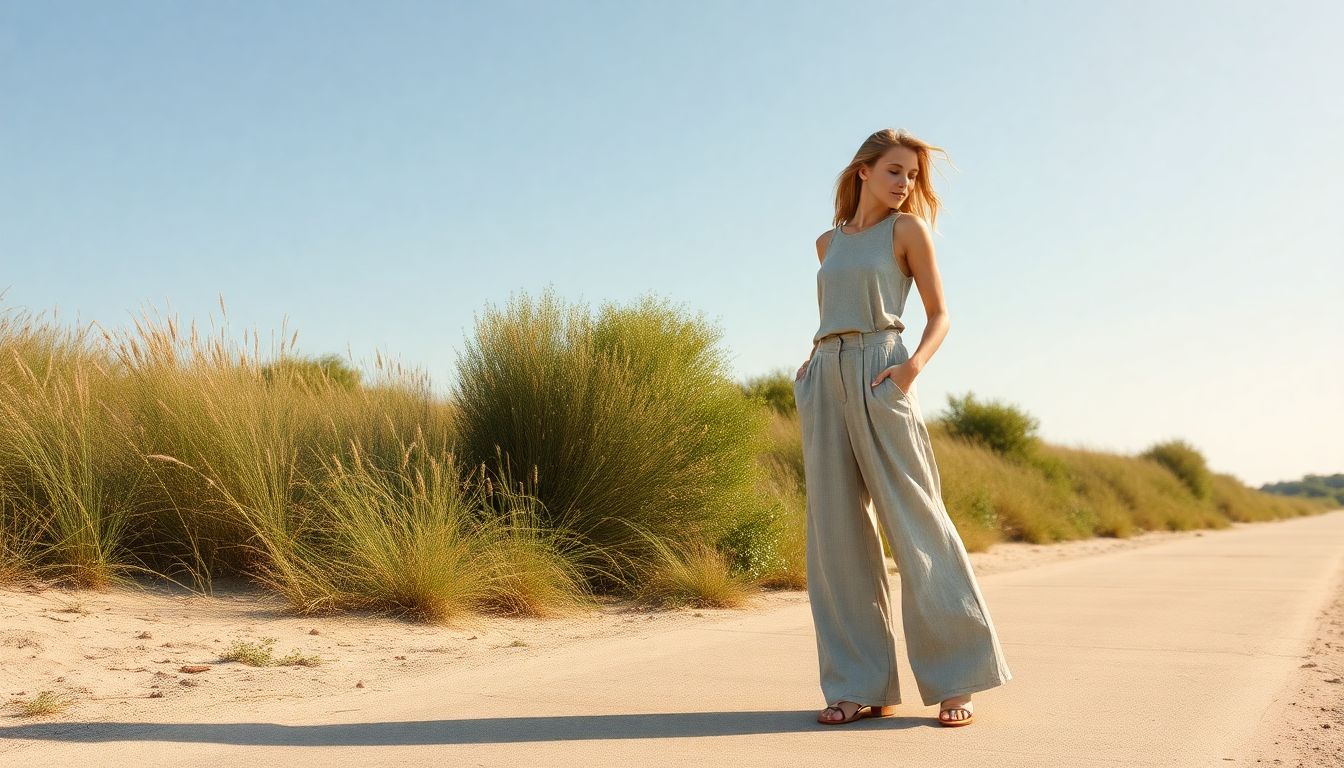
Wide-leg pants and a tank. Breezy linen or cotton wide-legs with a simple ribbed tank. The wide legs circulate air; the fitted tank keeps structure on top. Add a woven belt and flat sandals.
The oversized linen shirt as a dress. A big linen shirt over a slip or swimwear, loosely cinched with a braided belt, with flat leather sandals. Barely-there and endlessly easy.
The matching linen set. A relaxed linen button-down with matching drawstring shorts in butter yellow, olive, or ecru reads as put-together with no effort at all.
A few guiding rules underneath all of these:
- Stick to light, reflective colors — white, cream, soft pastels
- Avoid dark colors that absorb and hold heat
- Choose loose silhouettes so air can circulate
- Skip synthetics that trap heat and moisture
How the fabrics actually compare
If you’re deciding what to buy for a hot climate, this is the shorthand:
| Fabric | Breathability | Wrinkles | Best for |
|---|---|---|---|
| Linen | Excellent | High | Casual daytime, beach, resort |
| Cotton poplin | Very good | Low | Office-appropriate summer wear |
| Tencel / lyocell | Excellent | Very low | Travel, commuting, active days |
| Silk | Good | Medium | Evening events, dinner dates |
| Polyester | Poor | Very low | Avoid in real heat |
Accessories that don’t add heat
Swap heavy bags for lightweight straw totes or a small crossbody. Trade metal jewelry, which heats up against your skin, for beaded or woven pieces. And invest in sunglasses you genuinely like, because in a hot climate they’re part of your outfit from spring through early autumn, not an afterthought.
Small comforts that make a big difference
A few things aren’t about looks at all, just about being comfortable enough to look composed:
- Skip the padded bra. Foam push-up cups trap heat against your chest; an unlined cotton or mesh bralette breathes.
- Carry an anti-chafing balm. A quick swipe of a silicone or cornstarch stick along the inner thighs makes a dress wearable for a full day of walking.
- Wear a wide-brim straw hat. Shading your scalp and face genuinely lowers how hot you feel, and it finishes an outfit at the same time.
Dressing for heat is really about working with the weather instead of against it. The right fabric and the right silhouette let you stay cool and still look like you’ve got it together, even when it’s pushing 38°C outside.
To round out a summer look, our Summer Nail Ideas guide has plenty of seasonal color, and don’t skip the most important layer of all — our Daily Sunscreen Guide covers protecting your skin through the hottest months.
Frequently Asked Questions
How do you stop sweat marks from showing on summer clothes?
Wear loose, airy cuts rather than tight armholes, choose natural linen and cotton over synthetics, and opt for crisp white, navy, or busy prints that naturally disguise moisture marks.
Is linen or cotton cooler to wear in hot weather?
Linen is structurally cooler than cotton due to its hollow flax fibers and looser weave, allowing heat to escape faster and drying almost instantly.
Can you wear long sleeves in extreme heat?
Yes! A loose, lightweight white linen long-sleeve shirt protects your skin from burning solar radiation, keeping you cooler than baking bare skin in direct sun.
How do you iron linen without destroying its natural texture?
Iron linen while it is still damp using the high steam setting on your iron, or simply hang it in your bathroom while taking a hot shower to let gentle steam soften deep creases.
Additional Details
- Description: Staying stylish in extreme heat requires the right fabrics, silhouettes, and color choices. These summer outfits keep you cool without sacrificing your look.
- Published: 2025-10-28T00:00:00.000Z
- Updated: 2026-09-07T00:00:00.000Z
Images
- (none listed)