
📌 At a Glance (Key Takeaways)
- Up to 80% to 90% of visible skin aging (photoaging) is caused by daily cumulative UVA/UVB exposure.
- UVA rays penetrate glass windows and clouds year-round, degrading collagen and elastin.
- Apply the two-finger rule (approx. 1/4 teaspoon for the face) to achieve the stated SPF rating on the bottle.
- Mineral (zinc oxide/titanium dioxide) and chemical filters offer targeted benefits for sensitive vs. active skin.
If your routine has one step you never skip, make it sunscreen. Not the serum you spent too much on, not the ten-step evening ritual, sunscreen. It does more to keep skin looking young than anything else you can buy, and most people either wear too little of it or save it for beach days.
Here’s the part that reframes everything: the majority of what we think of as “aging skin,” the lines, the sagging, the brown spots, comes from sun exposure rather than birthdays. Dermatologists call it photoaging. So a good SPF isn’t just protection against sunburn, it’s the closest thing skincare has to an anti-aging product that actually works.
Two kinds of rays, two kinds of damage
Ultraviolet light reaches your skin in two wavelengths worth knowing about.
UVB is the burning kind. It hits the surface, causes sunburn, and is strongest in summer. It doesn’t pass through glass, which is why you don’t tan sitting by a closed window.
UVA is the aging kind. It has a longer wavelength that sinks deeper into the skin, breaking down the collagen and elastin that keep your face firm, and it drives a lot of pigmentation. Unlike UVB, it’s steady all year, it goes through clouds, and it goes through window glass. That’s the reason “it’s overcast” and “I’m just indoors today” aren’t reasons to skip it.
The word to look for on a label is broad-spectrum, which means the formula covers both. Aim for SPF 30 to 50.
How much, and how often
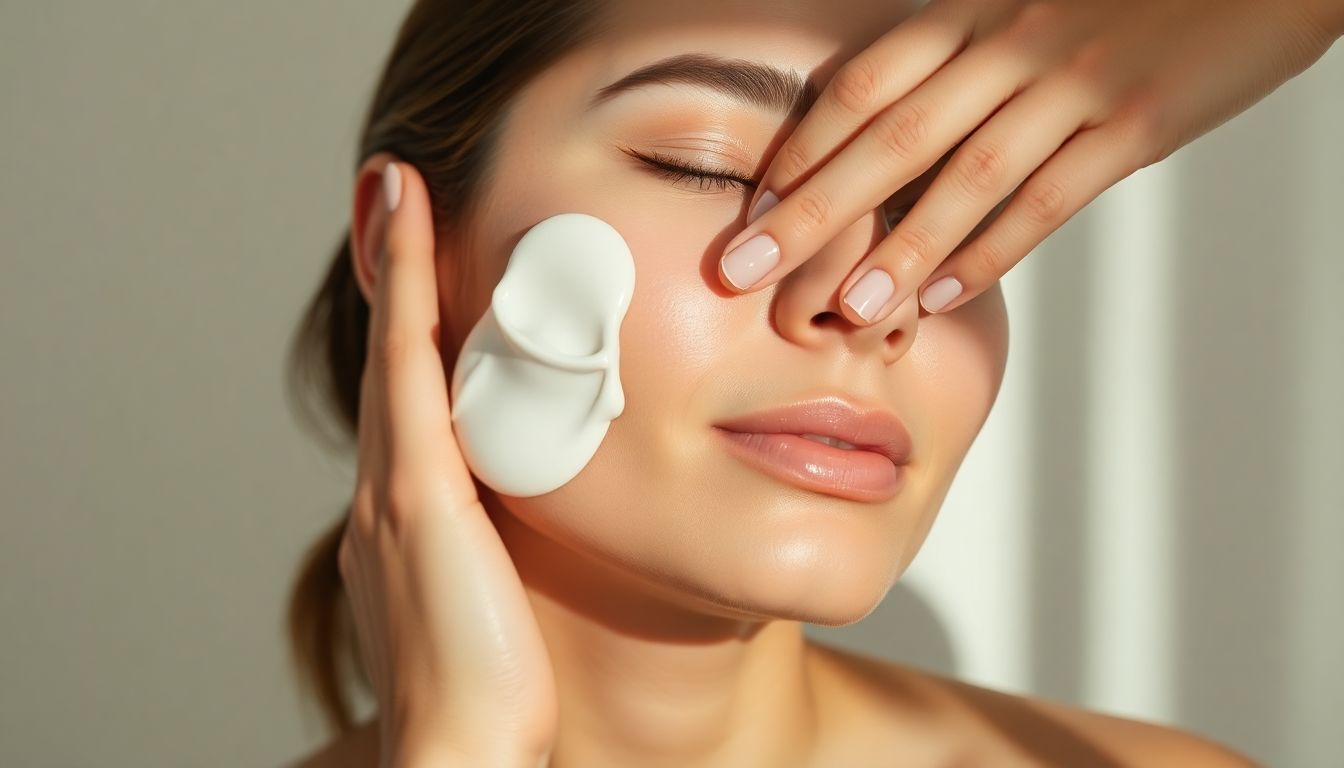
The single biggest reason sunscreen underperforms is that people use a fraction of what the tested SPF assumes. A simple fix is the two-finger rule: squeeze sunscreen along the full length of your index and middle fingers, and that’s roughly the amount for your face and neck.
A few habits make the difference:
- Apply it last in your morning skincare, after moisturizer, and give it a few minutes to set before makeup.
- Reapply every couple of hours when you’re outdoors, swimming, or sweating. A powder or mist SPF makes midday reapplication over makeup realistic.
- Take it down your neck and onto the backs of your hands, which are usually the first places to show age and the first places people forget.
Mineral or chemical?
Both types work. They just get there differently, and one may suit your skin better than the other.
| Type | Common filters | Strengths | Trade-offs |
|---|---|---|---|
| Mineral (physical) | Zinc oxide, titanium dioxide | Gentle, good for sensitive or reactive skin, works the moment it’s on | Can leave a white cast, feels a touch heavier |
| Chemical | Avobenzone, octisalate, and others | Sheer, light, sits easily under makeup | Needs about 15 minutes to absorb, can sting near the eyes |
Mineral formulas sit on top of the skin and are the safer bet if you’re prone to irritation or rosacea. Chemical formulas absorb in and tend to feel more invisible, which many people prefer for everyday wear. Modern mineral sunscreens have also gotten much better at avoiding that chalky cast, and tinted mineral versions with iron oxides work beautifully on deeper skin tones without leaving a gray film.
Matching it to your skin
Oily skin does best with an oil-free, gel, or fluid formula that dries down matte. Dry skin is happier with a creamier sunscreen that includes hydrators like hyaluronic acid or glycerin. Sensitive skin generally tolerates mineral formulas best, since they’re less likely to react. If you’ve never liked how sunscreen feels, the odds are good you were using the wrong texture for your skin rather than the wrong product entirely.
The best sunscreen, in the end, is the one you’ll actually put on every morning. Find a texture you don’t mind, keep it by your toothbrush so you remember, and wear it whether or not you’re going outside.
At night, that SPF needs to come off properly, and a splash of water won’t cut it, so our Double Cleansing Method Guide walks through removing it. If you’re still building the rest of your routine around it, start with our Beginner Skincare Routine.
Frequently Asked Questions
Do I really need to wear sunscreen if I work indoors all day?
Yes. Standard window glass in offices and homes blocks UVB rays (preventing sunburn), but allows up to 75% of UVA aging rays to penetrate directly through, degrading collagen while you sit at your desk.
Does the SPF in my foundation or BB cream provide enough protection?
No. You would have to apply 7 to 10 times the normal amount of foundation to achieve the SPF 30 rating on the bottle, which would look cakey and unnatural. Always apply a dedicated standalone sunscreen underneath makeup.
What is the difference between SPF 30 and SPF 50?
SPF 30 filters out approximately 97% of UVB rays, while SPF 50 filters out 98%. While the percentage difference appears small, SPF 50 allows half as many photons to penetrate your skin over cumulative hours.
Why does sunscreen sometimes pill when I apply makeup?
Pilling occurs when incompatible ingredients clash (e.g., silicone-heavy sunscreens over water-based moisturizers). Allow your moisturizer to absorb for 3 minutes before SPF, and let SPF set for 5 minutes before makeup.
Additional Details
- Description: Fine lines, hyperpigmentation, and loss of elasticity are heavily accelerated by UV light. Learn why SPF is a non-negotiable beauty step.
- Published: 2026-04-16T00:00:00.000Z
- Updated: 2026-09-07T00:00:00.000Z
Images
- (none listed)