
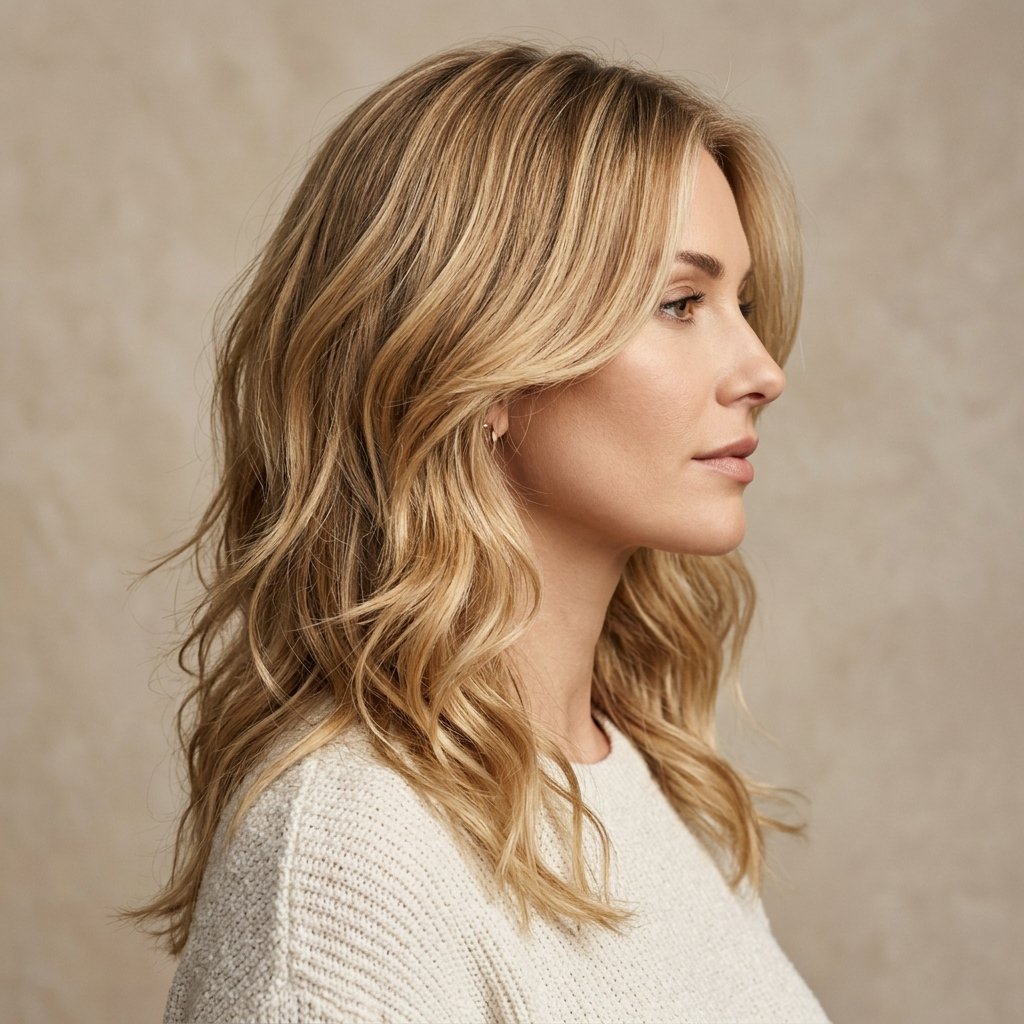
📌 At a Glance (Key Takeaways)
- Combines chin-grazing front layers with long, cascading perimeter layers for optical short-hair illusion.
- Best suited for medium-to-dense hair textures with natural waves or straight patterns.
- Requires a 10-minute round brush or velcro roller blowout to achieve signature 90s bounce.
- Maintains overall length while framing cheekbones and softening square or round face shapes.
Twist a butterfly cut up into a clip and it reads as a sleek lob. Shake it out and it falls past your shoulders in soft, cascading layers. That double life is the whole point of the cut, and it’s why it has been one of the most requested styles at salons for a few years running. You get the movement and face-framing of short hair without giving up the length or the ponytail.
The mechanics are simple once you see them. A butterfly cut is built in two tiers: short layers cut around the chin and cheekbones sit on top, and longer, feathered layers fall underneath. The short pieces create that lob illusion and all the volume around your face; the long ones keep your actual length intact. It’s essentially a softer, glossier cousin of the 90s supermodel blowout crossed with a modern shag.
Who it flatters
Thick and medium hair are the easiest wins. There’s enough weight to keep the ends from going stringy, so the layers stack into full, cascading “wings.” Straight hair shows off the precise feathered lines; natural waves lean into the airy texture. Fine hair can absolutely wear it, but the layers need to stay longer and softer, or the bottom perimeter thins out and looks wispy.
Face shape matters less than people fear, because the framing pieces do the adjusting. Chin-length front layers act like contour on rounder or squarer faces, softening a strong jaw and lengthening the neck. On oval and heart shapes, those same layers draw attention to the cheekbones and eyes.
What to actually ask for
The butterfly cut gets mistaken for plain long layers all the time, so be specific at the consultation. In our experience the requests that matter most are these:
- Short framing layers up top, starting somewhere between the chin and collarbone, to build the top “wing.”
- A seamless blend from those short front layers into the longer back, with no harsh disconnected step.
- Point-cut ends, so the layers finish soft and feathery instead of blunt and heavy.
- Long curtain bangs sweeping past the cheekbones for the signature silhouette.
It also helps to point at your own face and name where you want the shortest layer to land, and to say plainly that you want the bottom perimeter kept thick with only light point-cutting at the tips. That one sentence prevents most disappointing results. If you’re still deciding on the fringe, our curtain bangs guide covers how to wear and style them.
How it compares to its cousins
| Feature | Butterfly | Wolf cut | Classic layers |
|---|---|---|---|
| Vibe | 90s glam, voluminous | Edgy, shaggy | Subtle, blended |
| Top layer length | Chin to collarbone | Short crown | Mid-length |
| Volume | Around cheekbones and roots | Heavy at crown | Even |
| Styling effort | Medium | Low, air-dry friendly | Low to medium |
If the edgier, more lived-in end of the spectrum appeals to you, it’s worth reading about the modern shag, which shares the layered DNA but wears rougher.
Styling it at home
The volume that makes this cut sing comes from a blow-dry, and it’s a fifteen-minute job once you have the rhythm.
- On roots that are about 70 percent dry, work in a little thermal mousse and a root-lifting spray.
- With a two-inch round brush, lift sections straight up, 90 degrees off the scalp, and dry from underneath to set the root lift.
- Roll the chin-length front pieces forward toward your face, then flick the brush back at the ends to make the winged shape.
- While the sections are still hot, wind them onto jumbo velcro rollers and clip. Let them cool completely, ten to fifteen minutes, so the shape sets.
- Take the rollers out, tip your head forward, shake the roots loose with your fingers, and mist a little dry texture spray under the layers.
Match the tool and temperature to your hair. Fine or color-treated hair does best on a 1.5-inch ceramic brush around 300-320°F with a weightless foam. Medium hair handles a 2-inch brush at 350°F. Thick, coarse hair can take a 2-inch iron up toward 380°F with a smoothing balm. Curly textures skip the round brush entirely in favor of a diffuser, a cool shot, and a leave-in cream.
A few things to avoid
- Over-thinning fine hair. Aggressive thinning shears leave the perimeter sparse. Insist on blunt ends.
- Skipping the cool-down. Hot hair holds no shape; if you don’t let it cool on the roller or hit it with the cool shot, the volume drops within the hour.
- Heavy oil at the roots. Serums and rich argan oils above the mid-shaft coat the cuticle and weigh the interior layers flat.
- Stretching out trims. The front pieces sit close to your face, so split ends show fast. Every seven to nine weeks keeps the shape honest.
If you want to understand how layering decisions change with your face, our breakdown of layered haircuts by face shape goes deeper on the geometry behind cuts like this one.
Frequently Asked Questions
Can I get a butterfly haircut if I have fine hair?
Yes, fine-haired individuals can wear a butterfly cut successfully. However, your stylist should keep the bottom perimeter blunt and use light interior slide-cutting rather than aggressive thinning shears to maintain density.
What is the difference between a butterfly haircut and a wolf cut?
A wolf cut is a cross between a mullet and a shag with heavy crown layers and tapered ends. The butterfly cut is far more polished and feminine, focusing on soft 90s blowout wings and preserving length at the perimeter.
How long does styling a butterfly haircut take in the morning?
With a modern round-brush blow dryer or overnight heatless curler set, styling takes approximately 10 to 15 minutes. On non-wash days, a quick 2-minute root refresher with dry shampoo and a claw clip revives the shape.
How often should you trim a butterfly cut to maintain its shape?
To keep the face-framing layers grazing your cheekbones and jawline cleanly, schedule maintenance trims every 6 to 8 weeks.
Additional Details
- Description: The butterfly haircut combines bouncy 90s blowouts with modern face-framing layers. Here is how to ask your stylist for it and style it at home.
- Published: 2026-07-20T00:00:00.000Z
- Updated: 2026-09-07T00:00:00.000Z
Images
- https://womensgo.com/articles/butterfly-haircut-inline1.png
- https://womensgo.com/articles/butterfly-haircut-inline2.png