
📌 At a Glance (Key Takeaways)
- BIAB (Builder in a Bottle) is a thick, flexible soak-off builder gel that reinforces natural nails without harsh extensions.
- Lasts 3 to 4 weeks between infills, making it far more durable than traditional gel polish while causing significantly less damage than acrylics.
- Formulated with an optimal balance of flexibility and strength that bends slightly with the natural nail rather than snapping.
- Requires professional infills or gentle acetone soaking; peeling or prying builder gel causes severe keratin layer stripping.
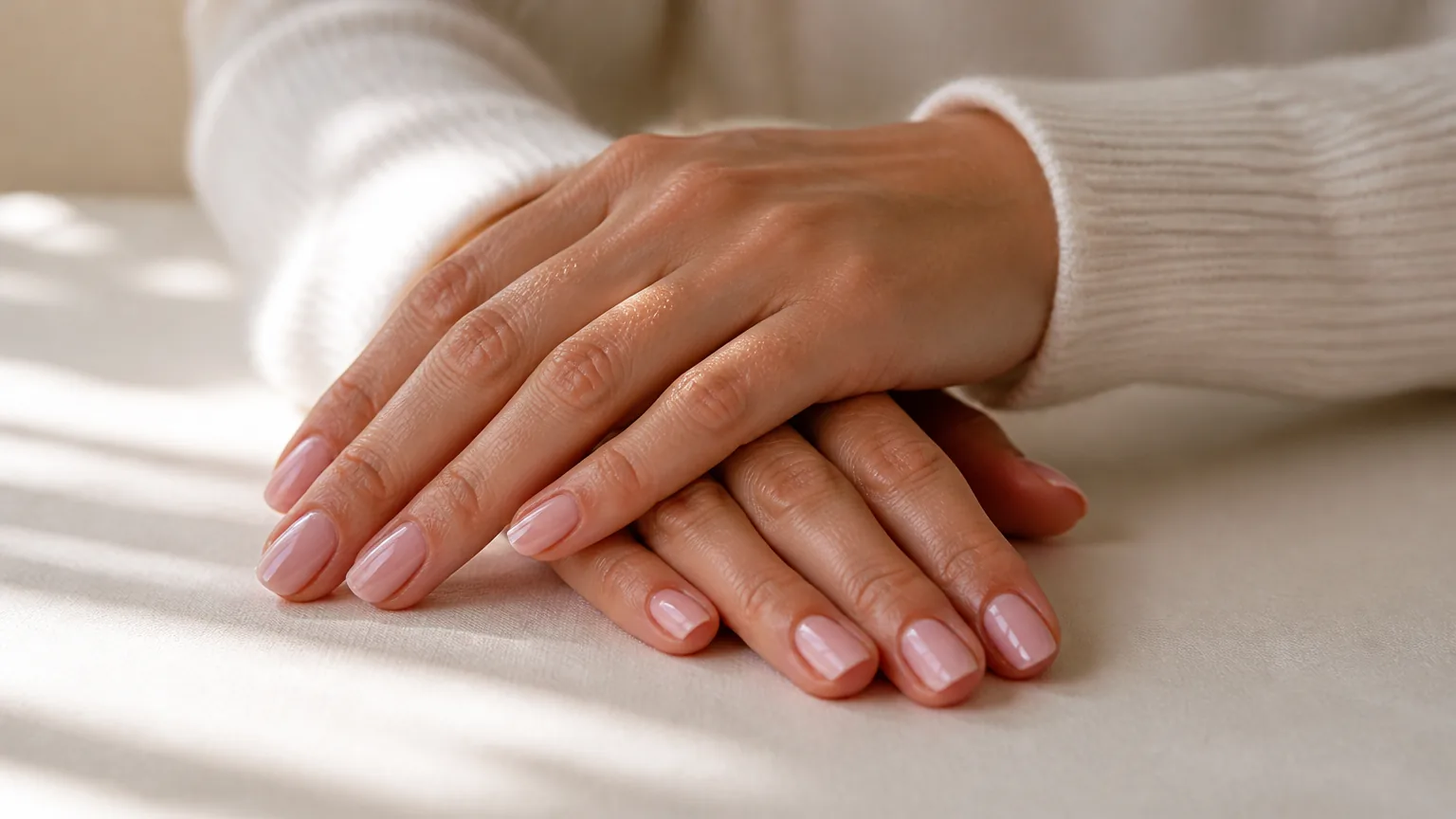
Is BIAB just a fancy name for acrylic? It’s the question every client seems to arrive with, and the answer is no, not even close. BIAB stands for “Builder in a Bottle,” a term coined by The GelBottle Inc that’s since become shorthand for almost any bottled builder gel. It’s a soak-off gel thick enough to build structure onto the natural nail, and its whole reason for existing is the opposite of acrylic’s: instead of gluing on rigid length, it reinforces the nail you already have so it can grow.
The reason it caught on so fast is flexibility. Builder gel sits somewhere between a hard gel and a soft one. Formulated with flexible oligomers, it moves with your nail plate rather than against it. Tap your nail on a doorframe or jam a finger, and the gel flexes a fraction of a millimeter and absorbs the shock instead of snapping off and taking a layer of your natural nail with it. That single property is why so many salons pivoted away from heavy acrylic extensions toward natural-nail rehab.
How it stacks up against the alternatives
If you’ve only ever had gel polish or acrylics, the differences are worth seeing side by side.
| BIAB (builder gel) | Gel polish | Acrylics | Dip powder | |
|---|---|---|---|---|
| Main job | Strengthen and support growth | Color, light protection | Rigid artificial length | Hardened color overlay |
| Flexibility | High | High | Very low | Low |
| Typical wear | 3–4 weeks | 10–14 days | 2–3 weeks | 2–3 weeks |
| Nail damage | Very low | Low | Moderate to high | Moderate |
| Infills? | Yes | No | Yes | Usually not |
The takeaway: builder gel gives you acrylic-level wear time with far gentler prep, and you can infill it rather than soaking it off every visit. Our piece on “The Healthiest Ways to Strengthen Brittle Natural Nails” digs further into how overlays interact with keratin underneath.
Who it actually helps
BIAB looks lovely on anyone, but a few people see genuinely transformative results.
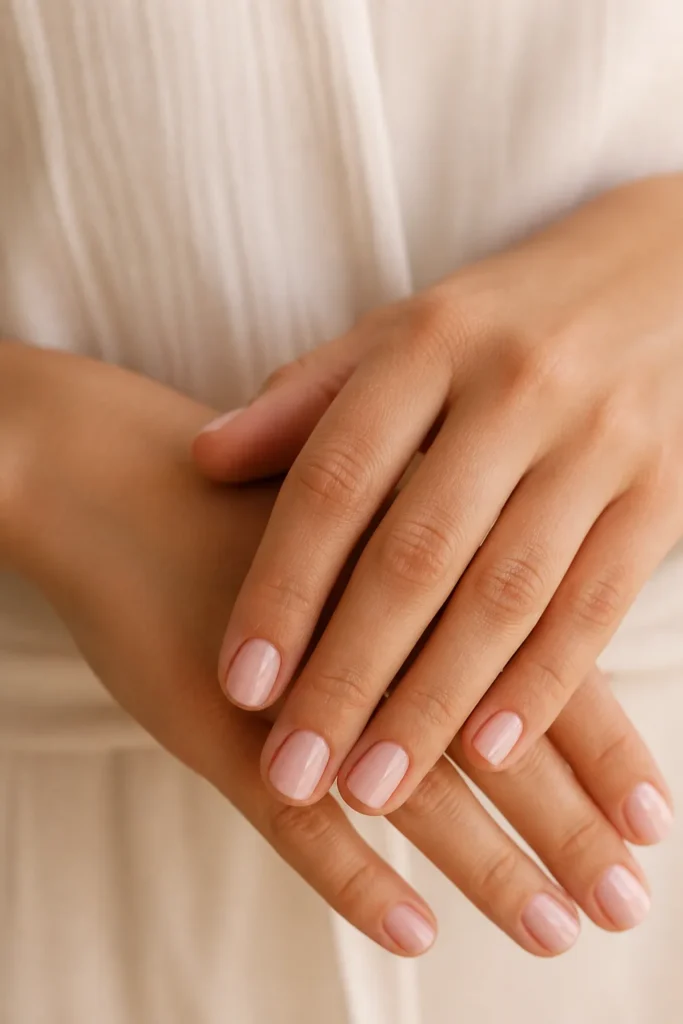
Chronic nail biters are the clearest case. Biting is usually triggered by a rough edge or a hangnail that your fingers keep finding. A smooth, blunt builder-gel shell removes those triggers and makes biting tactilely unrewarding, which buys the nail bed the uninterrupted weeks it needs to reattach and grow. People with thin, papery, bendable nails are the second group; a single arched layer of builder gel distributes pressure across the plate and stops the horizontal peeling that ordinary polish can’t touch. And anyone coming off long-term acrylics benefits from a protective overlay while the thinned, sensitive natural nail grows back out over the next four to six months.
What a proper application looks like
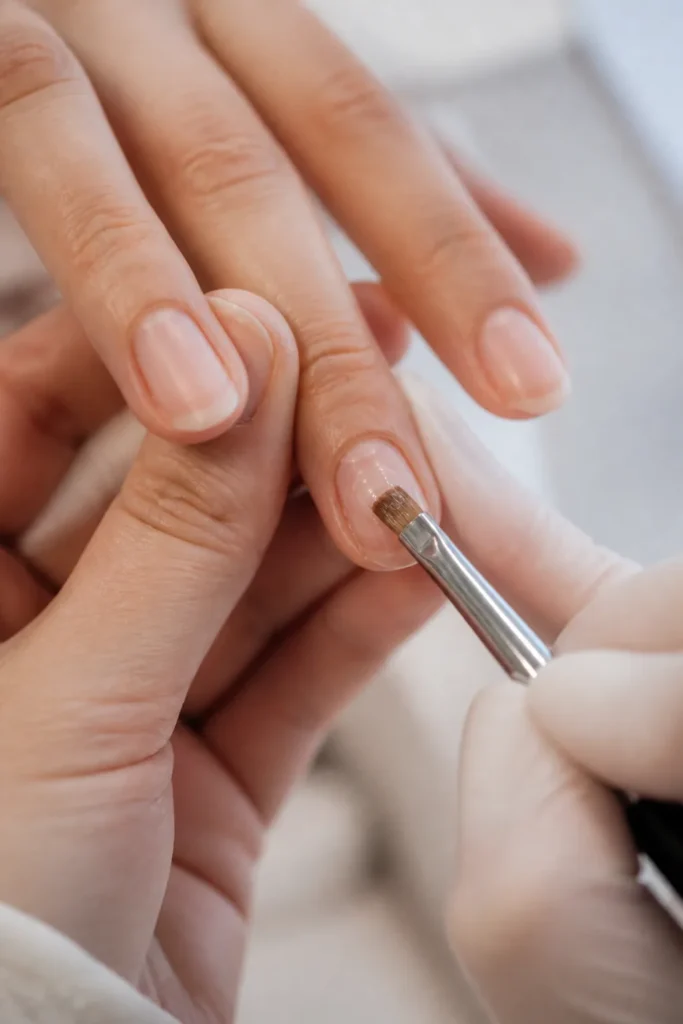
Four weeks of lift-free wear comes down to prep. Here’s the sequence a good technician follows:
- Dry cuticle work. Using a gentle steel pusher or a soft e-file bit, they clear away the non-living tissue clinging to the nail plate. Any skin cell left behind stops the gel bonding and causes lifting.
- De-shine. A light pass with a 240-grit buffer removes the natural oil sheen without thinning the nail.
- Dehydrate and prime. A dehydrator strips residual oil and moisture, followed by a thin coat of non-acid primer.
- Slip layer. A micro-thin layer of builder gel goes on and stays uncured, acting as a guide for the main bead.
- Build the apex. A bead of gel is placed near the cuticle and floated down the center of the nail. Flipping the hand palm-up for several seconds lets gravity settle it into a smooth arch over the nail’s stress zone.
- Cure and finish. A low-heat cure of 60 to 90 seconds prevents that hot flash of exothermic heat, then the surface is refined and sealed with a gloss or matte top coat.
Don’t skip your infill
One of the best things about builder gel is that it doesn’t need a full acetone soak every visit. The technician files back the top layer, checks for lifting, blends the regrowth, and rebalances. But timing matters more than people realize.
In the first two weeks the apex sits right over the stress zone and everything feels sturdy and light. By week three, a couple of millimeters of natural nail have grown in and the apex has crept forward. Week four is the sweet spot for an infill; the weight has shifted toward the free edge and needs rebalancing. Push past week five and that heavy bead is now well past your fingertip, so every tap creates leverage against the thinner cuticle area, which leads to pocket lifting, trapped water, and eventually the greenish tinge of a bacterial “greenie.” Book the infill on time and none of that happens.
Keeping it looking good, and taking it off safely
Day to day, the maintenance is simple. Oil your cuticles with jojoba twice a day; its small molecules actually penetrate both the gel and the keratin, keeping everything flexible. Treat your nails as decoration, not tools. Wear gloves for cleaning, since alkaline detergents break down the plasticizers in the gel. And go easy on long hot baths for the first 24 hours while the polymers finish stabilizing.
When you want a break, never peel or bite it off. Peeling a gel overlay can tear away a third to half of your dorsal nail layers and leave you with raw, thin nails for months. Instead, file down about 80% of the bulk with a coarse file, soak cotton pads in pure acetone, wrap each fingertip in foil, and wait 20 to 25 minutes until the gel goes crumbly. Nudge it off gently with a wooden stick, re-wrapping any stubborn spots rather than scraping, then flood everything with cuticle oil and a rich hand balm.
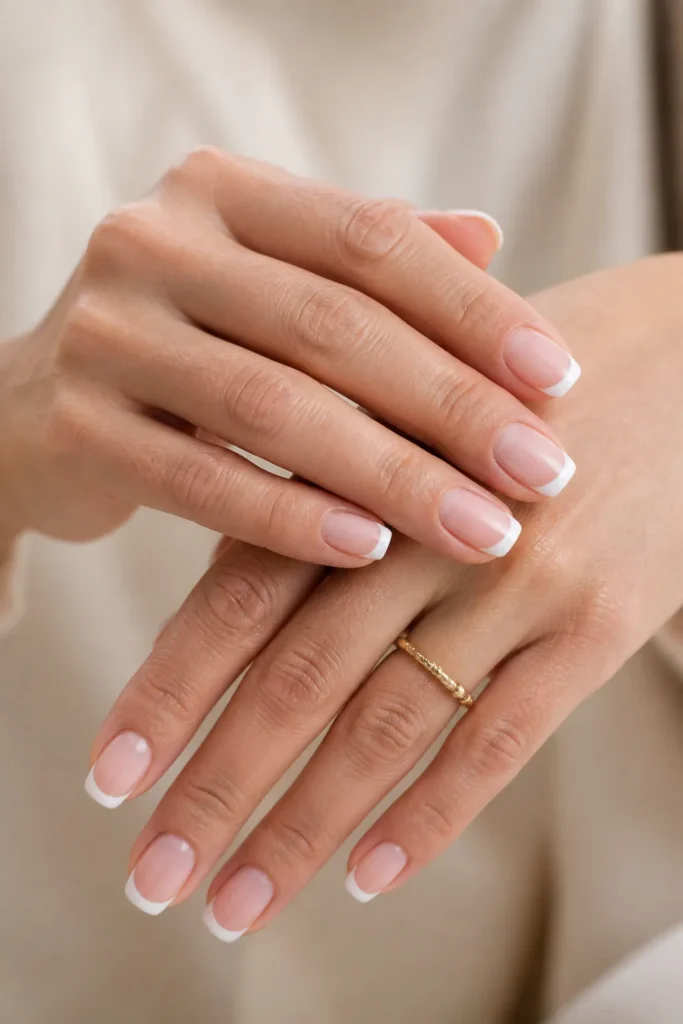
For ways to style your reinforced nails, browse “Short Nail Designs: Chic and Minimal Nail Art” and “French Tip Nails: Modern Variations on the Classic”.
Frequently Asked Questions
Can BIAB help short or severely bitten nails grow out?
Yes, BIAB is considered the gold standard for recovering nail biters and brittle nails. Because builder gel creates a thick, durable protective armor over the nail bed, the underlying natural nail is shielded from physical trauma and biting impulses, allowing uninterrupted growth.
How often do you need an infill with BIAB nails?
Most clients require an infill every 3 to 4 weeks. Waiting longer than four weeks shifts the reinforced apex too far forward toward the free edge, which increases leverage and makes the nail prone to breaking or lifting.
Can you take off BIAB at home safely?
While professional salon removal is recommended, you can remove BIAB at home by gently filing down the top shiny layer and soaking your nails in 100% pure acetone using foil wraps for 20 to 25 minutes. Never force or pry the product off.
What is the key difference between BIAB and standard gel polish?
Standard gel polish provides color and minor shine but lacks structural strength. BIAB is a viscous oligomer gel that can build an apex, correct uneven nail ridges, and withstand heavy daily stress without chipping.
Additional Details
- Description: BIAB (Builder in a Bottle) is revolutionizing natural nail care. Learn how builder gel strengthens weak nails, how it compares to acrylics, and how to maintain it.
- Published: 2026-09-02T00:00:00.000Z
- Updated: 2026-09-07T00:00:00.000Z
Images
- (none listed)