
One Halloween, my friends and I decided to be a group of storybook characters and handled it in the least organized way possible. We picked the theme in a group chat, said yes to everything, and then everyone went shopping alone. I still love group halloween costumes, but that year taught me how quickly a cute idea becomes four unrelated outfits standing beside a bowl of chips.
When we arrived, one friend looked incredible in a full costume with a wig, styled makeup, and shoes she had clearly planned weeks earlier. Another had a beautiful dress but nothing that connected it to the theme. Then there was the friend in jeans, a black top, and cat ears, smiling like she hoped confidence would count as a character. It did not, although I admired the optimism. The mismatch was not really about money. It was effort, color, and communication, all slightly out of sync.
We spent half the night explaining the theme, which is the clearest sign a group costume has missed. The photos looked like we had met in the drinks line rather than arrived together. Since then, I have treated group halloween costumes like a tiny styling project: choose the theme, assign the roles, agree on color and effort, and decide exactly where everyone is getting their pieces before anyone buys a thing.
The ideas below are built to survive real group dynamics. One person can sew, one can thrift, one will inevitably start two days before the party. The trick is giving every role the same visual language so the group reads clearly at different budgets and effort levels. Good group halloween costumes do not require identical outfits. They require a shared plan.
10 Group Costumes That Actually Look Good Together
1. The Sanderson Sisters in Green, Purple and Deep Red
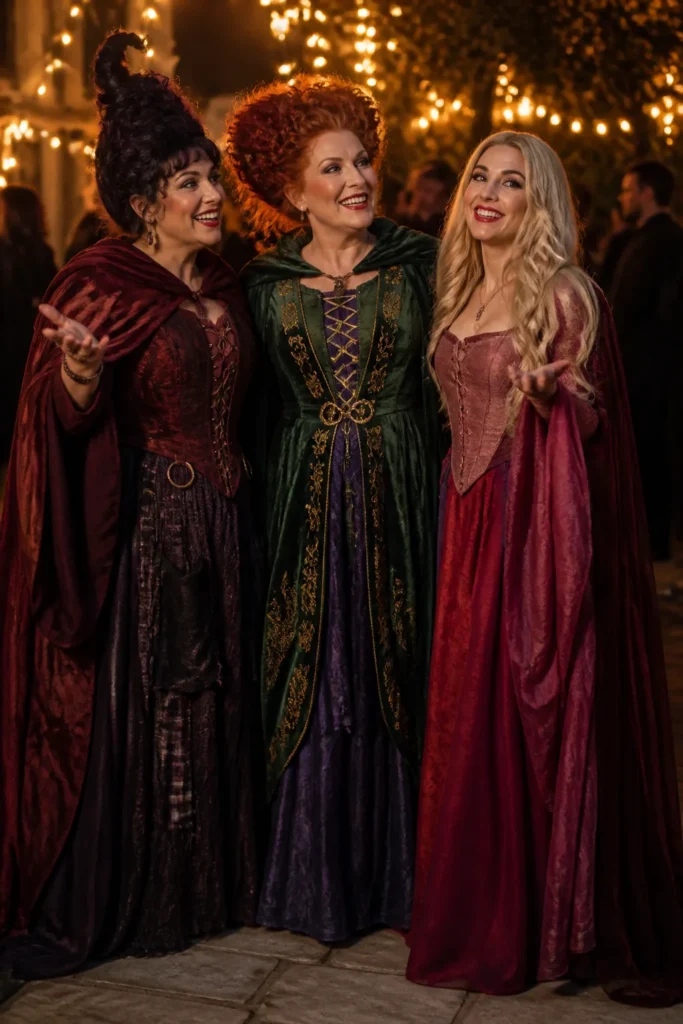
For a trio, the Sanderson Sisters are instantly recognizable and wonderfully color coded. Winifred takes emerald green with a dramatic cloak or velvet dress and copper toned hair. Sarah wears purple and red with softer, romantic layers. Mary gets burgundy, brown, and a little plaid, with a fuller silhouette and strong brows. Long dresses, corset style belts, capes, and thrifted velvet make the group feel rich without exact replicas.
Agree on the level of witchy drama before you start. If one sister wears a floor length gown and the others choose short modern dresses, the group can still work if the colors, capes, and makeup intensity match. Share photos of the pieces in the chat as you find them. A broom for each person is less important than the same moody jewel tone palette.
Why it worked: Each person owns a separate color, so nobody competes for the same pieces and the trio reads clearly even when they are not standing in a perfect line.
2. Follow the Yellow Brick Road: Dorothy and Friends
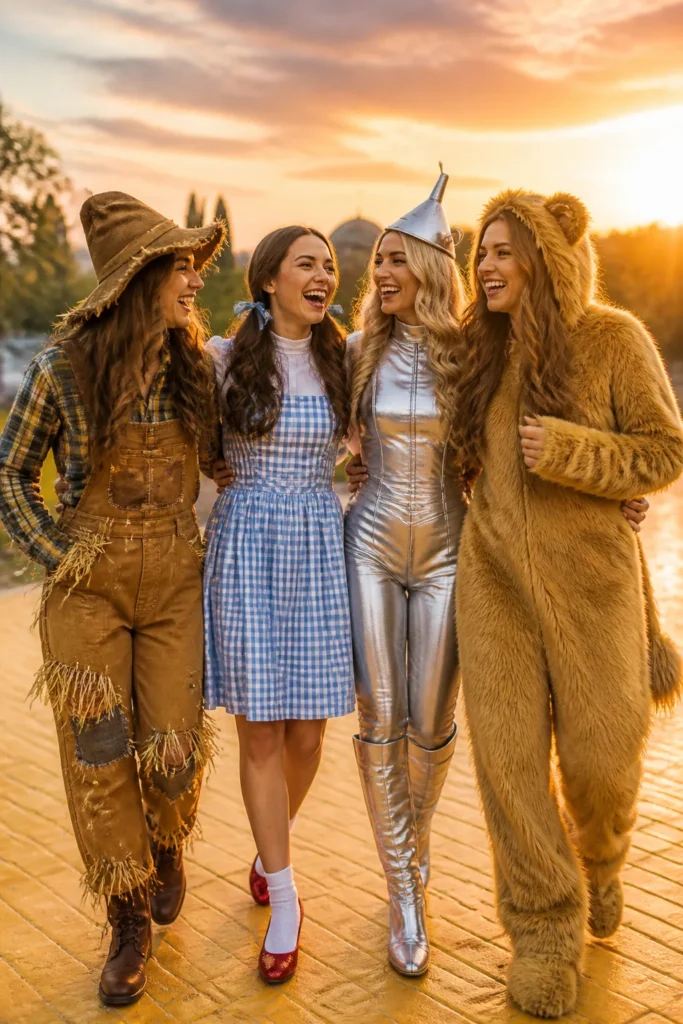
The Wizard of Oz crew gives four people very different roles with one shared storybook feeling. Dorothy wears a blue gingham dress, white blouse, braided hair, and red shoes. The Scarecrow uses flannel, jeans or brown trousers, a soft hat, and straw colored accents. The Tin Woman can wear a silver dress or metallic top and skirt with a small funnel hat. The Cowardly Lion chooses tan, caramel, and gold with ears and a soft mane.
Most of these pieces can come from closets, thrift stores, or inexpensive accessories. Coordinate by keeping the colors bright and simple rather than trying to look like a film still. Dorothy can carry a small basket, the Scarecrow can add raffia at the cuffs, and the Lion can use makeup whiskers. These group halloween costumes work especially well when every character has one prop or detail visible from a distance.
Why it worked: The silhouettes are all different, but the primary colors and storybook accessories tie them together. Nobody is just wearing a random dress and hoping the group explains it.
3. Mystery Solvers: Velma, Daphne and the Whole Gang
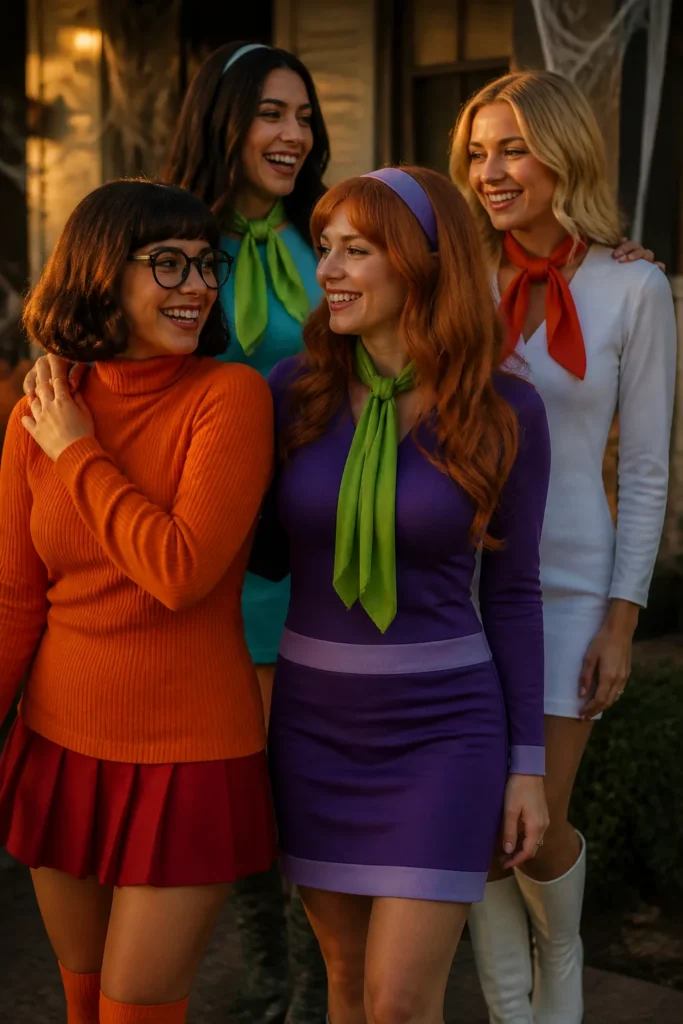
The Scooby Doo gang is one of the easiest group themes to cast. Velma wears an orange turtleneck or sweater, a red skirt, knee socks, and glasses. Daphne takes a purple dress, pale tights, a green scarf, and a headband. If partners or more friends join, Fred can wear a white sweater, blue trousers, and an orange scarf, while Shaggy needs a loose green tee and brown pants.
A friend in brown with a blue collar and dog ears can complete the lineup as Scooby. The pieces are basic, but the exact color blocks matter. Put Velma in true orange, Daphne in purple, and Fred in clean white and blue so the group does not drift into generic cartoon colors. Magnifying glasses and a flashlight make easy shared props.
Why it worked: The costumes are basically comfortable clothes in unmistakable colors. Everyone can shop separately and still match because the palette is agreed before the pieces are bought.
4. Pick Your Spice: Five Personas, One Pop Star Palette
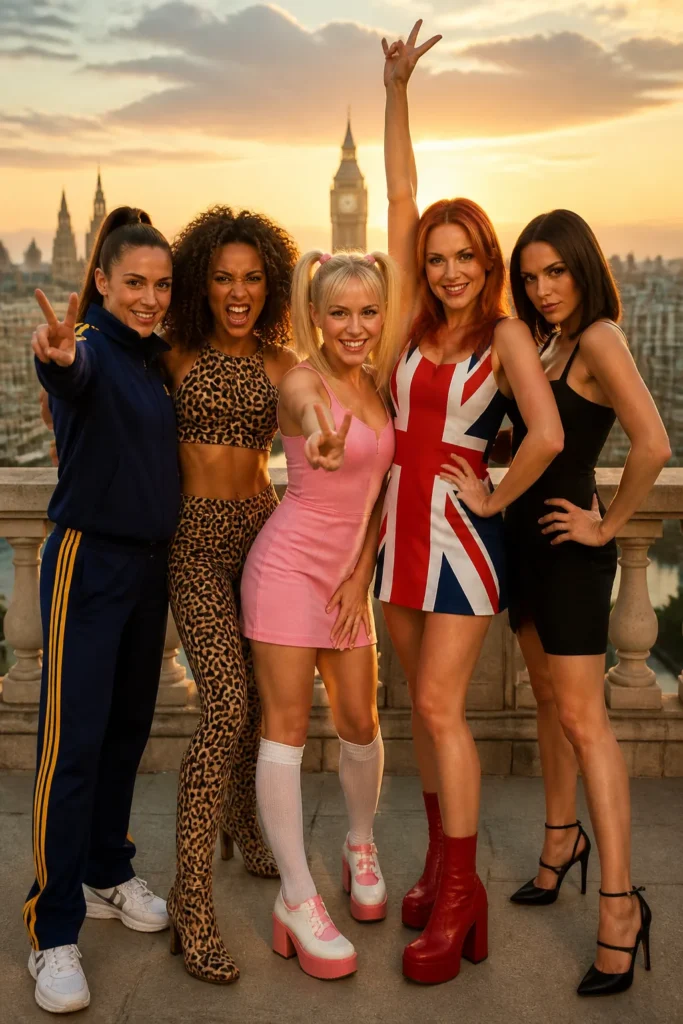
The Spice Girls let five friends choose the role that actually suits them. Sporty wears a tracksuit, crop top, and high ponytail. Scary takes leopard print and big hair. Baby chooses pink or powder blue with playful platforms and pigtails. Ginger can wear a bold red, white, and blue dress inspired by the famous Union Jack look. Posh keeps it simple in a sleek black dress and sunglasses.
The group connection comes from the 90s styling, not identical outfits. Platform shoes, mini bags, glossy makeup, and confident poses help everyone look like they belong in the same music video. Let people claim roles early so there are not three Posh costumes and no Sporty. A shared playlist during getting ready is optional, but I highly recommend it for morale.
Why it worked: Every person can lean into a different comfort level while the decade specific shoes, hair, and makeup provide the group consistency.
5. The Plastics: Pink Looks With One Very Important Rule
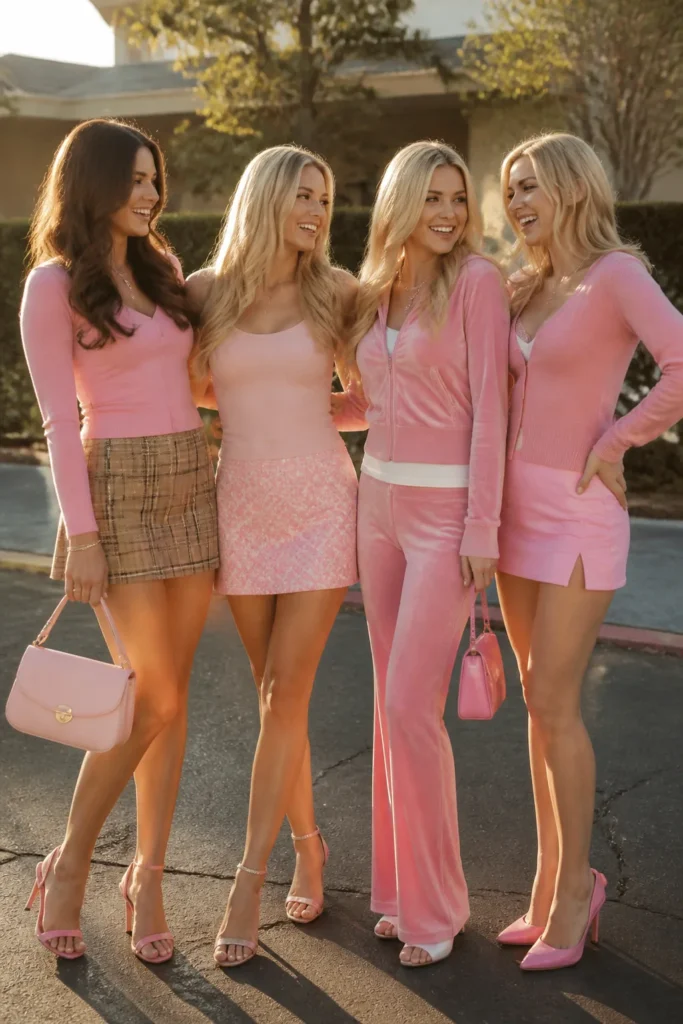
The Plastics are perfect for a group that wants to look polished and a little mischievous. Build the palette around pink, but vary the shades and textures. One person can wear a pink sweater and plaid skirt, another a pink slip dress with a cardigan, another a pink blouse with a mini skirt, and another pink trousers or jeans if skirts are not her thing. Silver jewelry and glossy hair keep it early 2000s.
The in joke writes itself: on Wednesdays, the Plastics wear pink. If your party is on a Wednesday, mention the rule in the group chat and commit fully. If it is not Wednesday, you can still make pink the nonnegotiable. Strong group halloween costumes often come down to one rule everyone follows, and here the rule is visible in every photo.
Why it worked: Nobody has to wear the same outfit, but the repeated pink makes the group look deliberate. Different textures stop it from becoming four copies of the same costume.
6. Ghostbusters in Khaki With DIY Proton Packs
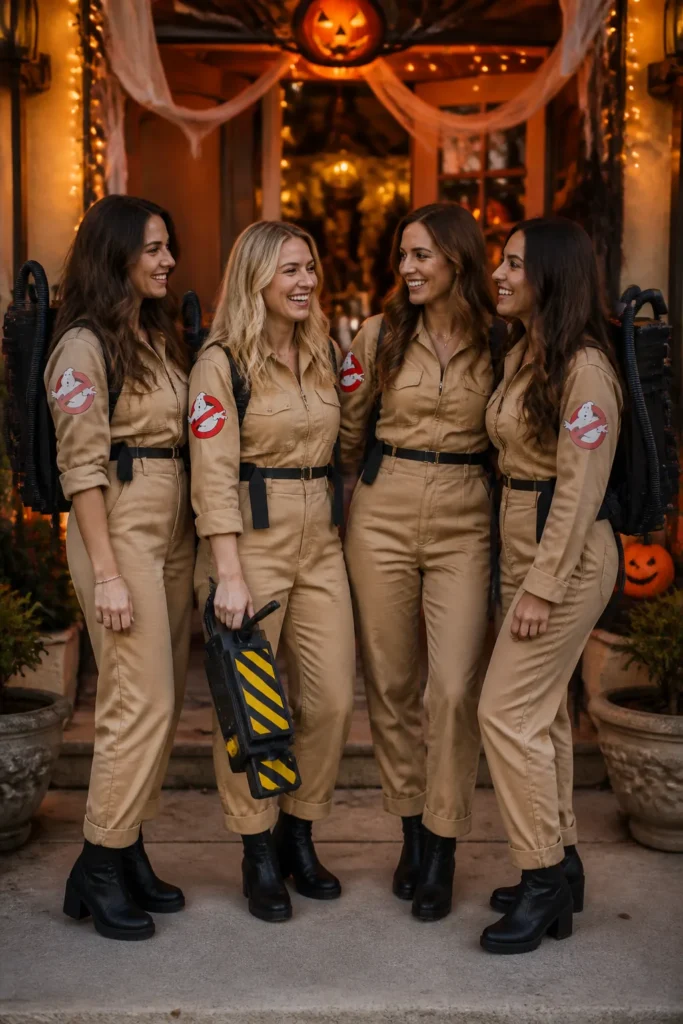
Ghostbusters is the answer when your group wants a true uniform. Matching khaki jumpsuits are easiest, but khaki shirts and trousers create the same effect. Add black boots, a belt, and a simple name patch for each person. If the group includes different body types or budgets, separates are often more comfortable and easier to source than one standard jumpsuit.
The proton packs can be made from lightweight backpacks or cardboard boxes covered in black paint, silver details, colored buttons, and a hose made from flexible tubing. Keep them light. A pack that looks amazing at 7 p.m. can become deeply annoying by 9 p.m. One person can carry a small ghost prop or wear a slime green accessory for variety.
Why it worked: A uniform removes most coordination problems. Once the khaki base and black boots match, the homemade details add charm instead of creating visual chaos.
7. Decades Crew: 50s Through 90s in One Timeline
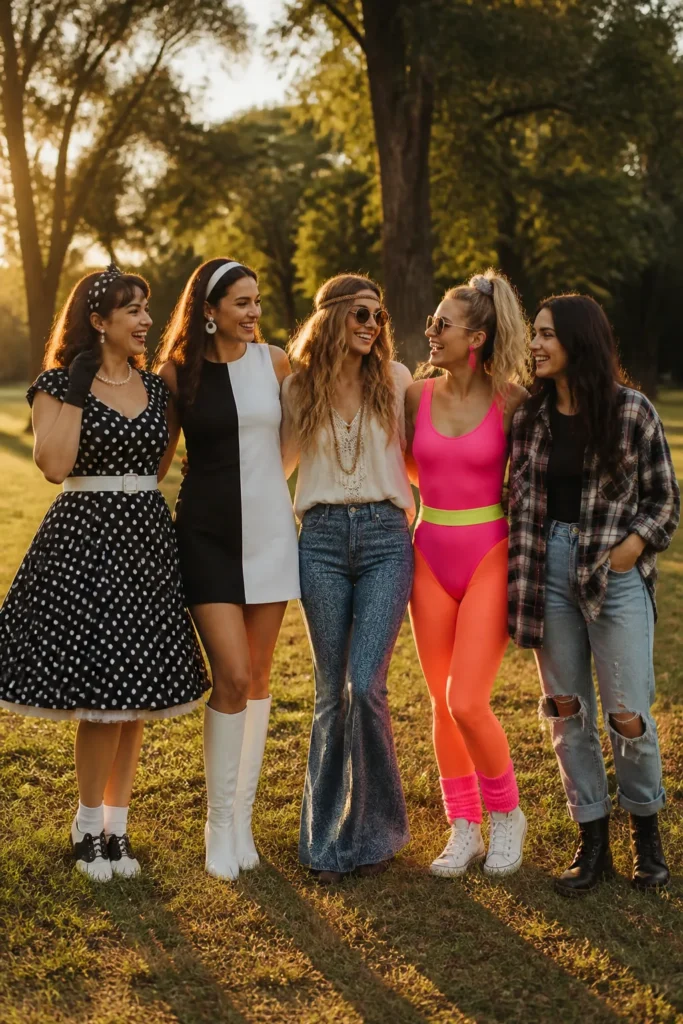
The Decades Crew is ideal when everyone has strong opinions and no desire to match. Assign each person a decade. The 50s look can use a polka dot swing dress and cat eye sunglasses. The 60s role takes a bright shift dress and bold earrings. The 70s brings flared trousers, a flowing blouse, and warm earth tones. The 80s goes neon with a side ponytail. The 90s uses a slip dress over a tee, plaid flannel, or dark lipstick and choker.
Because the outfits are intentionally different, coordinate the presentation. Stand in decade order for photos, use a shared black backdrop if you are taking pictures at home, and decide whether everyone is aiming for polished, playful, or thrifted realism. Most pieces can be found secondhand, which suits the theme beautifully.
Why it worked: The contrast is the concept. Assigning decades early prevents overlap, and arranging the group in chronological order makes the idea instantly clear.
8. Playing Cards With the Queen of Hearts in Charge
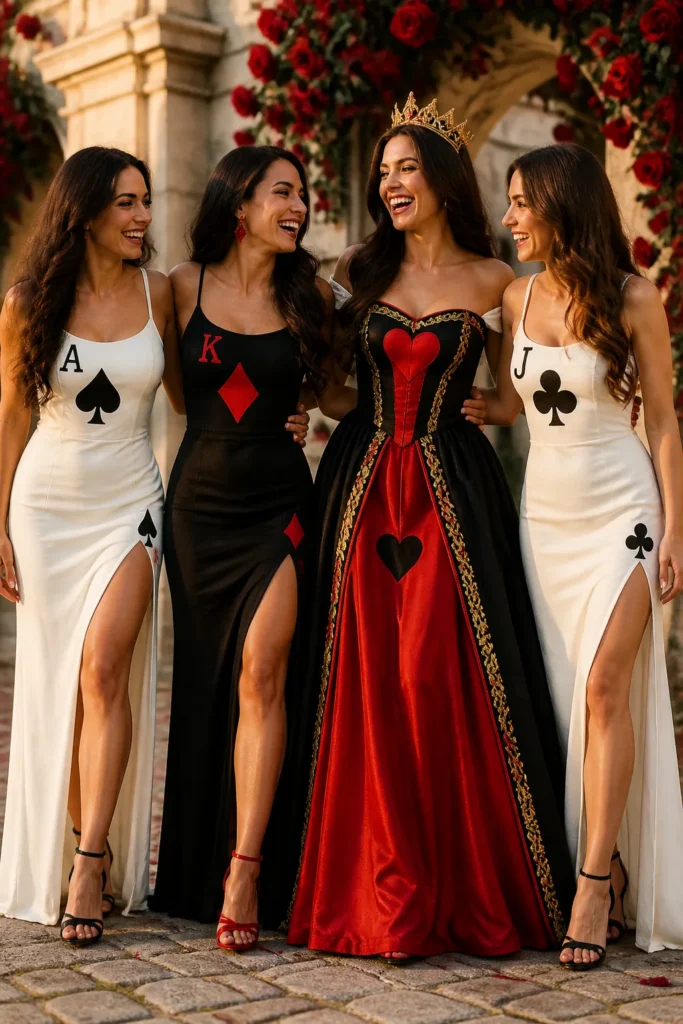
Playing Cards scale beautifully for groups of four, six, or more. The Queen of Hearts leads in a red, black, and white dress with a crown and heart details. A King can wear a black suit or black trousers and shirt with a crown. Everyone else chooses a rank, such as an Ace, Jack, Ten, or Two, and starts with a clean white or black base.
Make the card symbols from felt, card stock, or removable fabric pieces. Pin or lightly stitch a large heart, diamond, club, or spade and the rank letter to the front and back. Do not draw directly on a good dress unless you are truly ready to retire it. Matching red shoes or lipstick across the group adds polish. This is one of the most flexible group halloween costumes because extra people can join without redesigning the whole theme.
Why it worked: The white and black bases create a clean visual system, while the Queen’s red look gives the group a clear center for photos.
9. The Breakfast Club: Five Archetypes, Mostly Thrifted
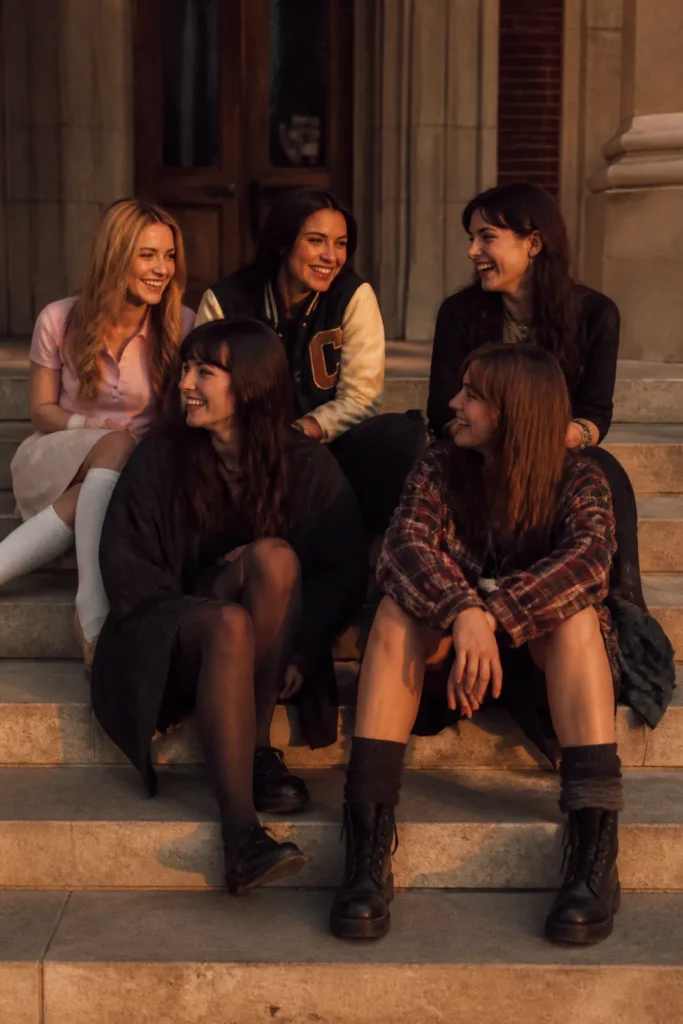
The Breakfast Club gives five people distinct roles without needing fantasy pieces. The princess wears a pink blouse, skirt, and polished boots. The athlete uses a varsity jacket or athletic sweatshirt with jeans. The basket case chooses dark layers, an oversized top, and smudged eyeliner. The criminal wears flannel, denim, boots, and a bandana or scarf detail. The brain can wear a sweater over a button down with neat trousers.
This is one of the most thrift friendly themes because the clothes are meant to look like real high school outfits, just sharpened for recognition. Agree on a slightly faded color palette and avoid dressing one archetype like a glamorous modern influencer while everyone else looks authentically 80s. Carry a notebook, lunch tray, or library book for the group photo.
Why it worked: The differences are intentional and character based. Shared 80s hair, washed out colors, and a few school props make the separate outfits belong together.
10. A Witch Coven, Every Color a Different Mood
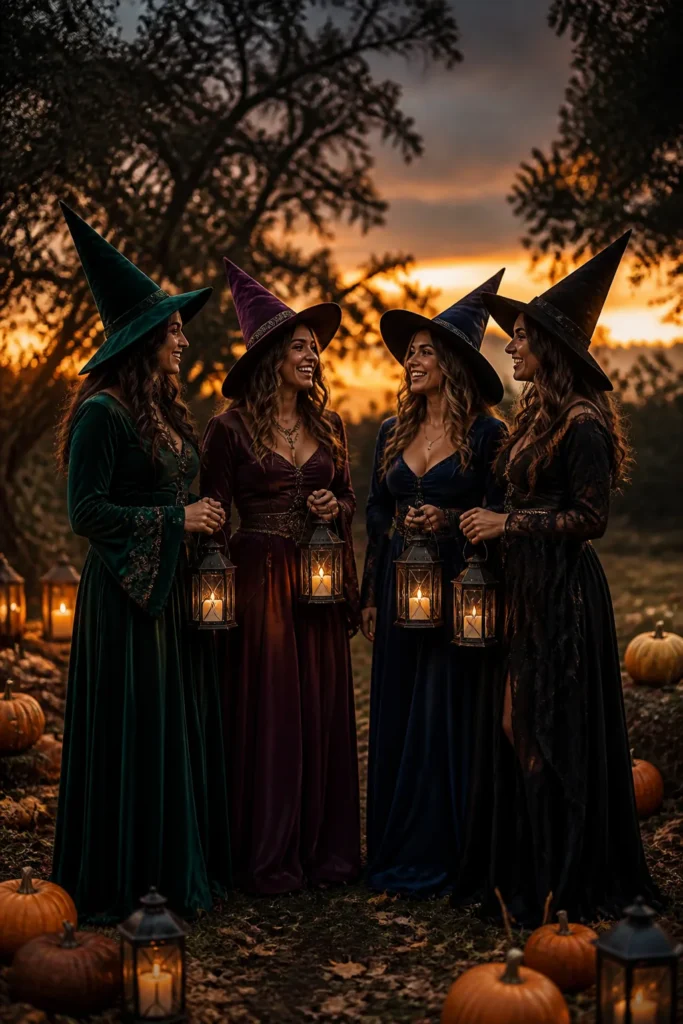
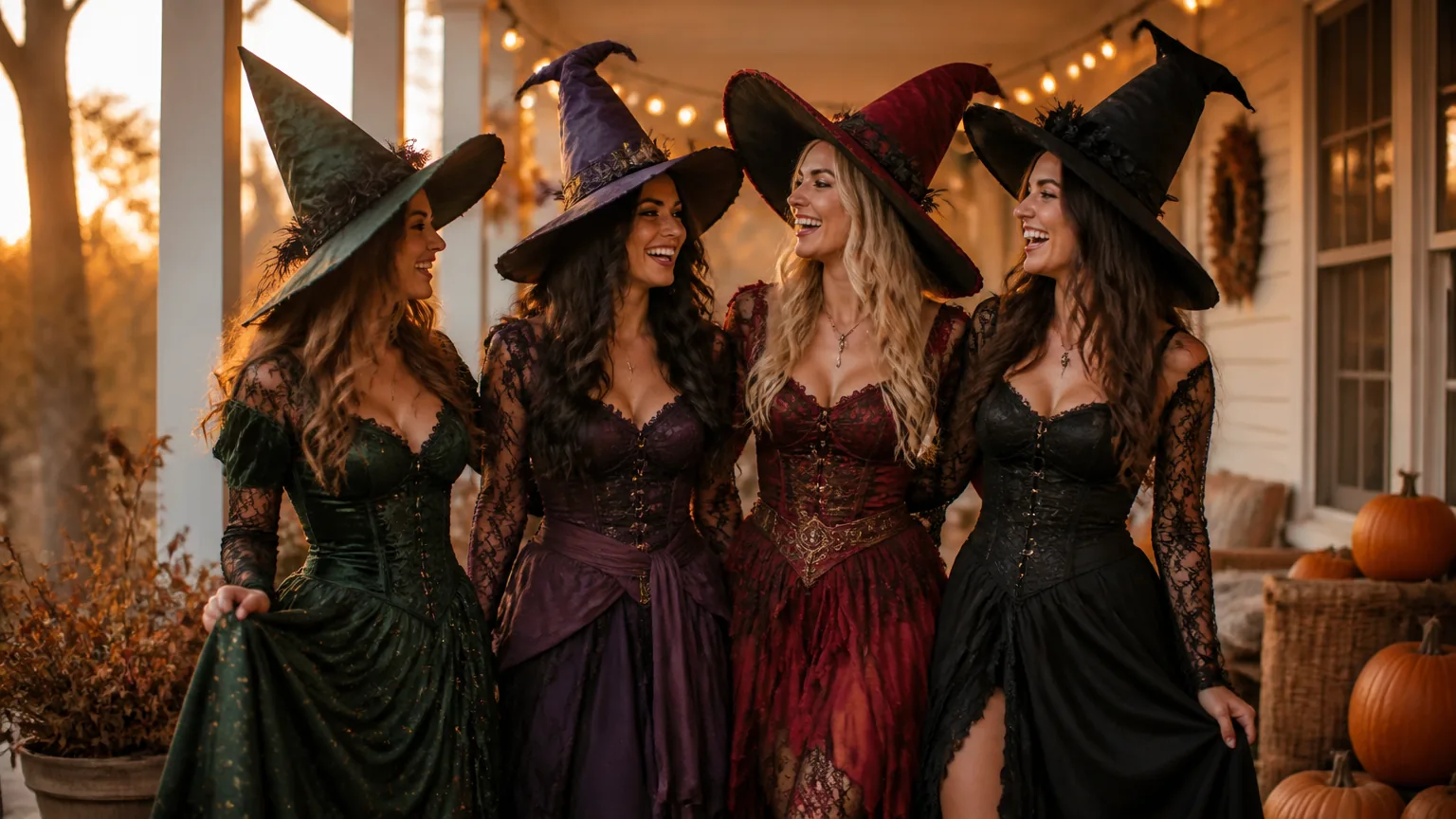
A Witch Coven is the graceful answer when everyone likes the same theme but nobody wants to be a copy. Each person chooses a color and style. One can be the classic black witch in a long dress. Another can go green and woodland with leaves and a brown corset belt. A purple celestial witch can add moons and stars. A red glamorous witch can choose velvet and gold jewelry. A white romantic witch can wear lace and silver.
The shared elements are pointed hats, a similar level of makeup drama, and long silhouettes or capes. Let each person select a dress length and neckline she feels good in. The group should decide whether the mood is elegant, spooky, or playful so one person does not arrive in horror makeup while the rest are doing a bridal editorial. Colorful hats or matching ribbons can tighten the connection.
Why it worked: The pointed hats and repeated drama make the group obvious, while the individual colors let everyone keep her own style and reuse a different dress.
What Actually Worked (and What Didn’t)
What worked was deciding the visual rules before anyone bought anything. A shared album with the palette, example pieces, and one photo of each person’s planned outfit saved us from surprises. We also used a simple effort formula: a recognizable base, one signature accessory, and finished hair or makeup. That formula makes group halloween costumes feel balanced even when one outfit is thrifted and another comes from a costume shop.
What did not work was assuming the group chat conversation counted as a plan. People remember different details, and “witchy” can mean a velvet gown to one friend and a pointed hat over jeans to another. Writing down the role, main color, and two required pieces sounds almost too basic, but it prevents the 6 p.m. panic when someone realizes she has bought the same role as someone else.
The other lesson was to set a deadline for base outfits, not for perfection. Once the main clothes were chosen, we could see what the group actually needed: a scarf, a crown, a pair of red shoes, or matching makeup. That is when group halloween costumes become fun instead of administrative. The last few days should be for trying things on and laughing at the photos, not rebuilding a character from nothing.
Frequently Asked Questions
How far in advance should we plan a group costume?
Two to three weeks is comfortable, but one week is enough if the pieces are simple. Assign roles first, share photos of the bases within a few days, and leave accessories for last. The important deadline is not the shopping itself. It is the moment everyone can see the outfits together and spot gaps.
How do we coordinate when everyone has a different budget?
Agree on the visible rules rather than the spending. Everyone should have the assigned color, one signature detail, and a similar finish level, but the pieces can come from a closet, thrift store, rental, or new purchase. Flexible group halloween costumes survive different budgets because the connection comes from palette and styling, not identical price tags.
What if one person wants to put in much more effort than everyone else?
Let her, within reason, but protect the group minimum. The person who loves Halloween can add the wig, detailed makeup, or handmade prop. Everyone else still needs the agreed base and signature piece. Problems start when extra effort becomes a substitute for other people doing the basics, not when one friend enjoys going all in.
What should we do if someone drops out at the last minute?
Choose themes that can flex. A witch coven, decades crew, playing cards, and Spice Girls lineup can often absorb one missing role if the colors and styling stay consistent. If the missing person was the central character, reassign that role early or shift to a broader version of the theme. Do not spend the party explaining who was supposed to be there.
The Bottom Line
A great group costume is not about everyone spending the same amount or wearing the same dress. It is about making the same decision three ways: the same story, a coordinated palette, and a similar level of finish. When those pieces line up, individual style becomes a strength instead of a problem.
So start the chat, assign the roles, and make everyone share a photo before the final week. It takes ten minutes and saves the entire costume. Then go enjoy the part that matters: arriving together, being recognized instantly, and having at least one photo where nobody is just wearing cat ears and hope.
Want more fall style ideas? Check out my guide to fall outfits for women in their 30s and these wide-leg pants outfits that work for every season.